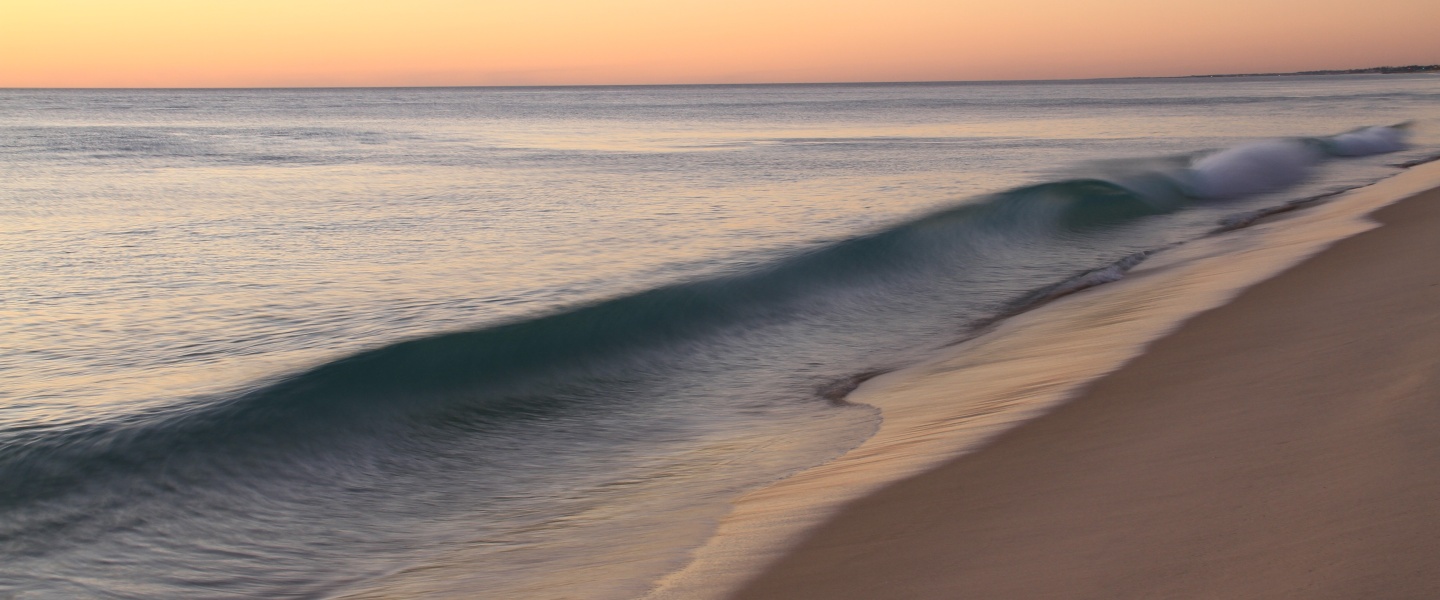

The second stop on our four-country trip is Zambia and the David Livingstone Lodge. Located on the edge of the Zambezi River, this iconic lodge is as beautiful as they say it is. It is July now, and it is wintertime in Southern Africa. Temperatures normally dip down to as low as 40 degrees at night and reach an average high of 78 degrees fahrenheit during the day. Yes, it’s quite chilly in the morning!
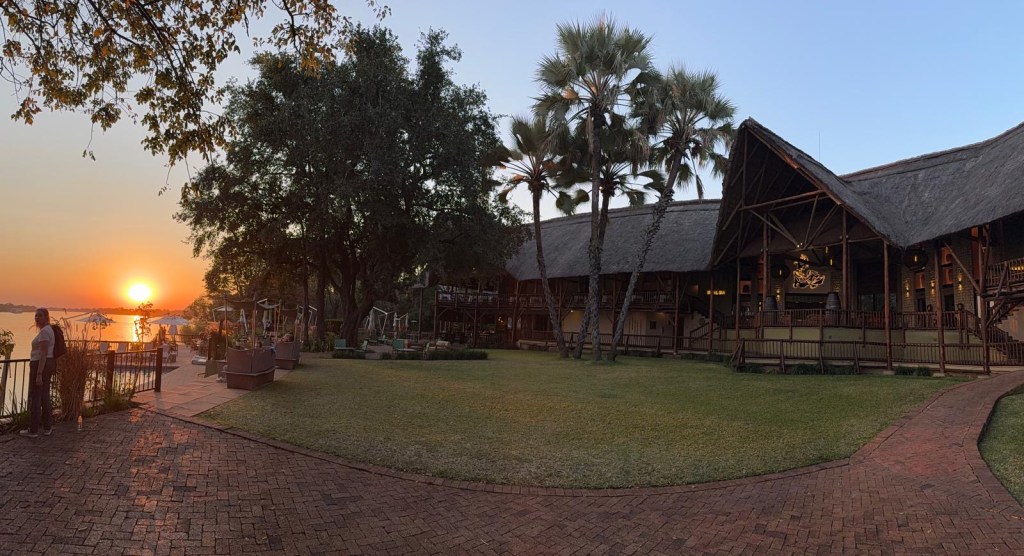
Our first evening there, my friend Sheryl and I stand and watch the sunset over the Zambezi River.
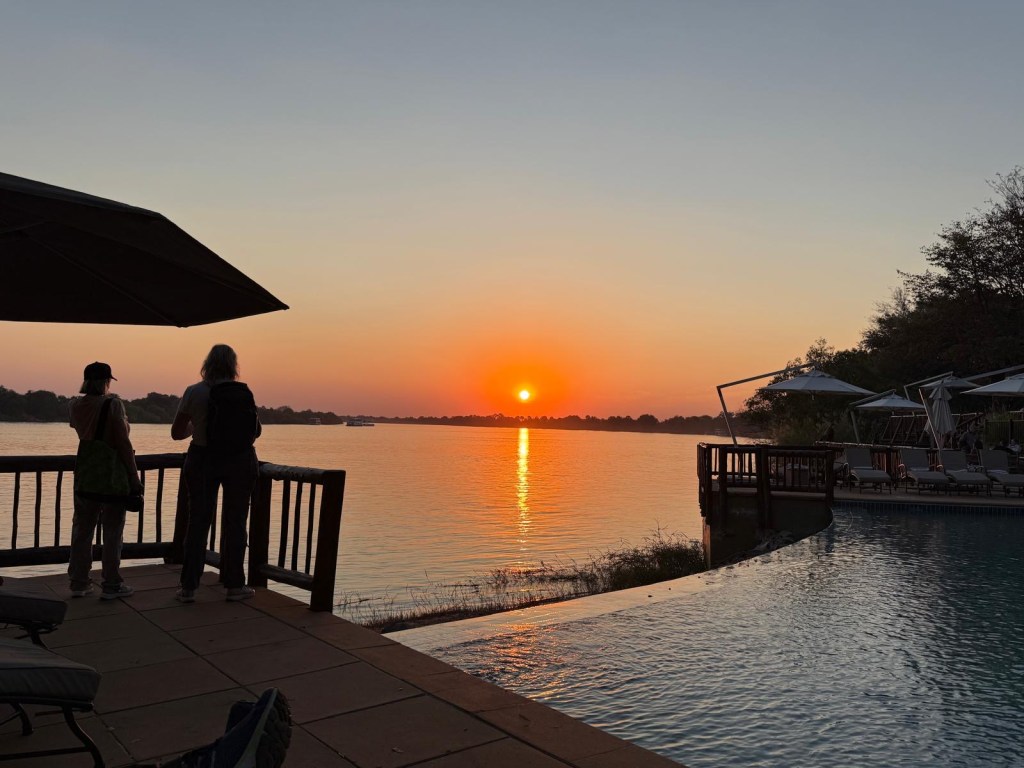
On this particular evening, we enjoy a wonderful outdoor buffet-style dinner by the river. I try Warthog stew and Impala. The warthog stew is pretty tasty, but I pass on the worm/beetle dish. We then settle into our rooms to get a good night’s sleep. I hear an elephant calling nearby.
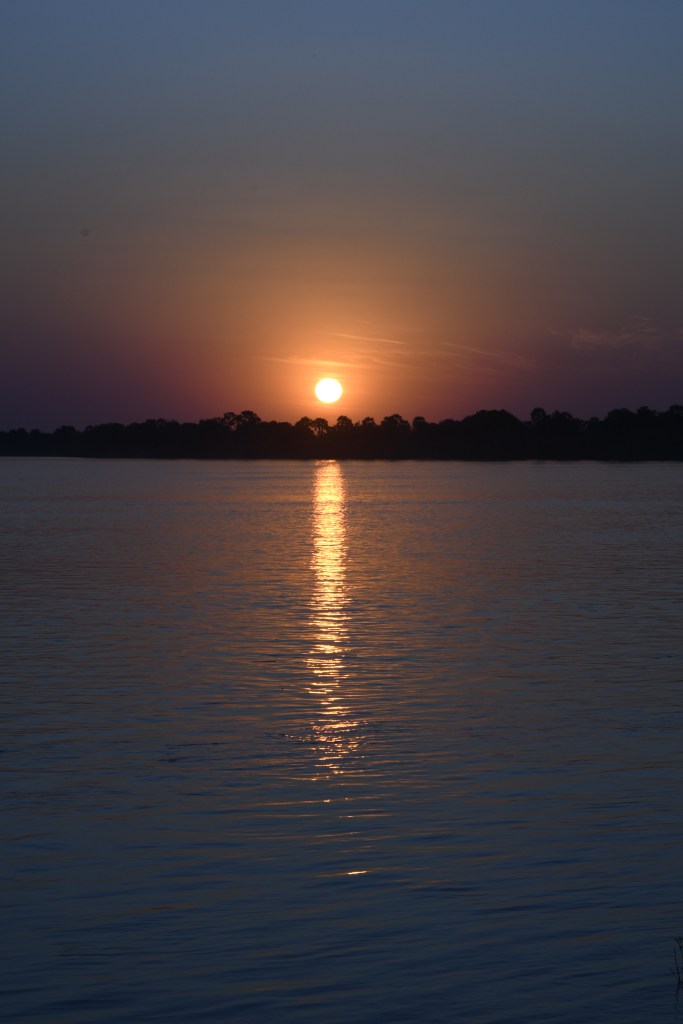
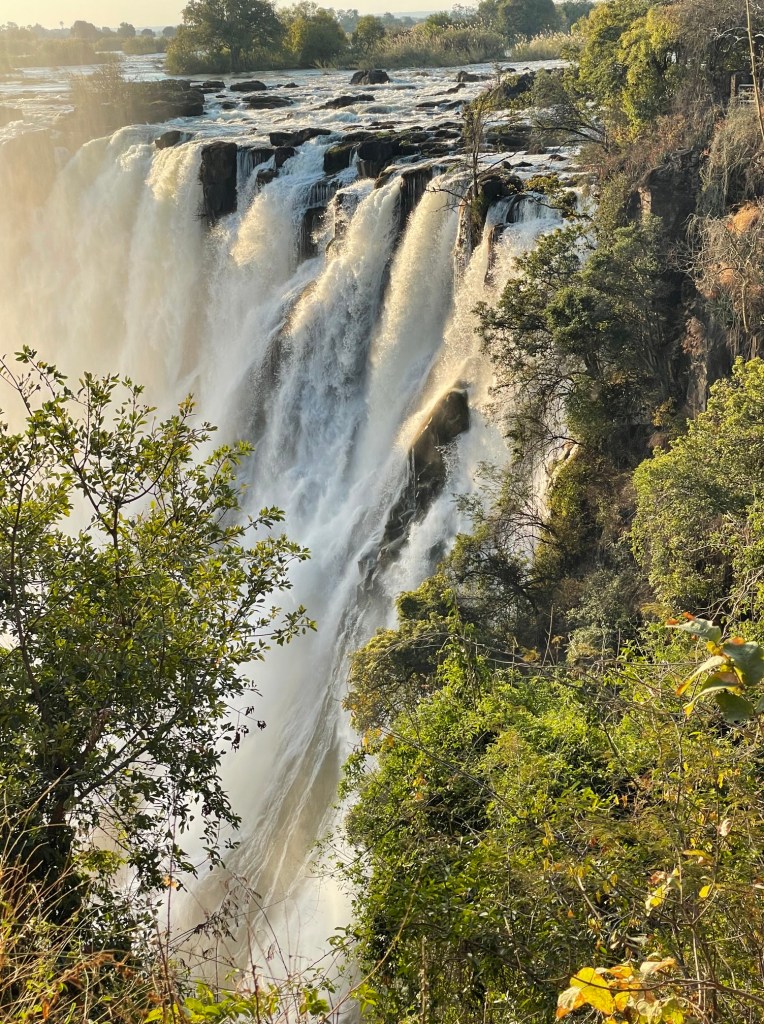
Before talking about the Rhinos, I want to show you Victoria Falls, which is the largest waterfall on the planet. The Zambezi River, from whence it flows, supports life all the way from Northern Zambia down to Mozambique through its many rivers, streams and tributaries.
The waterfall itself sits on the border of two countries, Zambia and Zimbabwe, so you can experience it from both sides.
First thing in the morning, we head over to Victoria Falls. The local name for the falls is Mosi-oa-Tunya, which means “The Smoke that Thunders”. The enormous pounding sound of the falls can be heard by local residents up to 30 miles (or 50 kilometers) away.
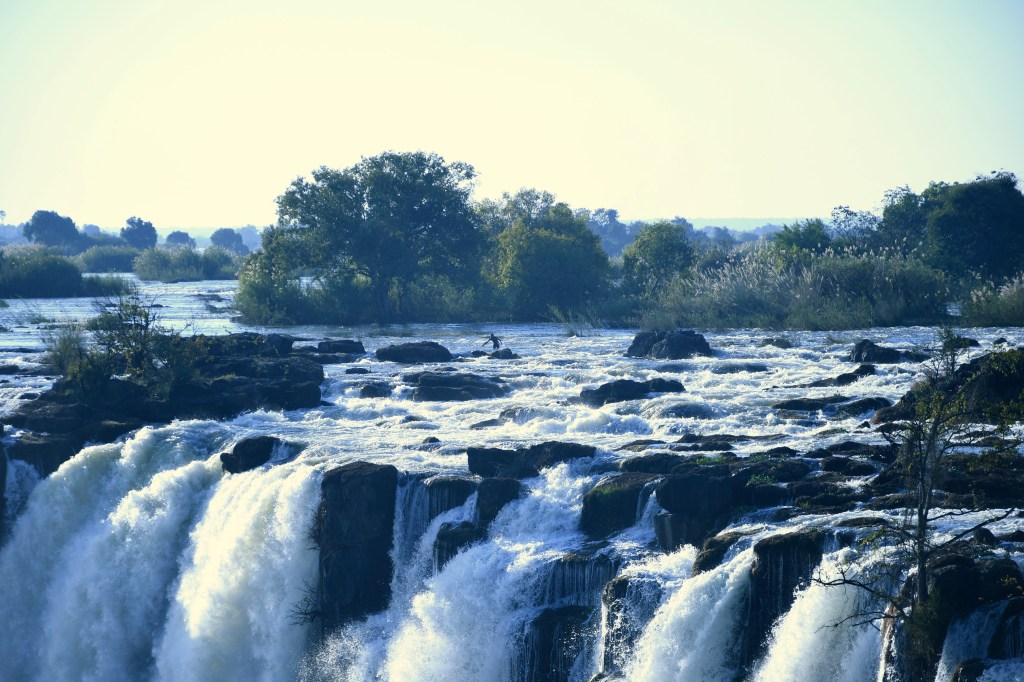
If you zoom in below, you can see a guy fishing. Huh? I would think this would be a place to avoid when the power of the water is extremely strong, but he probably just needs to feed his family. Roughly 60% of the population lives below the poverty line in Zambia.
I am compelled to tell you that the largest number of Mosquitos I encounter in Africa are in the hotel room at David Livingstone Lodge, mostly in the bathroom. So every night I take a small towel and start WHACKING them so they won’t attack me *unsuspected* in the middle of the night. It works – I don’t get bitten the entire trip!
The 3 Different Rhino Species
Three species of Rhinoceros exist in Africa:
1. The Northern White Rhino, according to the World Wildlife Fund, is considered functionally extinct, with 2 females left, who are now under armed guard around the clock. The reason for their demise is cultural demand from China and Vietnam for their horns because some people in those countries believe they have medicinal value, resulting in relentless poaching and the decline of all rhino species. These are unproven health claims, as they are basically made of Keratin like our fingernails. In these nations, some wealthy people also view them as status symbols and investments. Imho, losing the Northern White Rhino is one of humanity’s biggest failures. There could be others if we do not act.
2. The Southern White Rhino (below) During the mid 1800s, Southern White Rhinos used to be abundant in number according to historical reports. But by 1900, this species was thought to be extinct because of European hunters. Then unexpectedly, around 50 were found in South Africa’s Zulu Natal area. Conservation efforts ramped up during the 1950s and 1960s, and today they are on the rebound. Thanks to conservationists, they now number around 15,000. This has been reported as a “success story”, however, recently the numbers have gone down once again because of illegal poaching.
3. The Black Rhino is listed as critically endangered by the IUCN, and according to the International Rhino Foundation, there are 6,788 still living in the wild in Africa.
In the afternoon, we head out on our first Walking Safari. This young man’s name is Boyd, and he is working for the government protecting Southern White Rhinos in the park. There are 40 White Rhinos currently living in Zambia, and he is putting his life on the line to protect them.
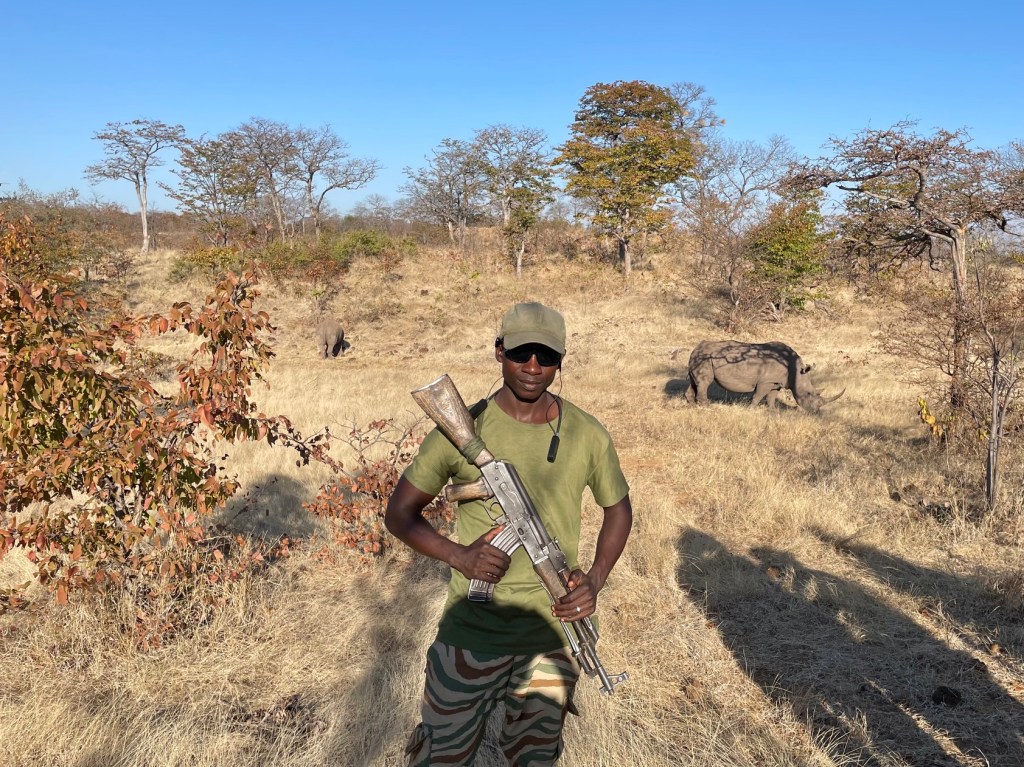
Thank you Boyd. We are so grateful for men like you!
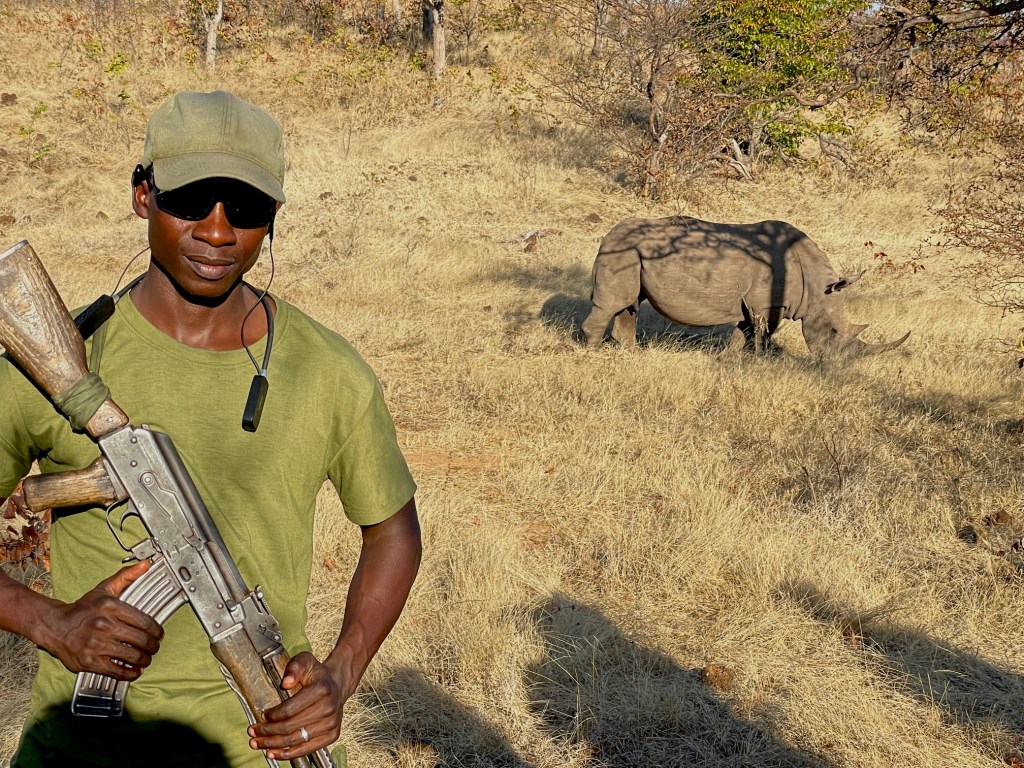
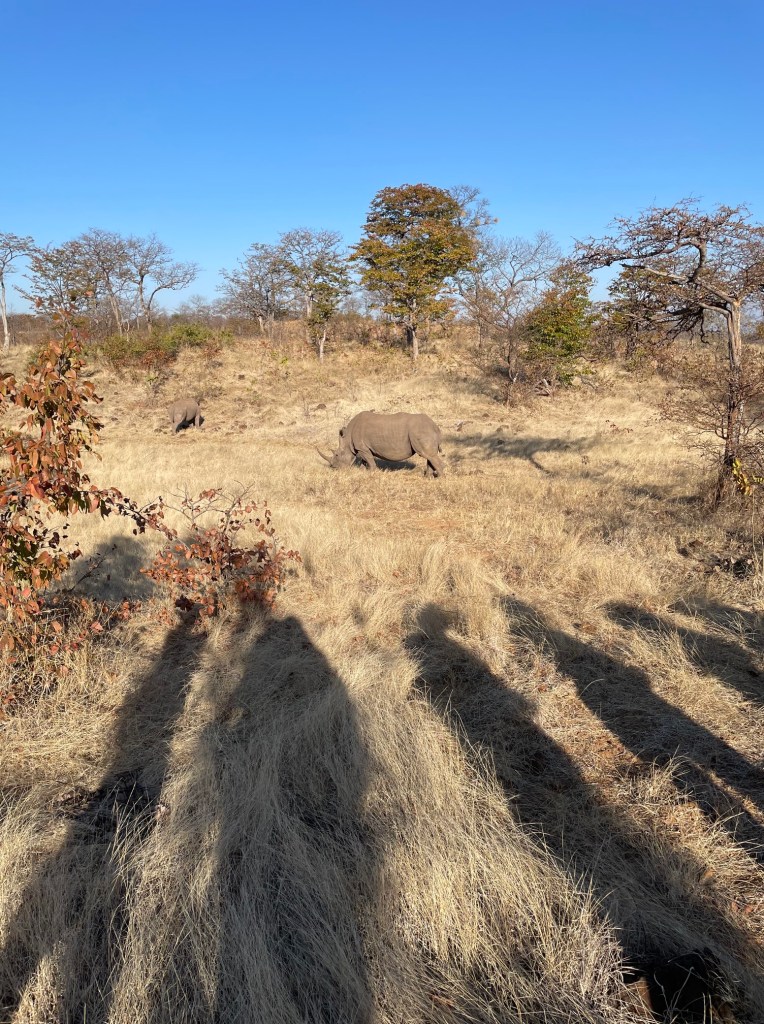
We are literally no more than 20 feet away from the gentle giants. It is so cool, I never in a million years thought I would get to see them this close! I am beyond thrilled.

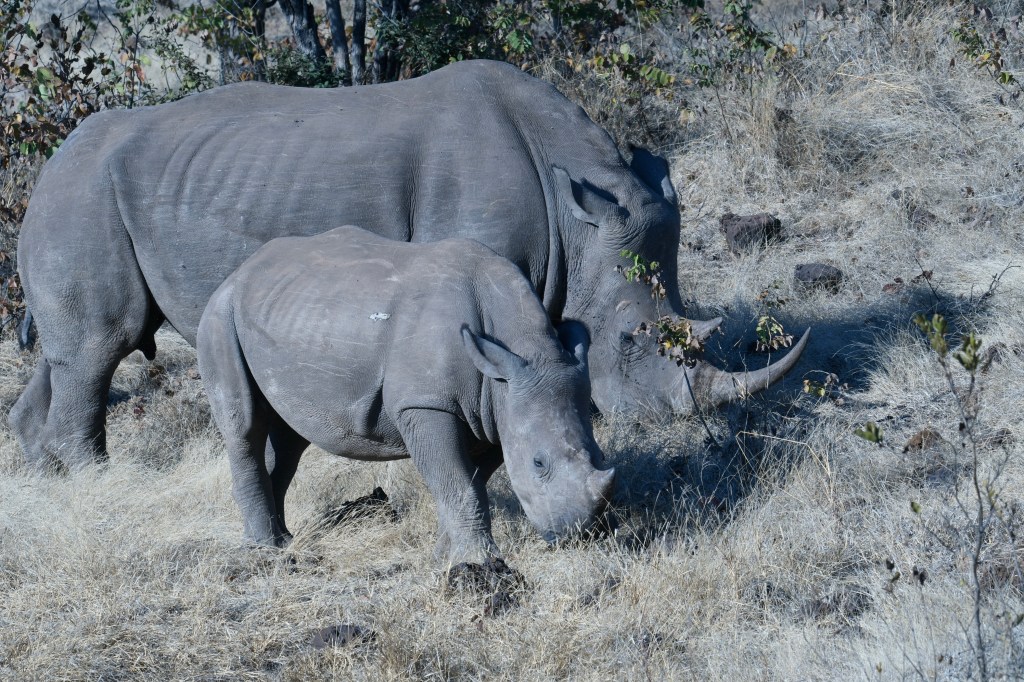
If they find poachers in the park in Zambia, they arrest them. In Botswana, however, it is legal to kill a poacher that is seen killing or trying to kill a Rhinoceros.
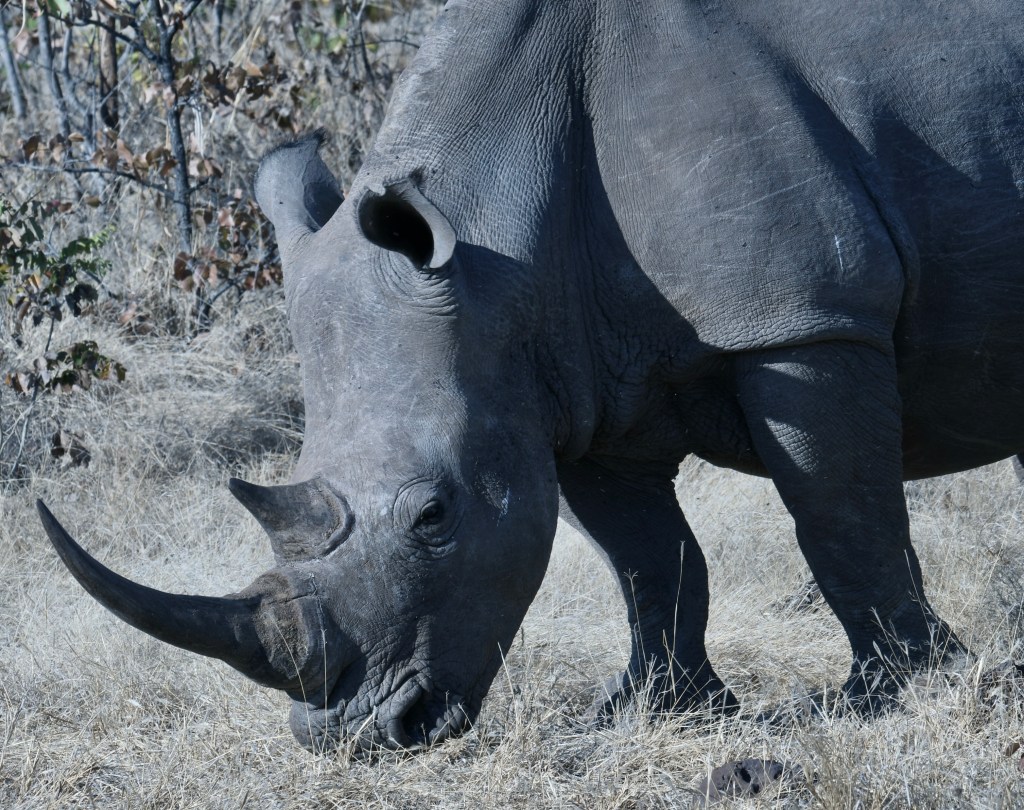
Rhinos spend much of their day grazing.
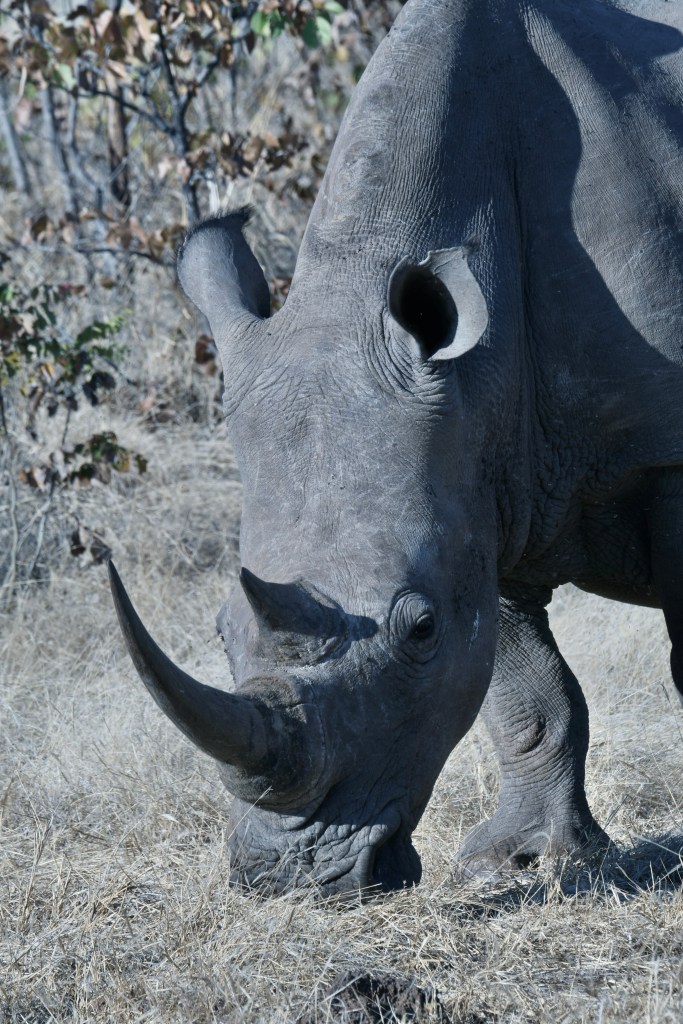
Did you know that a Southern White Rhino can weigh up to 6,000 pounds or 2,700 kgs? That is equivalent to a Ford F-150 truck!
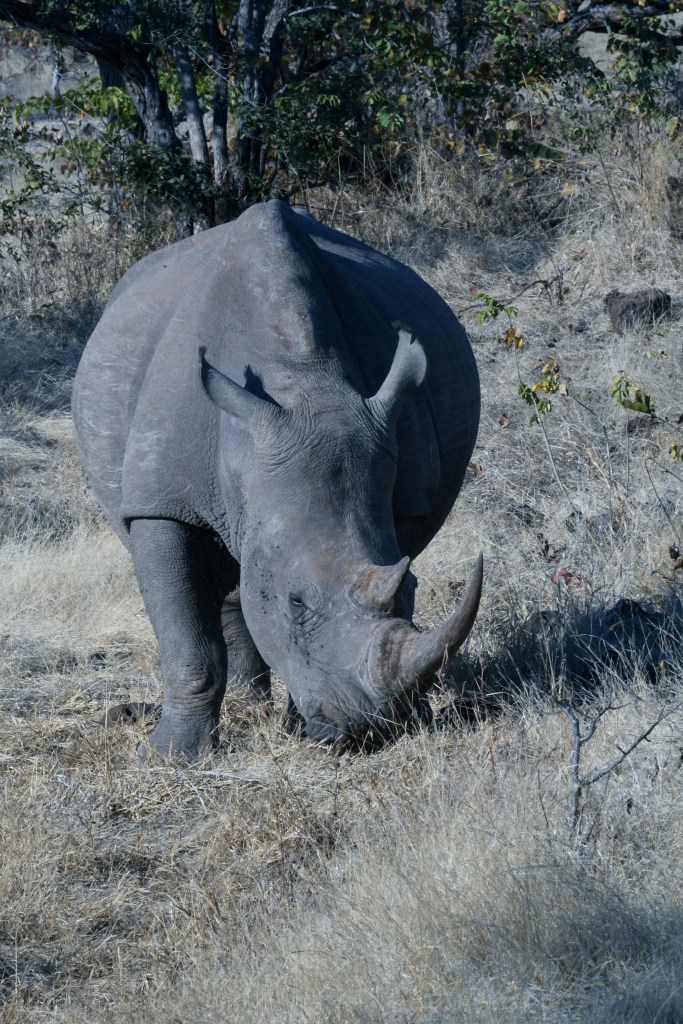
Cool, tubular ears…
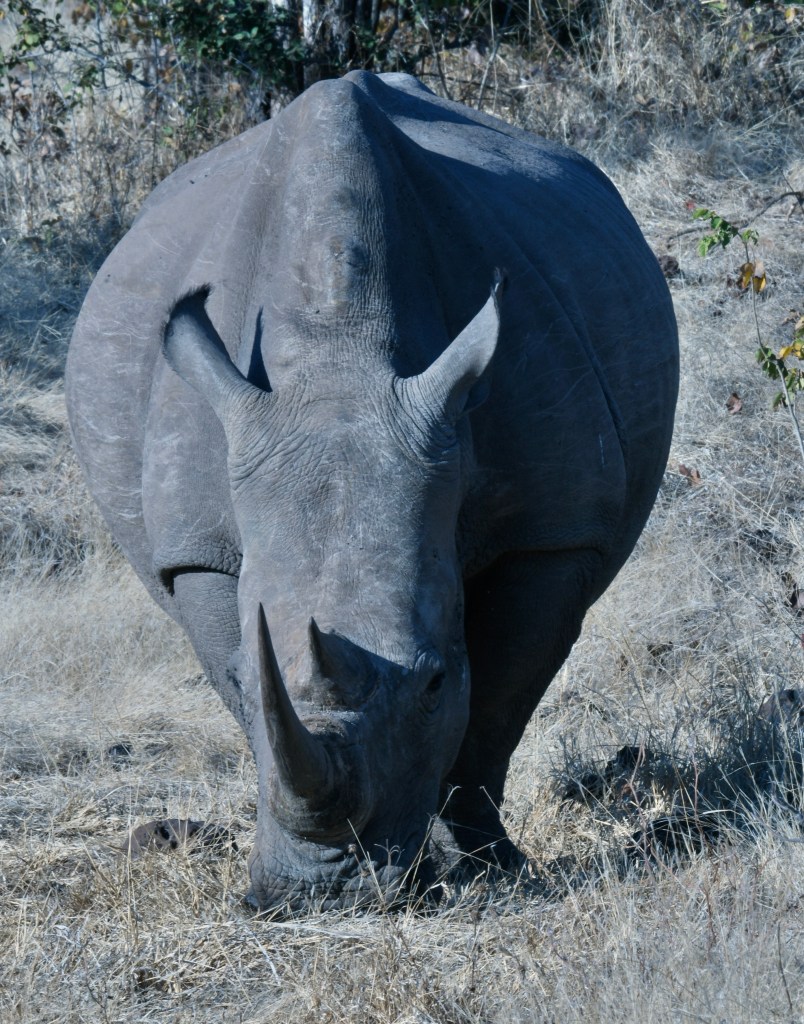
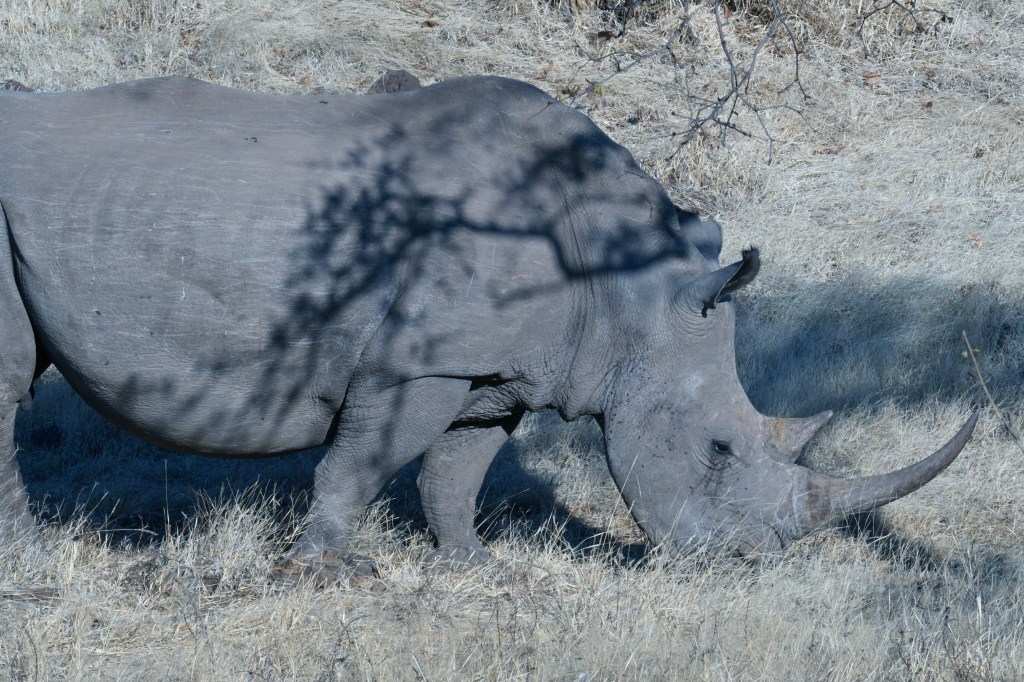
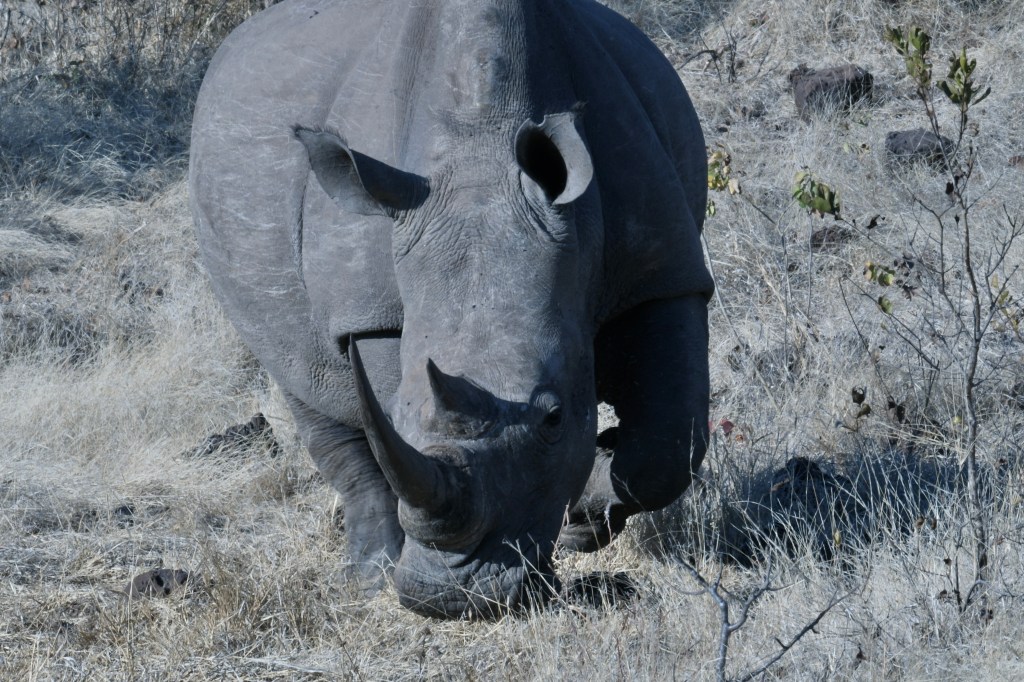
My friend Sheryl and I on the walking safari (with Rhinos behind us!)
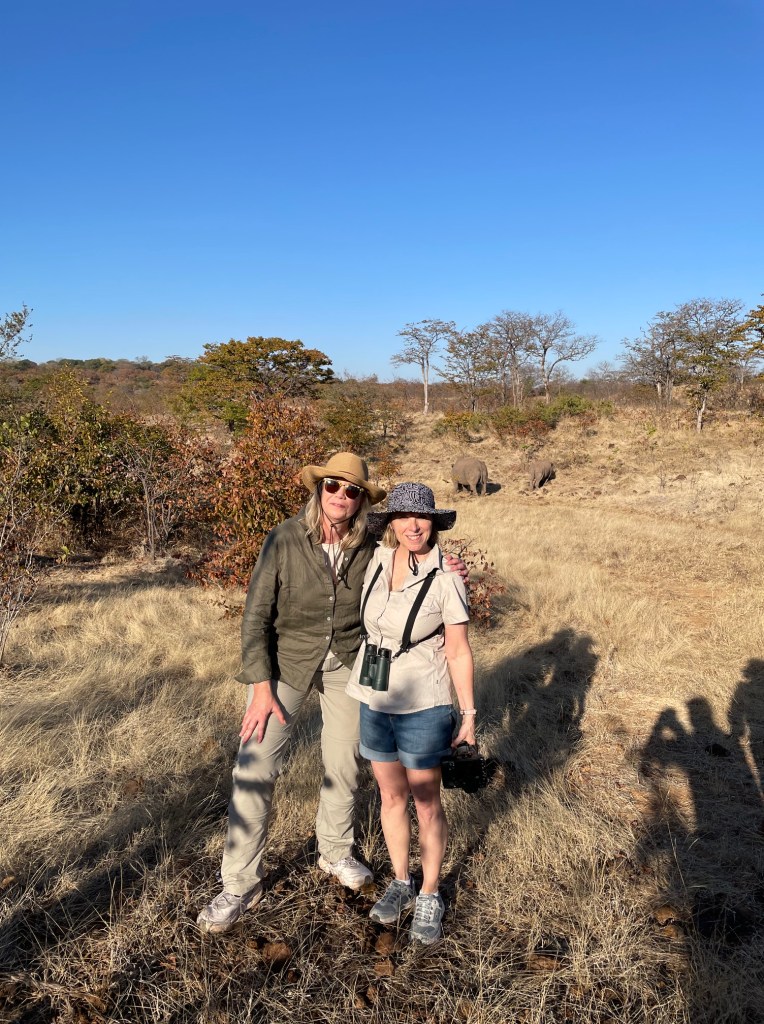

A more artistic photo, with human shadows.
To become a member of an organization working to save Rhinos and help them thrive in the wild, please go to savetherhino.org or rhinos.org.
Please leave Comments – I love them!
Look for the “SUBSCRIBE” button, type in your email address, and you will RECEIVE MY POSTS WHEN THEY ARE PUBLISHED. Thank You!


Love reading your posts and enjoy your beautiful photos. Thanks so much for taking the time to do these!
LikeLike
Hi Sue! Thanks so much. Hope you are well!
LikeLike