

October 3, 2024 – –
It is that time of year when the smallest, most beautiful birds move through and fly from Canada and the Northern United States all the way down to Central and South America for the winter. Each spring and fall, they brave many dangers (including wind, storms, pesticides and even city skyscrapers) during migration. As a wildlife photographer, I have been fortunate enough to see and photograph many different warbler species during various adventures that have spanned from Canada to Cuba.
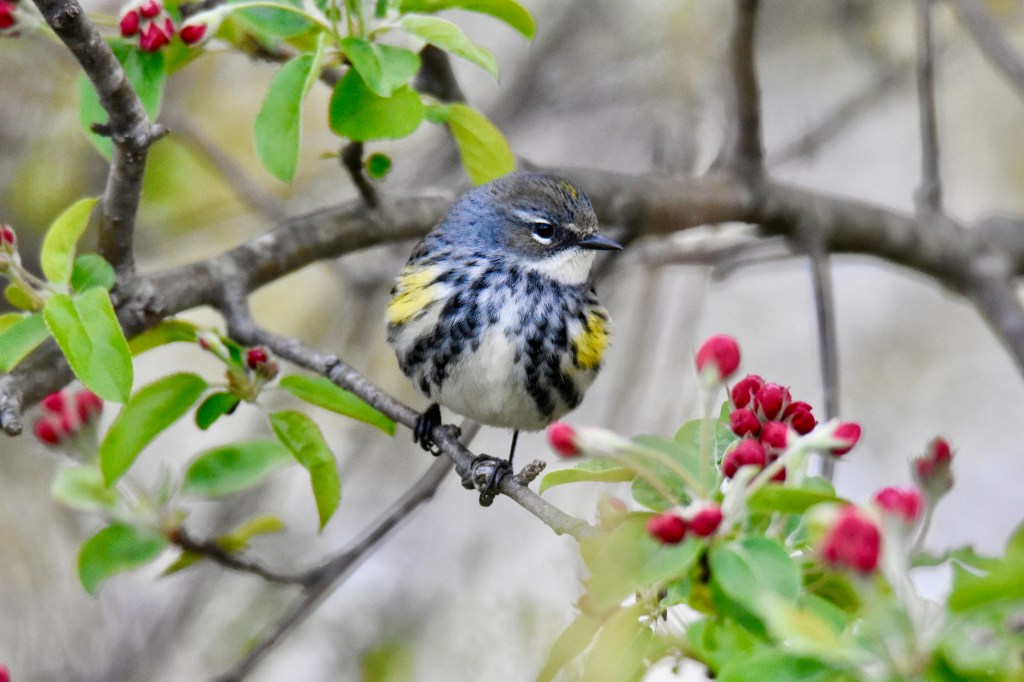
Yellow-rumped Warbler (above.)
I am convinced that Mother Nature expresses her love in the form of these little beauties. Most warblers are only around 3-4 inches long and 2 inches wide. These songbirds are fast and active as they search for insects, worms and berries. They live and breed mostly in the pines and tops of tall trees in forested and wooded areas all over North America. During migration, however, they can sometimes be seen on trees near the ocean!
The warbler shown above is one of the most common that you will find, and that is the Yellow-rumped Warbler. This bird literally has a yellow rump, and it is a delight to behold! It is the first warbler I ever laid eyes on, as there were a large group of them foraging on the wrack line at Odiorne State Park years ago. This is my “warbler story” .
The next beauty I discovered that day was a female Prairie Warbler. She was the most gorgeous creature … more subtle than the male, of course, but precious in her own right. (see below) Aside from this female, I will mostly be showing photos of the more colorful males (- : not to be sexist or anything, the males are just easier for me to identify).
These small birds are definitely challenging to photograph!

Below, the more common, but no less precious, Yellow Warbler

Check out the Yellow Warbler’s feet in the above photo. They’re yellow!
Yellow Warblers breed as far north as the Arctic Circle and spend their winters in Central and South America. According to the Smithsonian’s Conservation Biology Institute, Yellow Warblers perch high in small shrubs or small trees and whistle a “sweet, sweet, I’m so sweet” song and they also know how to alert other birds to the presence of Brown-headed Cowbirds with their alarm call. Can you imagine a Yellow Warbler trying to raise a large, brown-headed cowbird chick? That would be rough!
Another common warbler is the Palm Warbler, with its bright red cap and yellow body. Warblers eat mostly insects and caterpillars, but according to the Cornell Lab of Ornithology, they do eat berries in the winter. Yum!
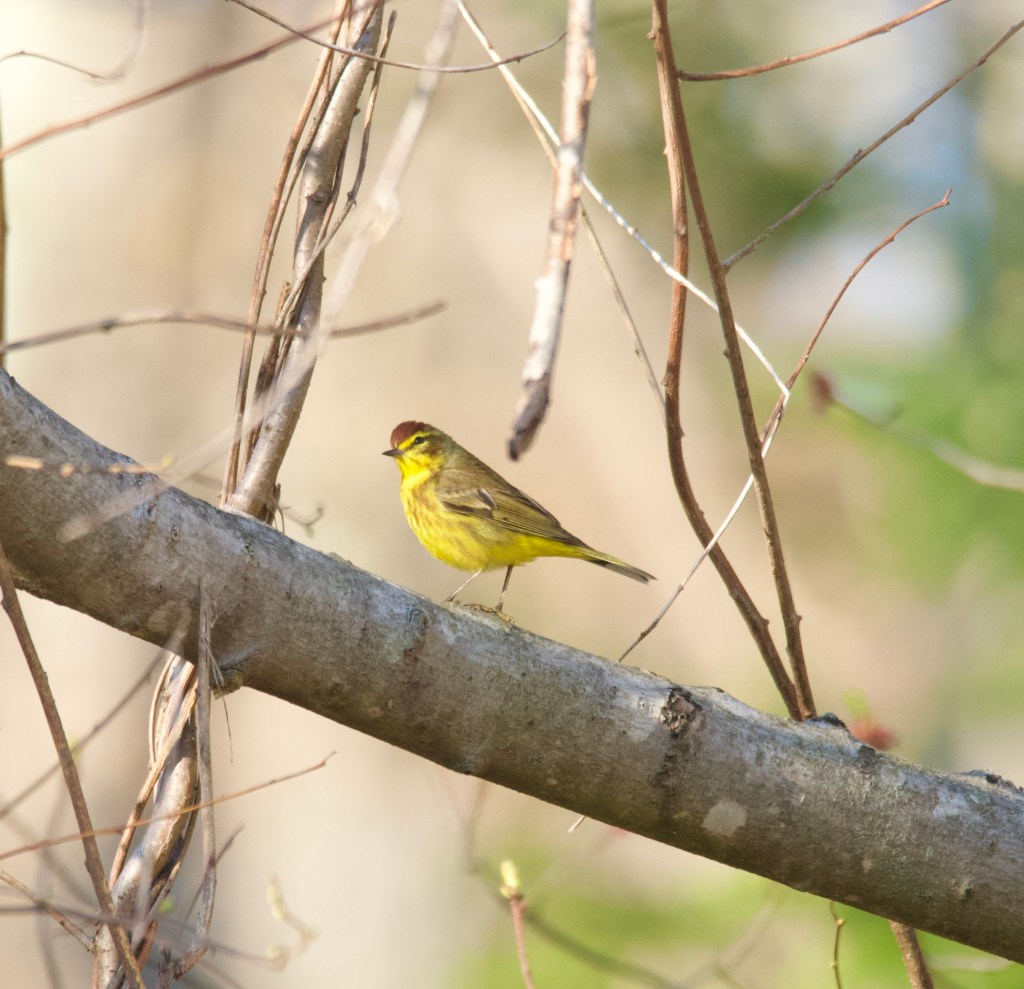
Palm Warbler
One of the most brilliant and striking warblers is the Magnolia Warbler, with its bold black stripes, yellow body and white wings. It may take a year or two to find one of these, but it is oh-so-worth-it when you see one! These birds are similar to the male Prairie warbler as well as the male Canada, but it has different facial features, such a black face mask and gray cap.
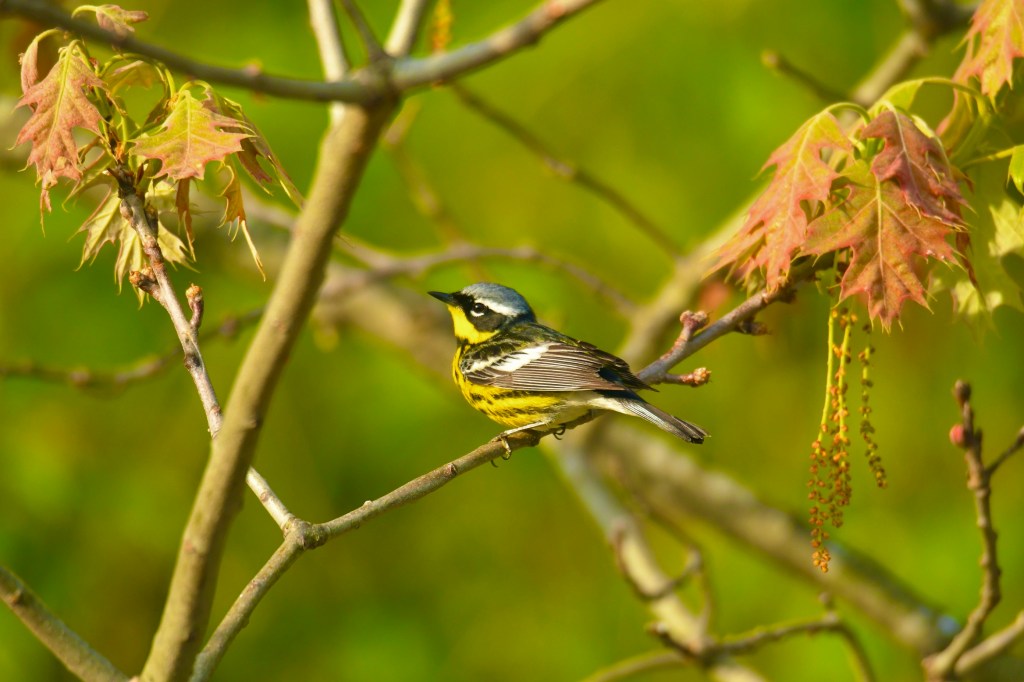
Magnolia Warbler

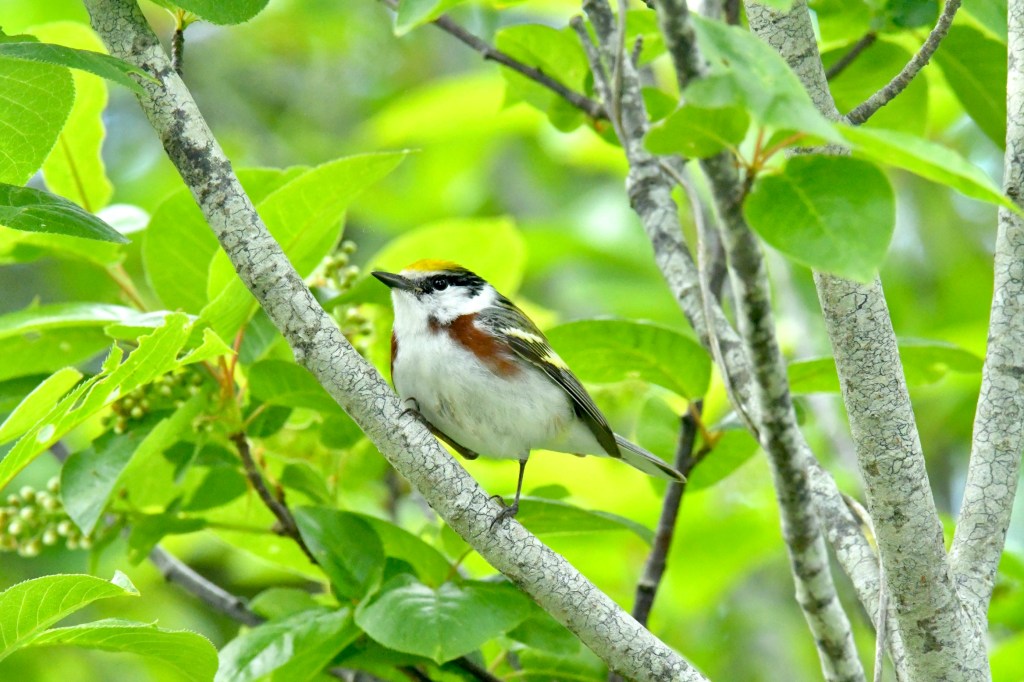
One of the hottest and best birding spots in New England is on Monhegan Island in Maine. I travelled there on two birding trips and was delighted with the variety of fall warblers. Below I found this Chesnut-sided Warbler, which is one of my favorites, foraging in the thickets at the top of the hill.

Chesnut-sided Warbler – how beautiful is this guy?
On my second visit to Monhegan, I found this Black-throated Green Warbler searching for insects on top of some shrubs in that same area:

Black-throated Green Warbler
Black and White Warblers (below) are more common than some others. But they are just as cool looking. B & Ws can be aggressive with other birds who try to enter their feeding territory.
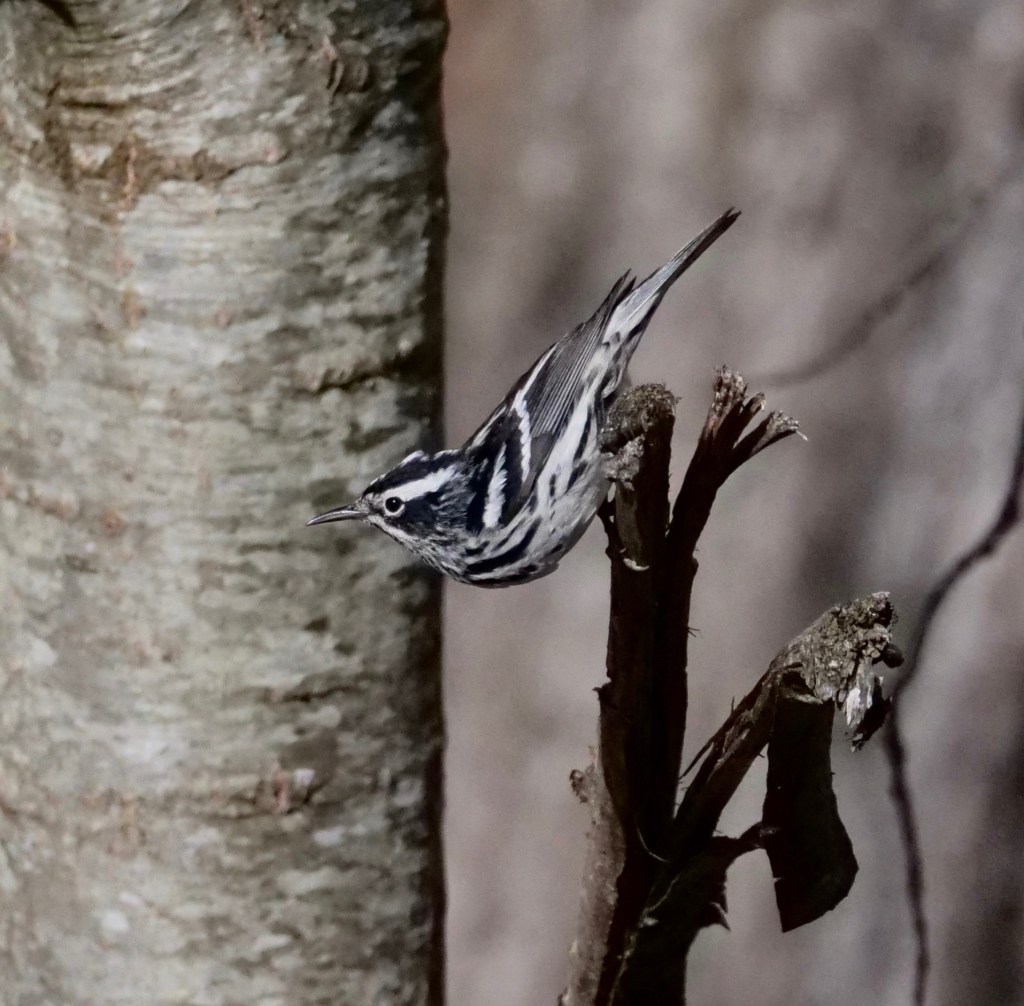
Black-and-white Warbler
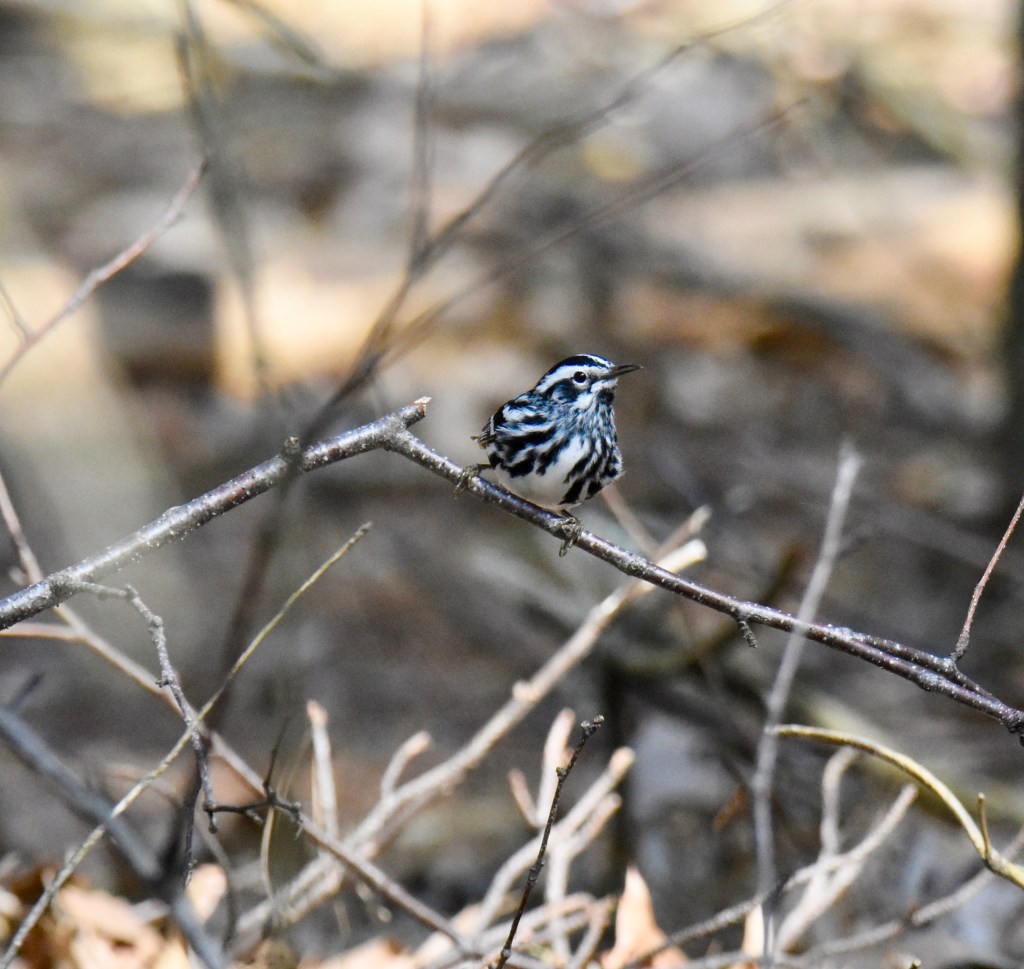
Now, compare the bird above with the Blackpoll Warbler, below. According to the Cornell Lab of Ornithology, each autumn, the Blackpoll warbler flies non-stop for up to 3 days over the Atlantic Ocean, covering an average of 1,800 miles to reach their wintering grounds in South America. If they come from Alaska, it will be an even longer journey.
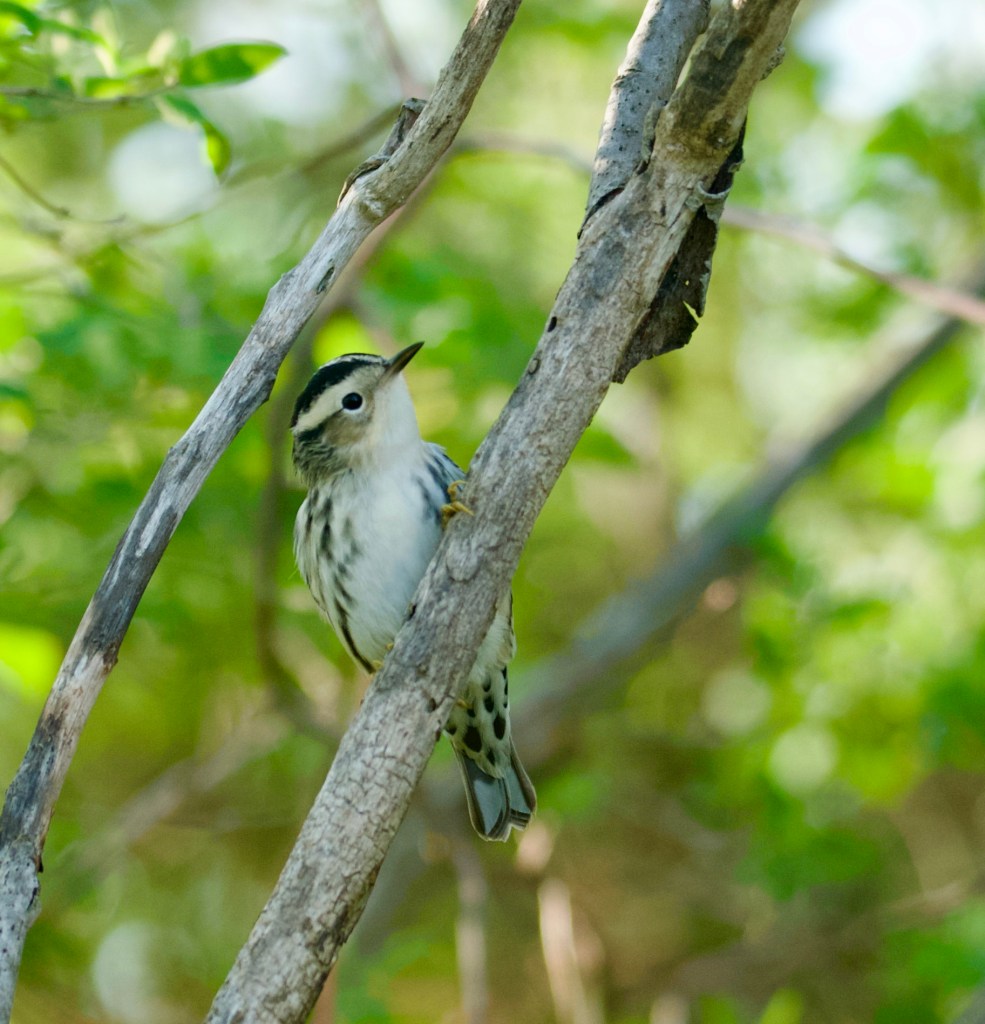
Blackpoll Warbler (above)
Aaahh, the Blackburnian – named for Anna Blackburn, a female ornithologist who lived during the 1700s in England. If the American Ornithological Society renames this bird, my vote is to call it the “Orange-flamed Warbler” or something similar. Others like “Fire-throated” warbler which would be great, too!
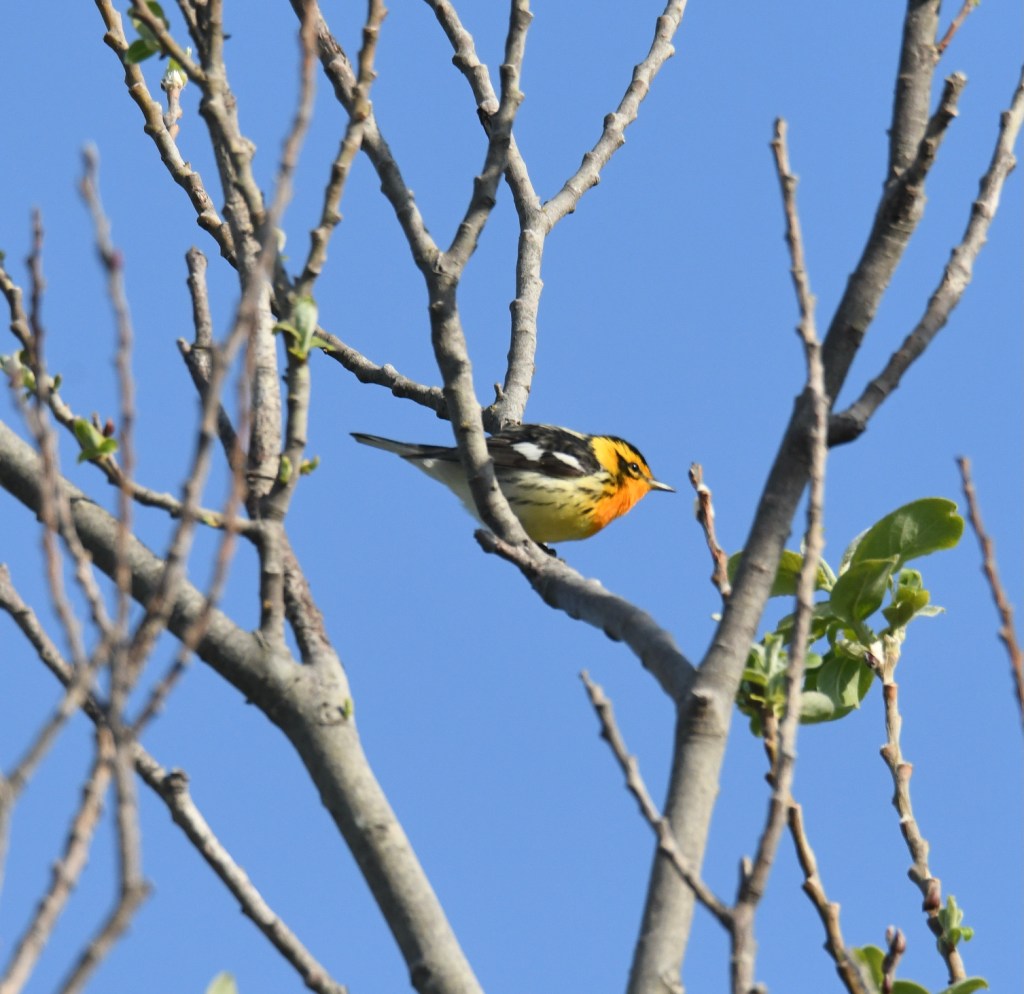
Blackburnian Warbler
This bird is no doubt one of the most colorful warblers in the world and one of my absolute favorites. The oldest Blackburnian Warbler ever found was in Minnesota and was at least 8 years old. As I was standing outside the Monhegan House one fruitful day in May, I was able to photograph this gorgeous Blackburnian in a tree. This reminds me… I really need to get back to Monhegan Island soon!
Below is a female Cape May Warbler also seen guess where … Monhegan! We spotted this beauty right near the summer home of Jamie Wyeth and family! I know….. the Wyeths. 🙂 And then I spotted the painter and his family getting lunch in town. This is the kind of day that makes life worth living! I left him alone, of course. But being an artist and writer, it kind of made my day!
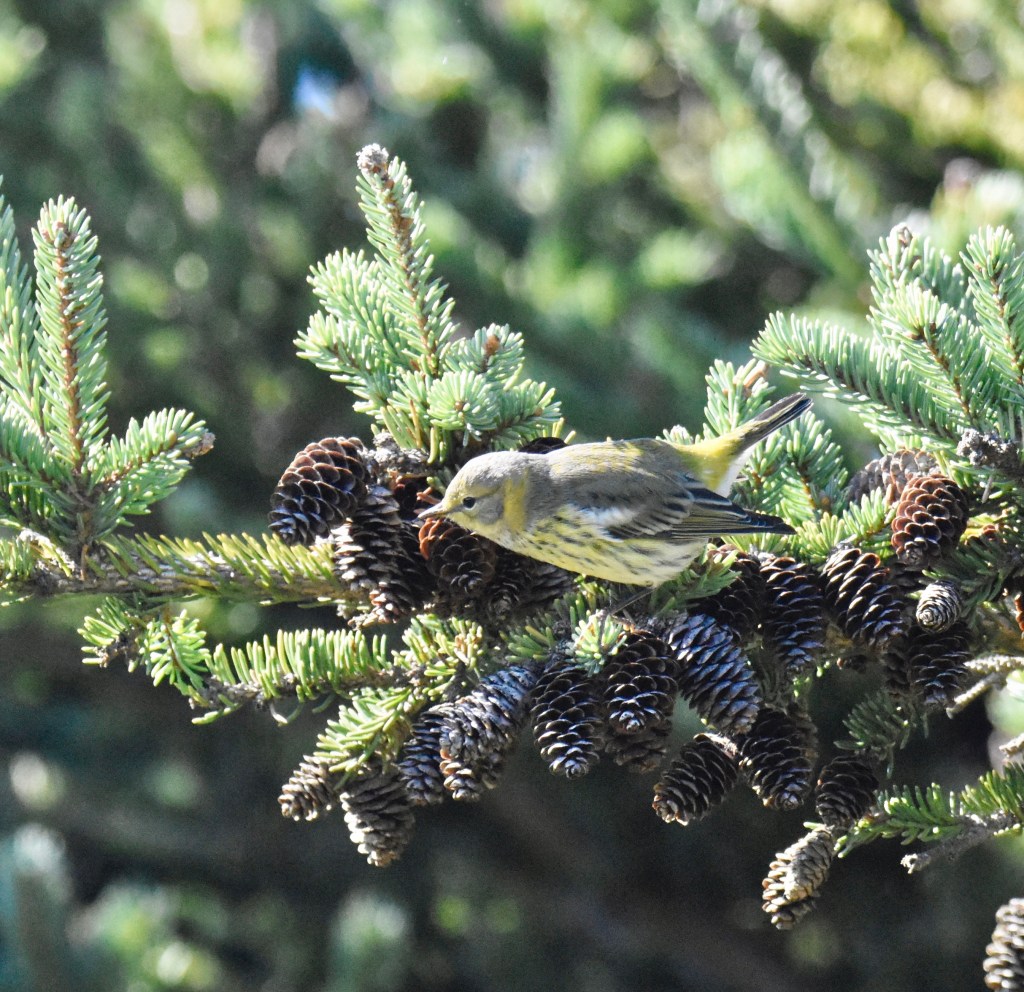
Female Cape May Warbler (above)
This bird below was actually the first warbler I ever saw on Monhegan – in September. A confusing, but special fall warbler: a Bay-breasted Warbler.
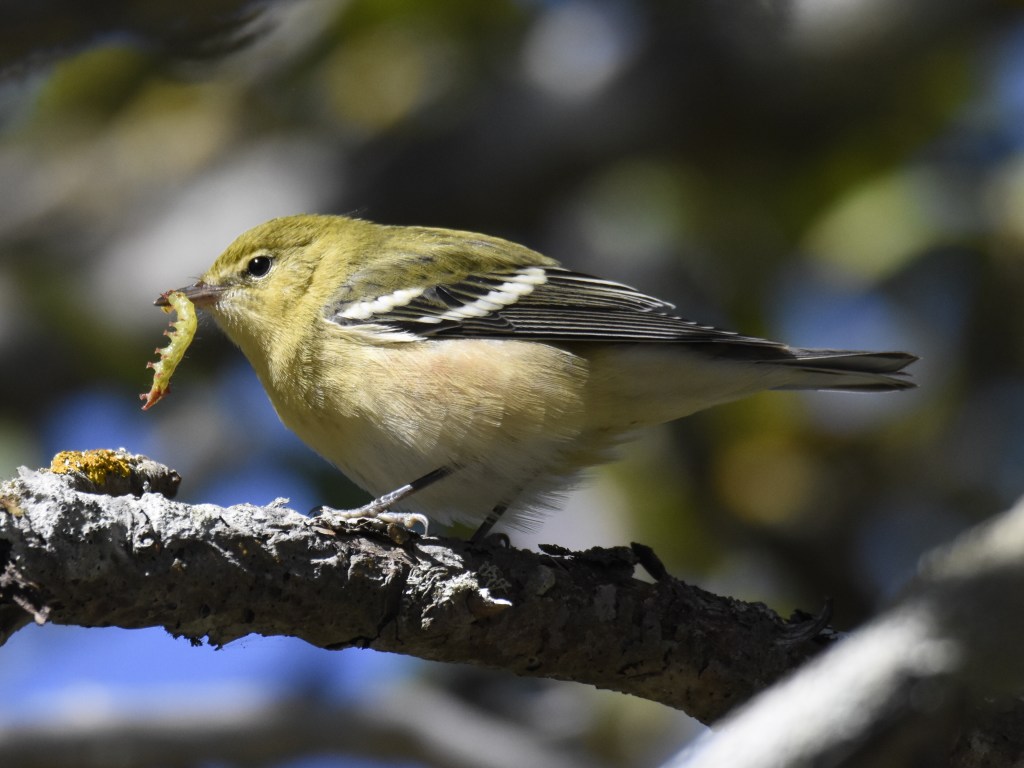
Bay-breasted Warbler
There are many more warblers in North America than are shown here. In fact, warblers live all over the world on every continent EXCEPT Antartica.
The Oven Bird is the last warbler that I will show you here. I have seen this species in New England several times, but ironically I was only able to photograph it in Cuba. The bird below was seen while birding on the estate of Ernest Hemingway, between his old home and the pool. Could Ernest have been visiting us in the form of an Oven Bird?
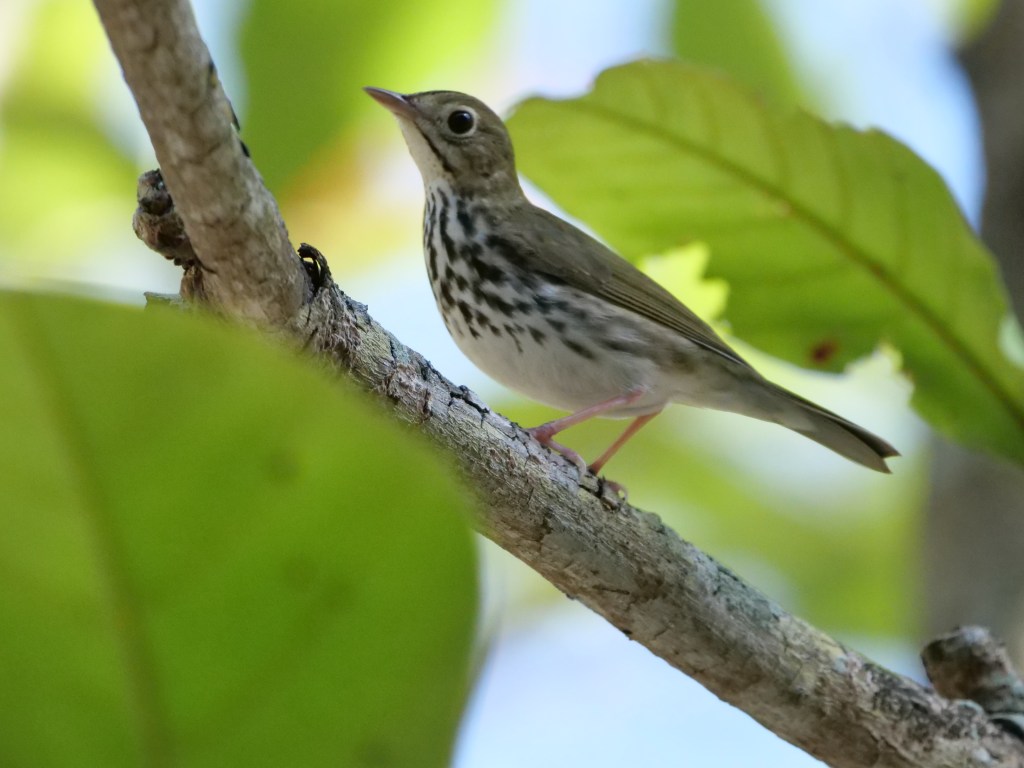
The Oven Bird
Thank you for reading my blog! Stay tuned next month for … Polar Bears!
Please sign up to receive my posts in your e-mail inbox by looking for the Follow Button on my home page.


I love your photos Diana. You are so wonderfully talented. Take care!
LikeLiked by 1 person
Thanks so much Liz. Hope you are well!
LikeLike
You sure know your warblers – quite makes one wobble at the knees.
This was a lesson. There are so many kinds – all so tiny and tough.
When I look in a bird book I think “no one actually sees all these”! You do.!!
Thanks for the lesson. !!
Peter Bryant
LikeLike
Thanks for your comment, Peter! I will respond to your other comment privately. 🙂
LikeLike