
A one-eyed road runner greets us as soon as we land in Tucson. The latino taxi driver at the airport has named her “Lolita” and, as he notices our binoculars, sends her our way. We all joke about this smart, semi-domestic and visually-challenged bird that is making the best of its situation.
My posts on Arizona are dedicated to the Apache and Navajo people who call this land home. My soul sister, Chris, is part-Apache and her mom used to live on the reservation, which lies just east of Phoenix.
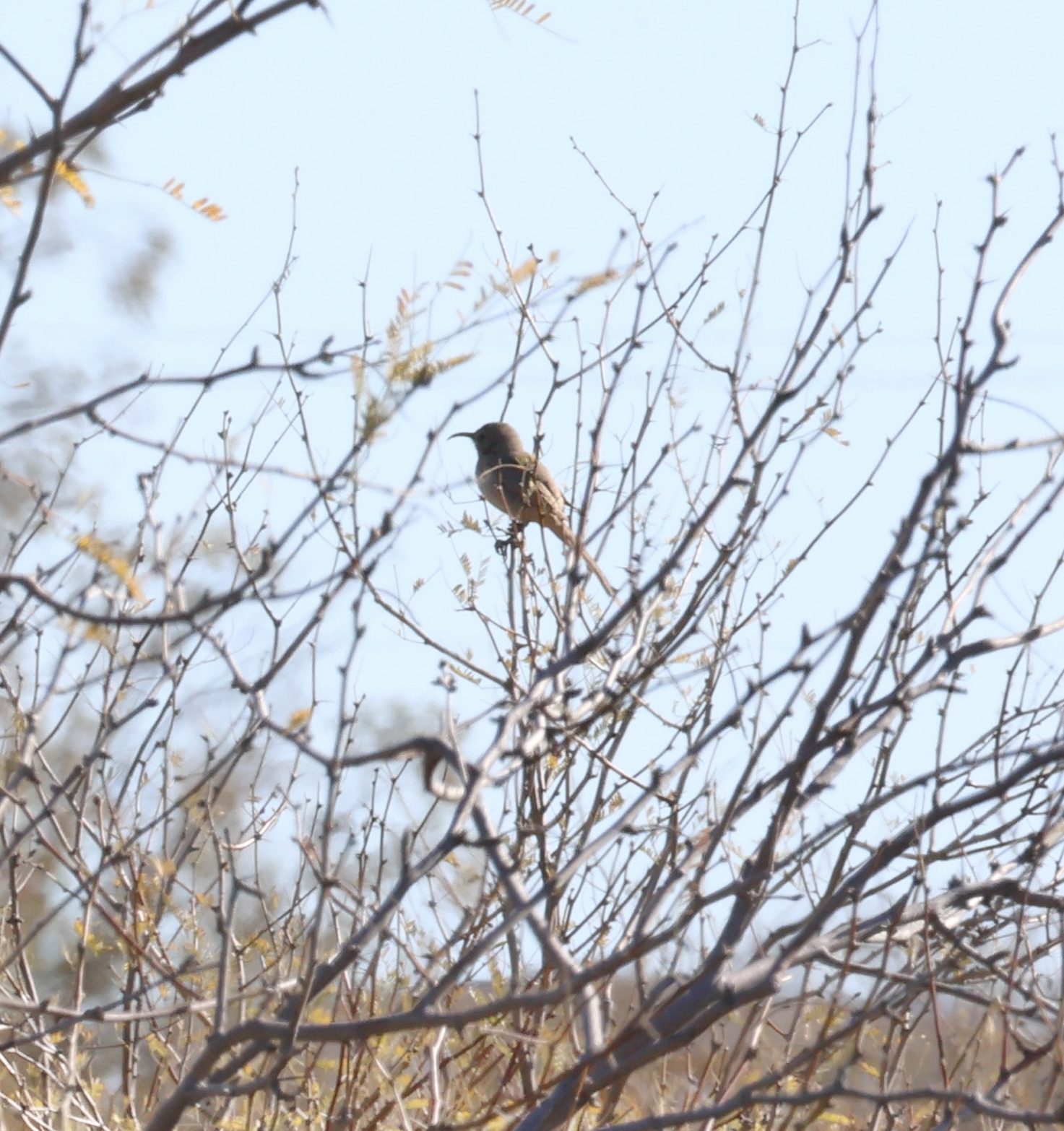
This particular day begins with “the Thrasher Site” in Buckeye, Arizona, where our Audubon group is searching for the elusive Le Conte’s Thrasher, as well as other life birds. The habitat where we are hiking is low desert and lacks many trees. These thrashers prefer shrubby habitat rather than open areas. Lauren is the first to find the Le Conte’s. This is not a great photo, but here it is anyway:
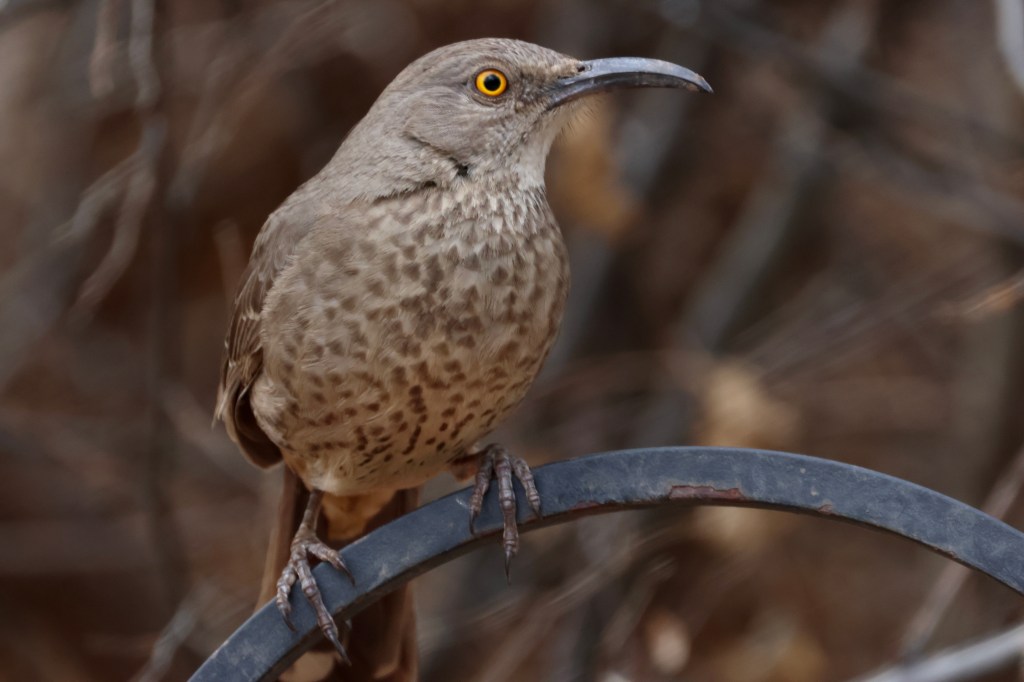
We see many Curve-billed Thrashers on our journey, heavily spotted with small triangles on their breasts.
We also spot a Bendire’s Thrasher in Buckeye. (below):
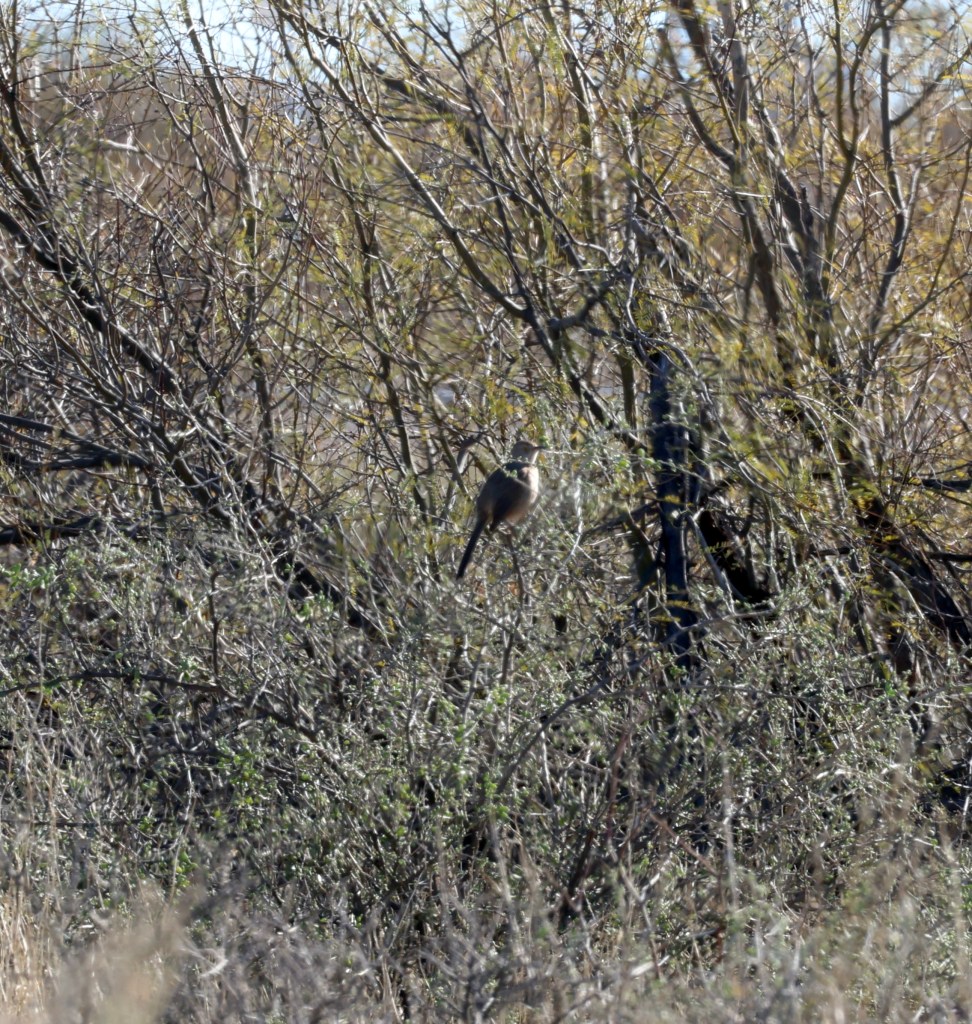
A Black-tailed Gnatcatcher decides to grace us with its presence in a Velvety Ash, which hardly looks velvety, below:

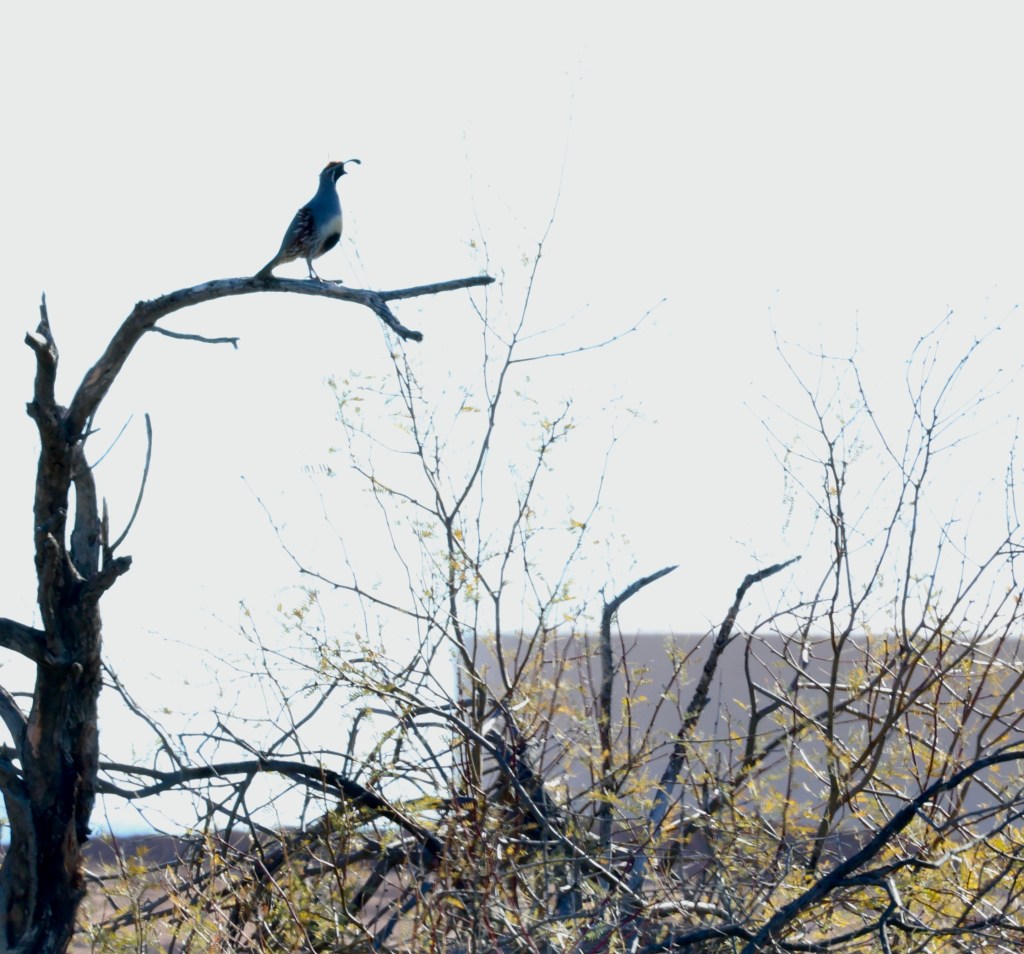
A male Gambel’s Quail displays his colorful plumage on top of a branch. He shows himself off to the females around him, with his black crest and rounded belly. “Look at me!”, he says:
A closer look at Gambel’s Quail:

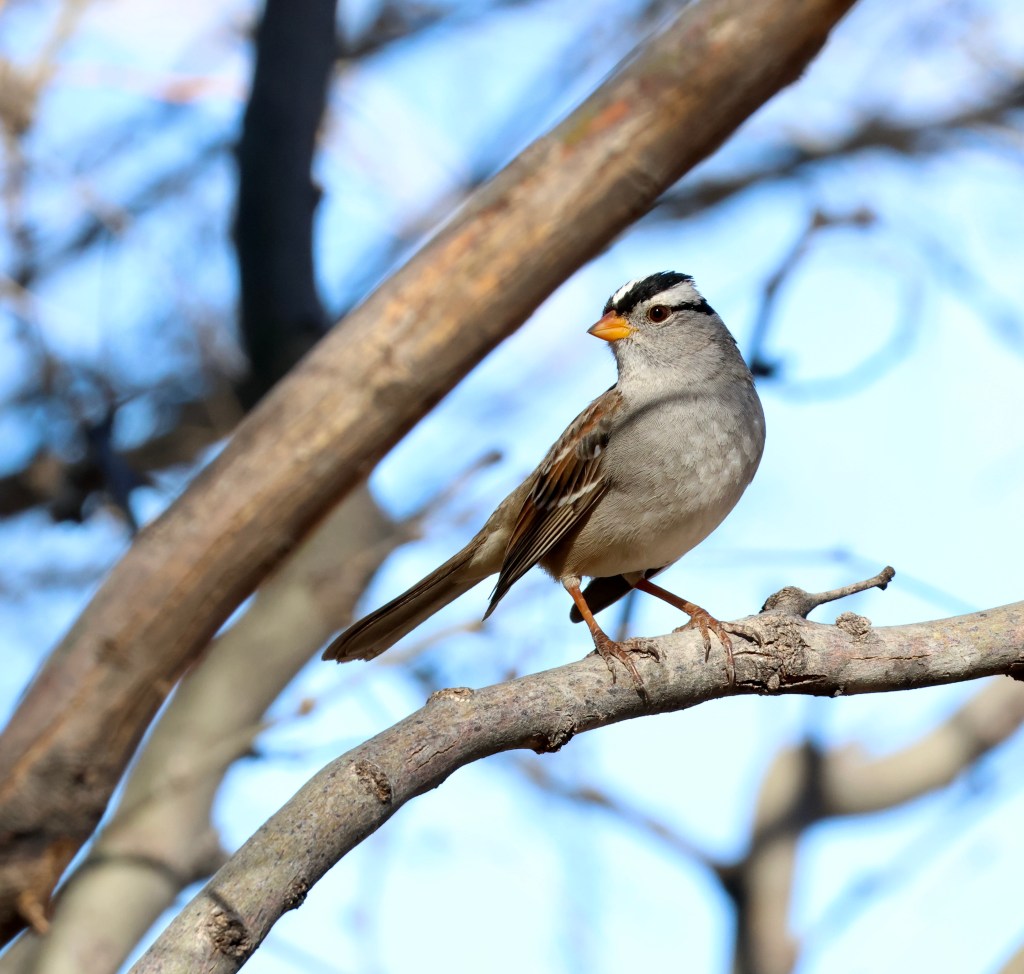
We see many White-crowned Sparrows in Arizona, unlike the Northeast where they are mostly passing through during migration.
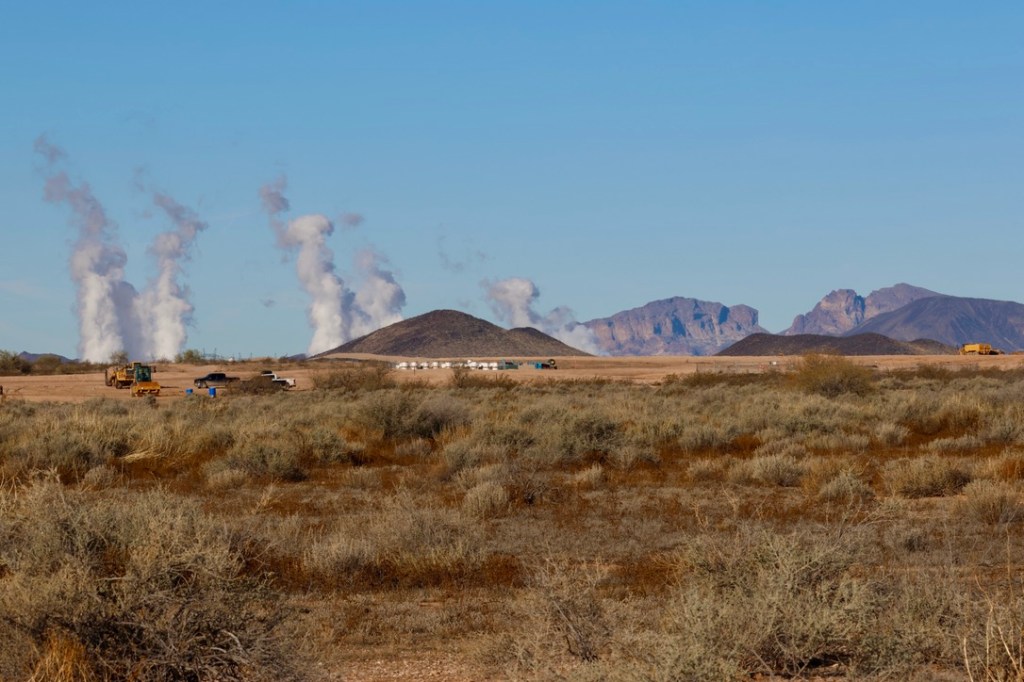
A lot of land is currently being cleared to make room for solar farms. This means there will be more loss of wildlife habitat. It is a tough environmental dilemma, because we also need to wean ourselves off of fossil fuels, which are warming the planet.
Encanto Park
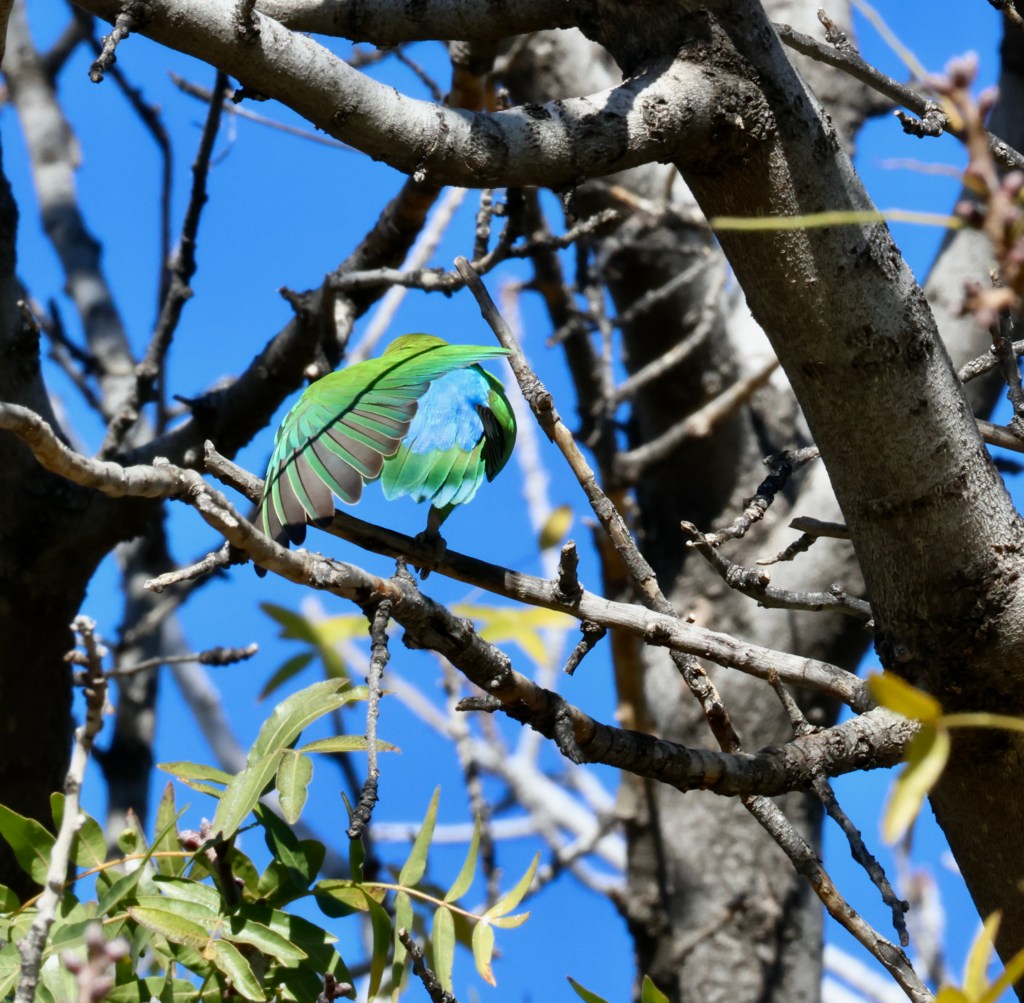
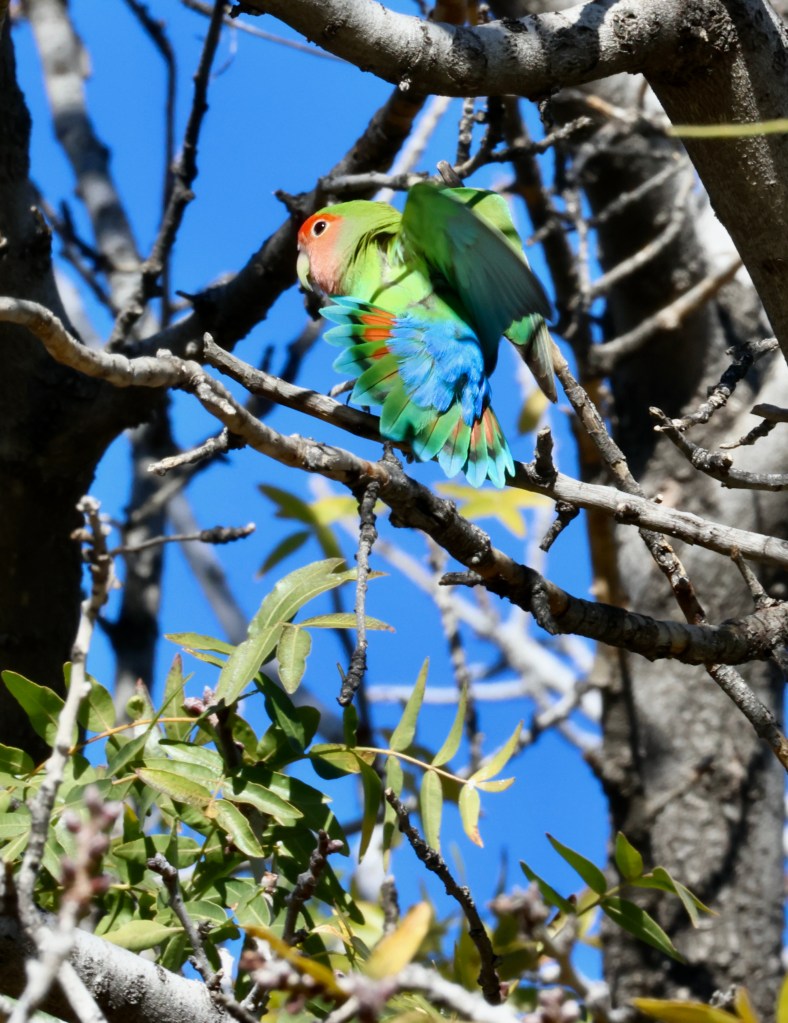
Next, we travel to a public park in downtown Phoenix. Encanto Park is attractively landscaped and full of ponds with many ducks. We are looking for the Rosy-faced Lovebird, however, which is known to perch in the non-native, imported palm trees planted here. Scott finds several love birds for us sitting up high in the palm fronds. These are formerly caged birds that have escaped and are now breeding in Arizona. They are originally from Africa.

This parrot begins to stretch and show its true colors.
At the park, we also observe Vermillion Flycatcher

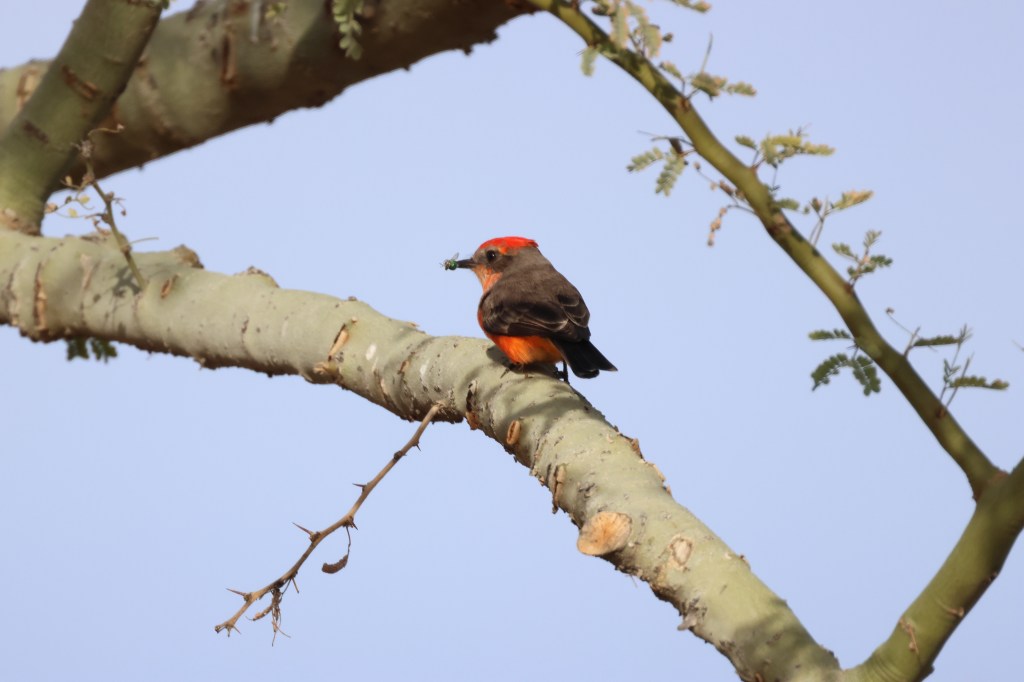
and Anna’s Hummingbird.
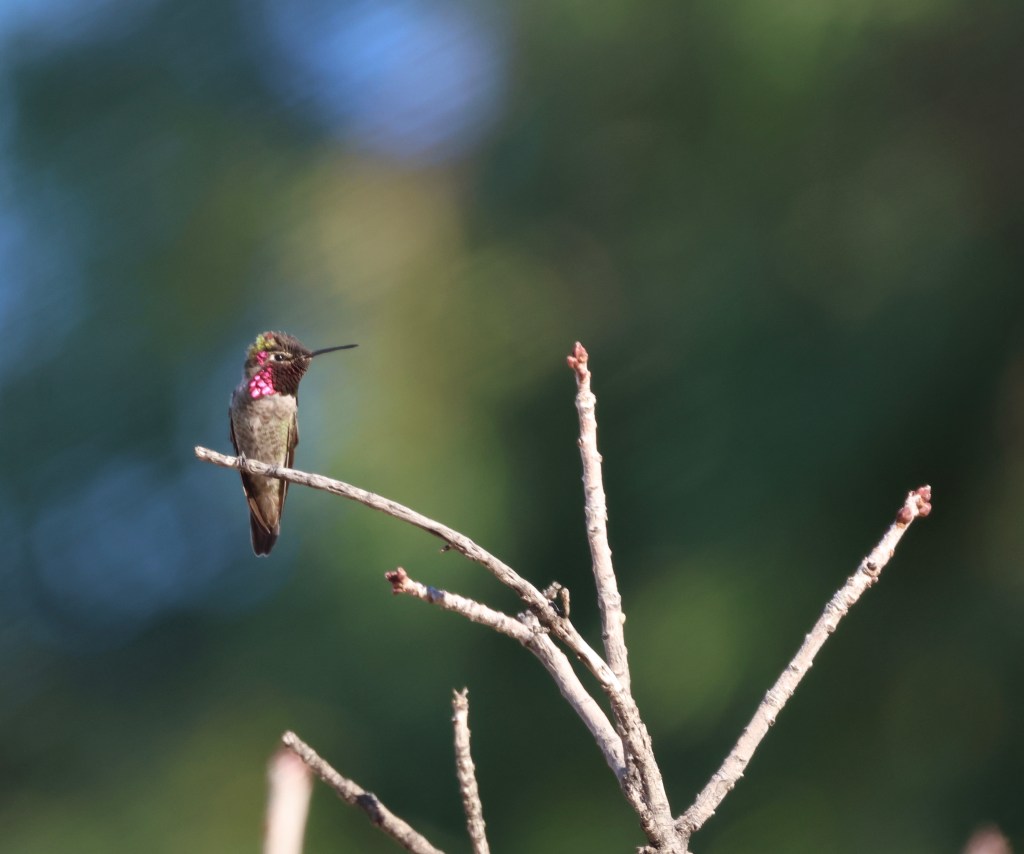
It is in this area that we see the Ferruginous Hawk flying with its light colors and wide wingspan high in the air above us.
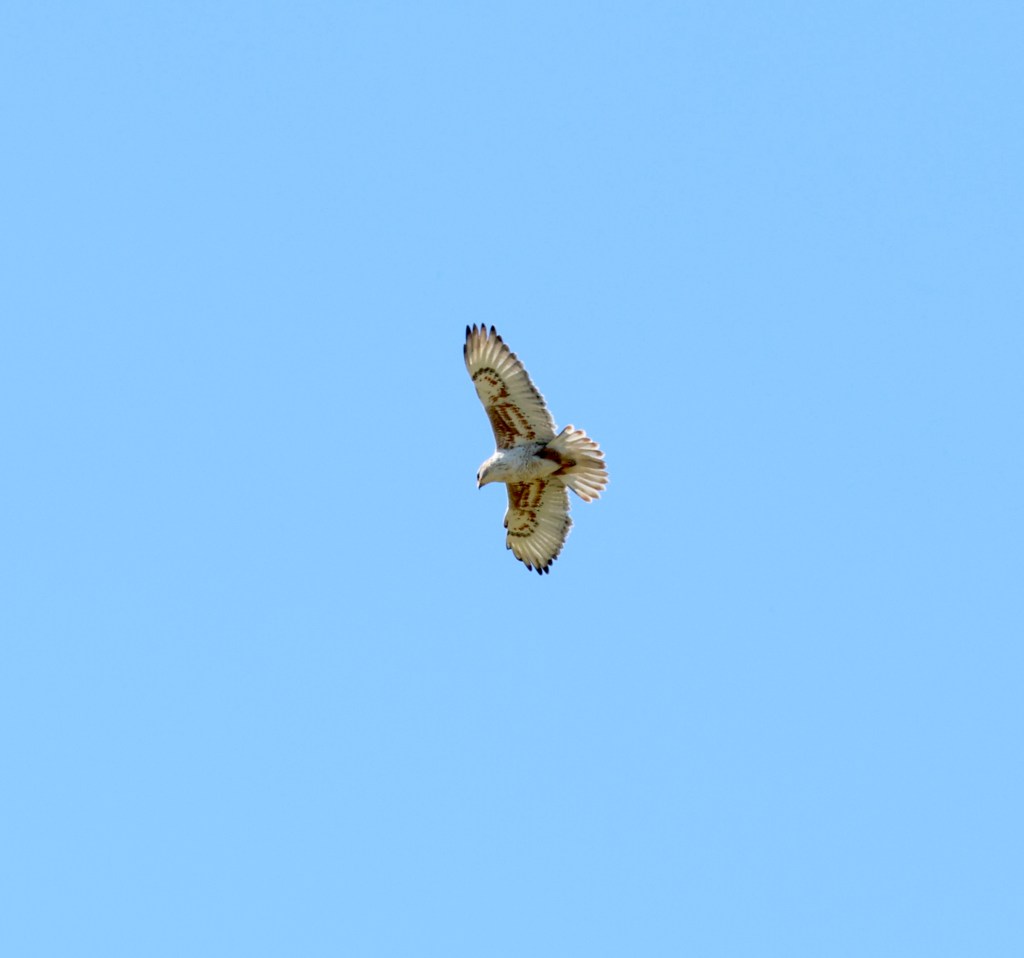
Santa Cruz Flats
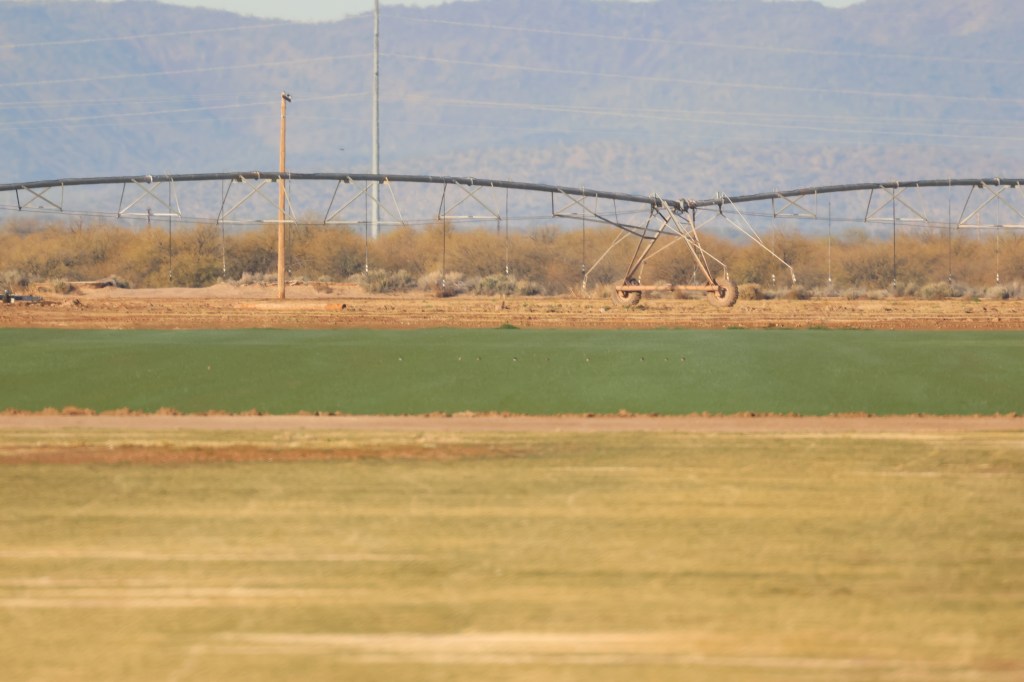
On Sunday, we head out to Santa Cruz Flats, which are basically commercial Sod Farms between Phoenix and Tucson. I never really thought about where Sod comes from before, or where it is grown in the United States, but it is being fertilized and irrigated here on one of the farms. The teeny, tiny dots you see are Mountain Plover, who prefer the green areas:
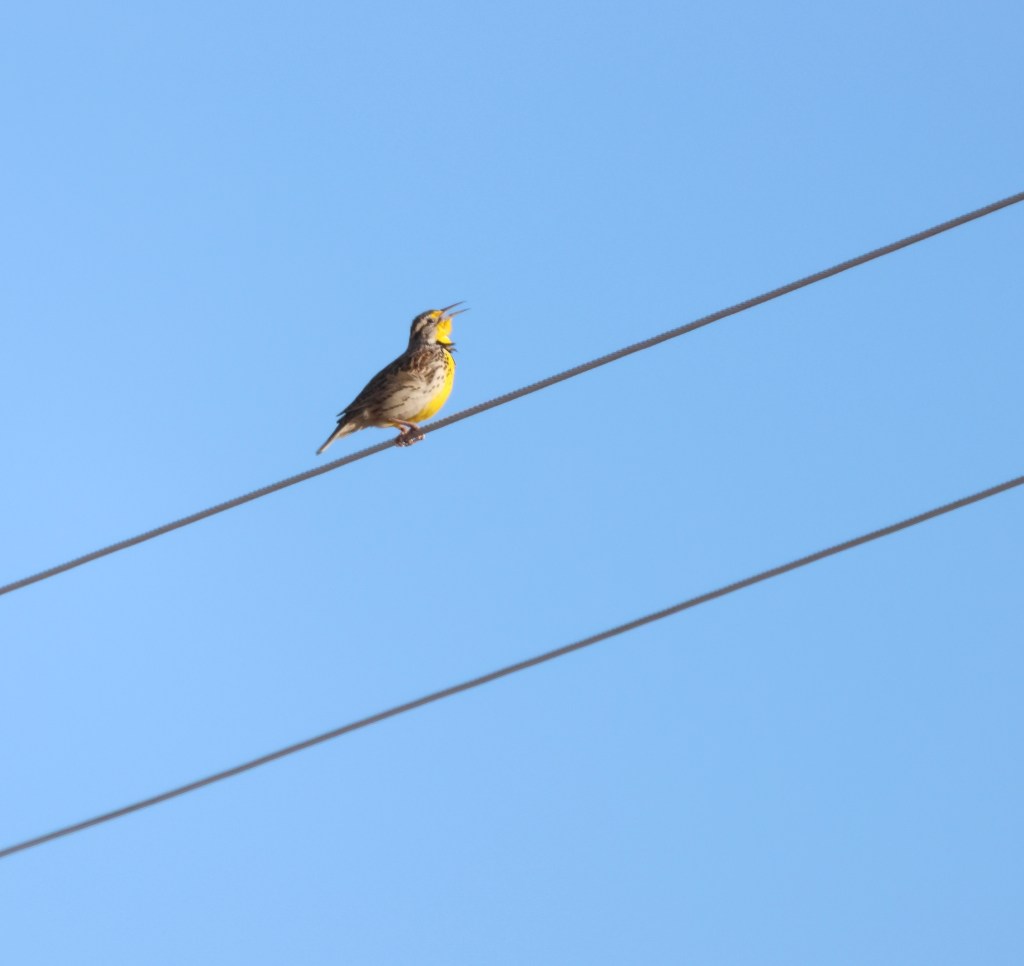
We call in a Western Meadowlark who lands on a wire and begins to sing.
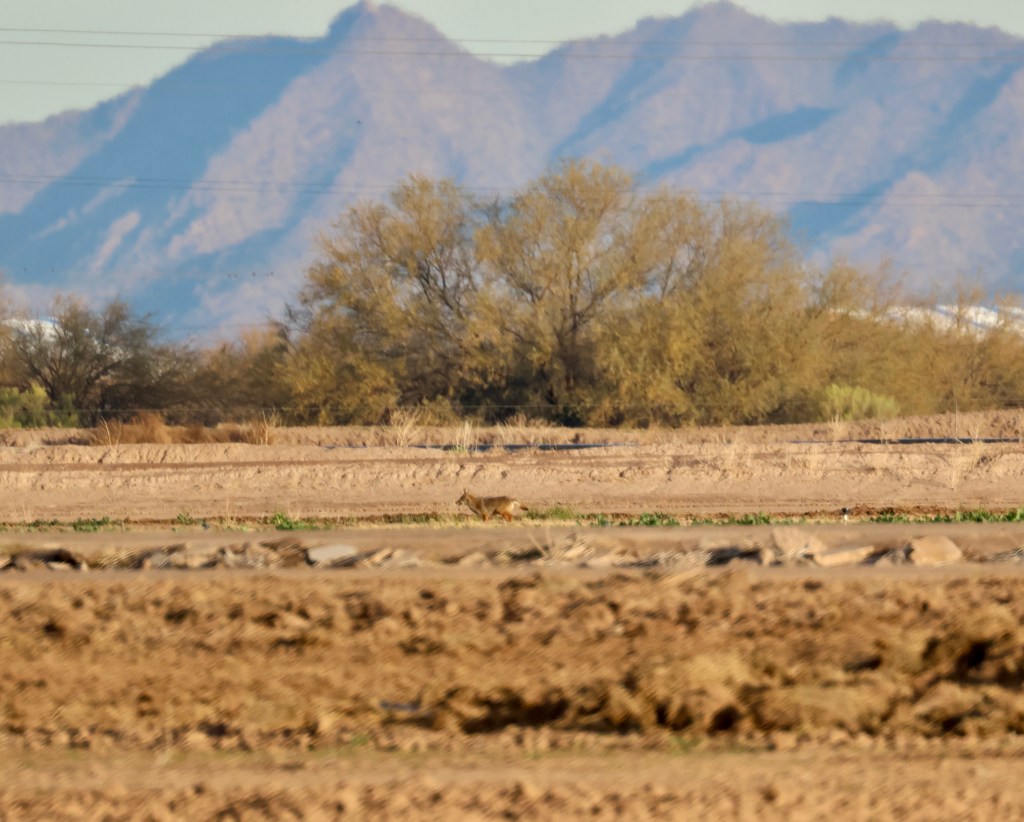
and I spot this Desert Coyote running in the distance near the mountains.
A Desert Cottontail plays with its friends nearby. As our van pulls away, a large Jackrabbit leaps up and darts away, through the desert landscape, and many of us see it clearly with glass. I wish I had been able to photograph the jack rabbit. It was much larger than this Cottontail.

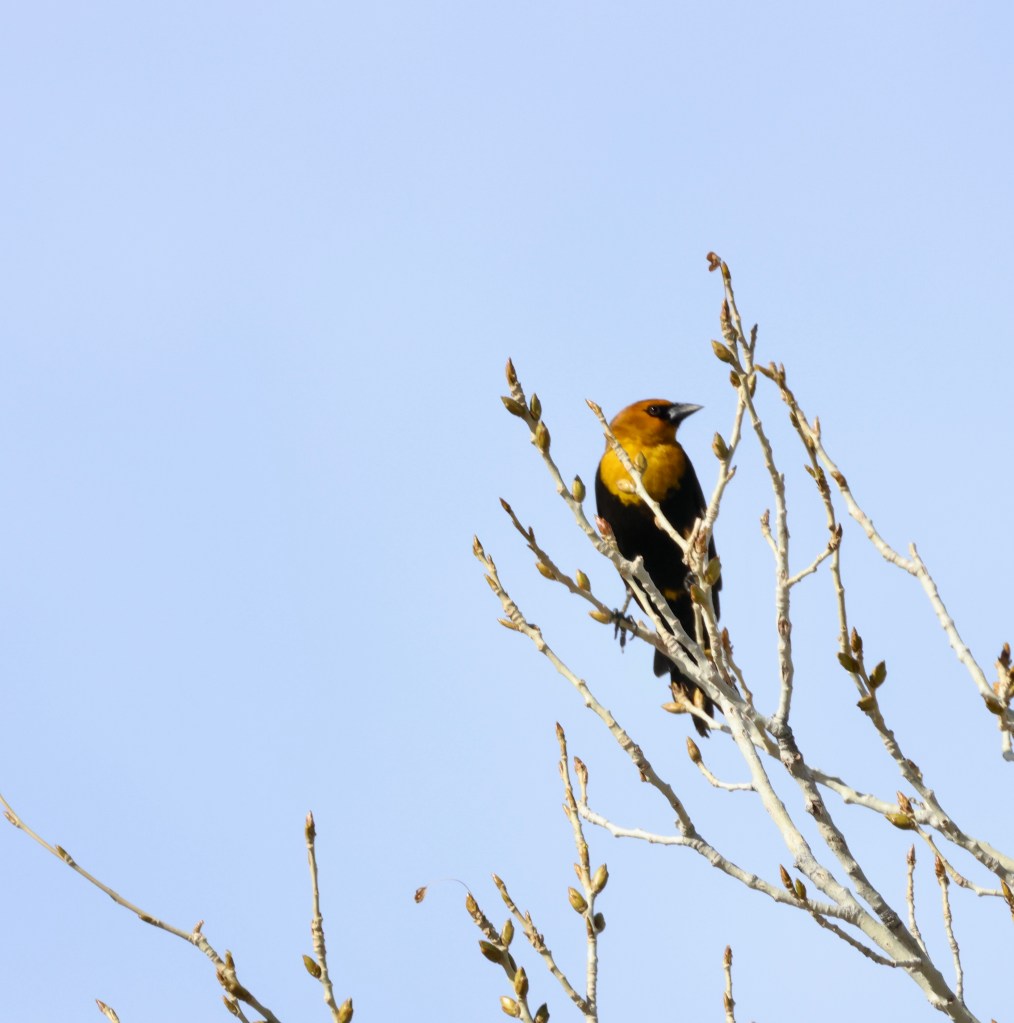
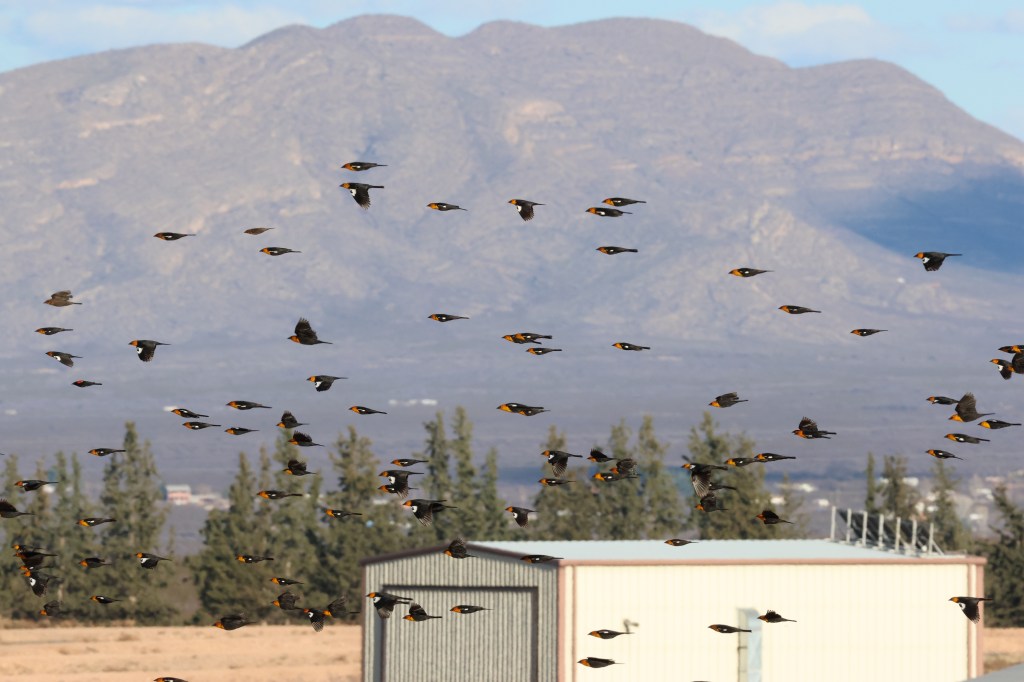
We hop back into the van and head to a stinky feed lot, where the cows look miserable as they wallow in their own excrement. A pungent odor hangs in the air. (One of the reasons I buy organic.) It is all worth it when Justine spots hundreds of Yellow-headed Blackbirds finding respite from the sun under a metal roof:
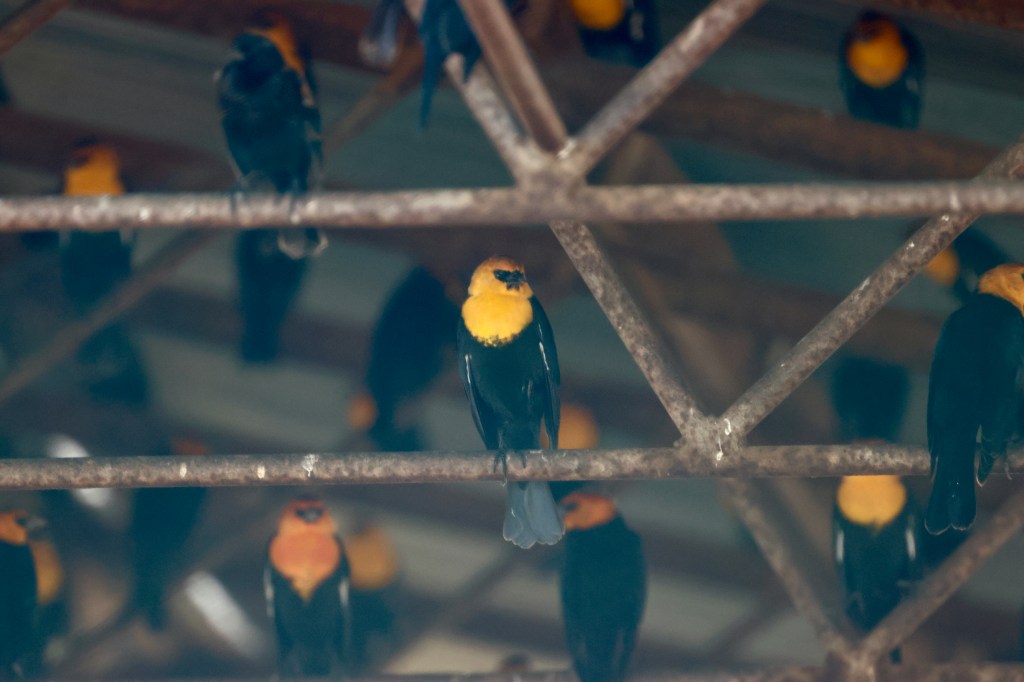
We estimate that 300 Yellow-headed Blackbirds are roosting in the feed lot, taking advantage of the shade and God knows what else:
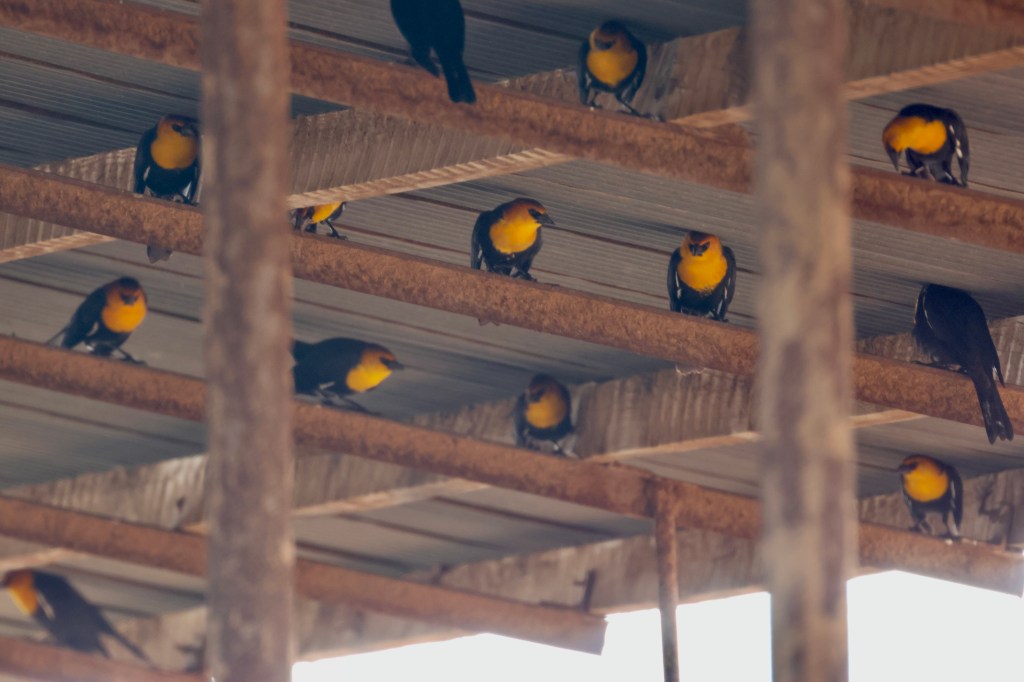
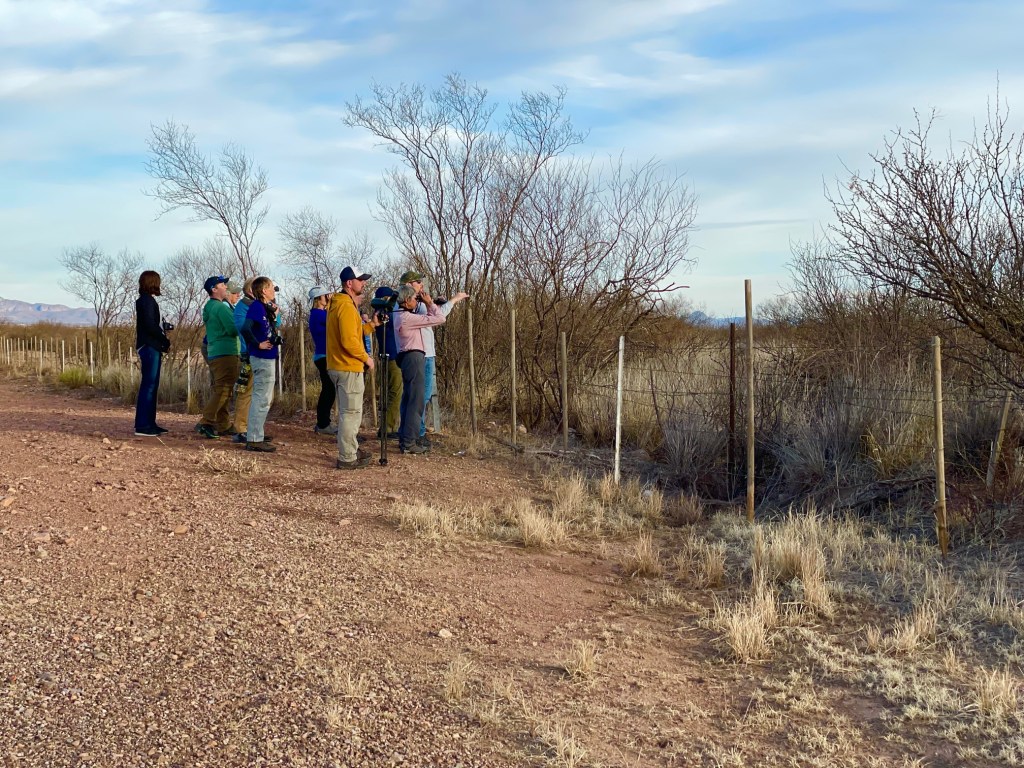
This group knows how to find birds!
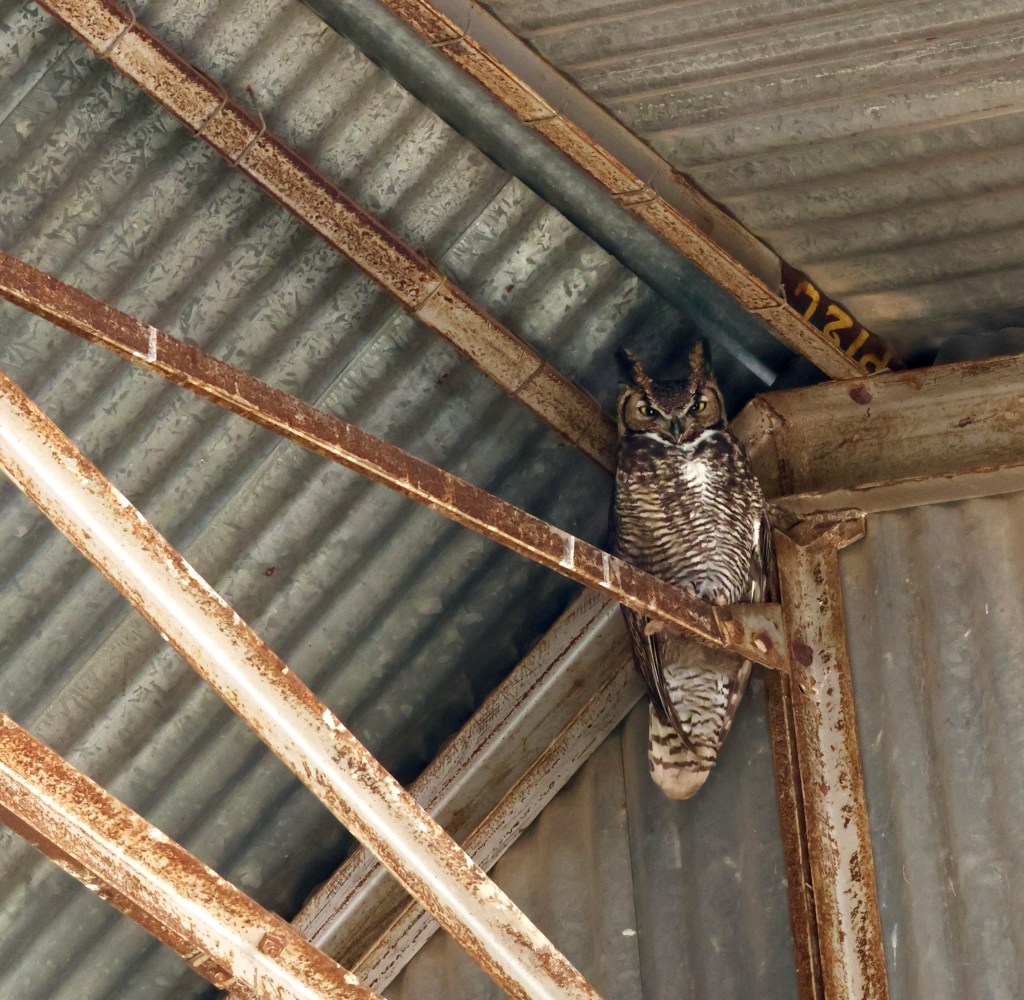
Scott brings us to a secret spot and shows us a Great Horned Owl he found the day before. A beautiful bird, hidden in plain sight:
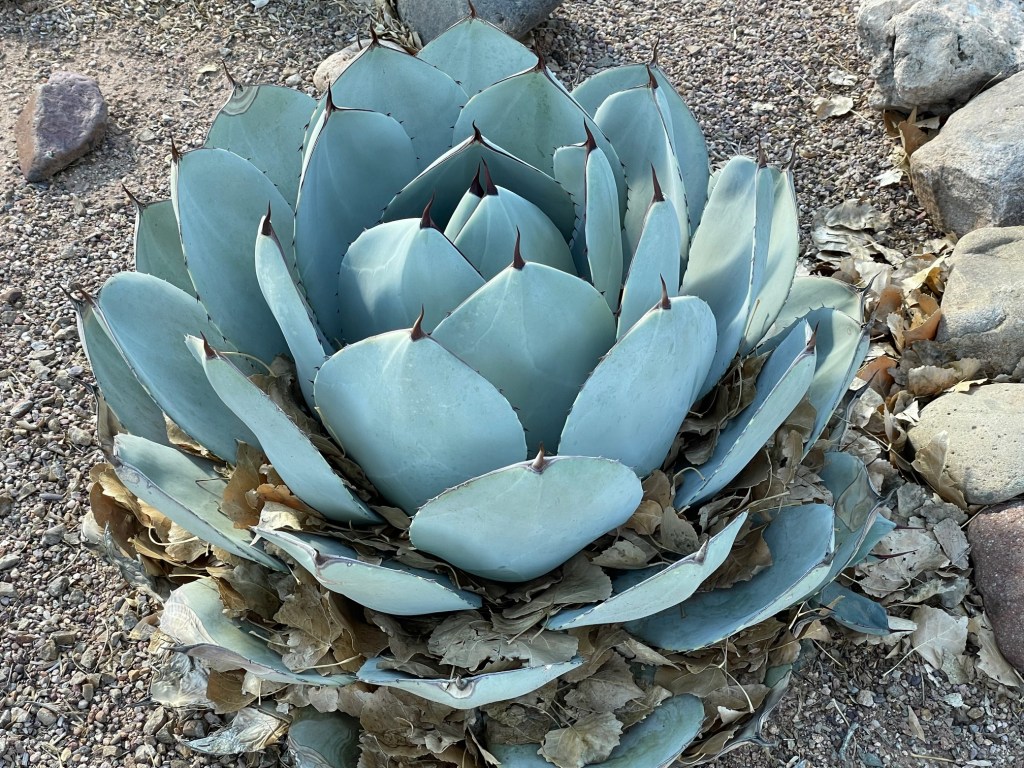
Several cactus species thrive in the arid Arizona desert, such as Saguaro and this Agave plant, below:
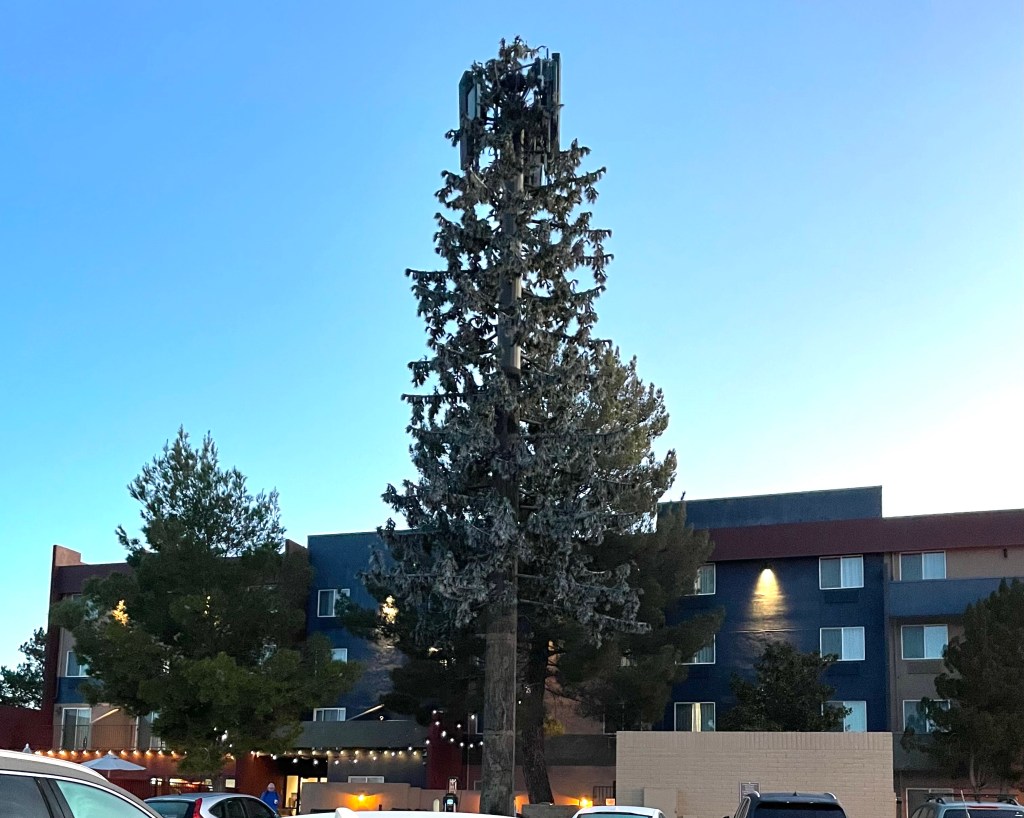
At our hotel in Sierra Vista, Lauren happens to notice this interesting tree species called Pinus 5Gus:
Gilbert Water Ranch
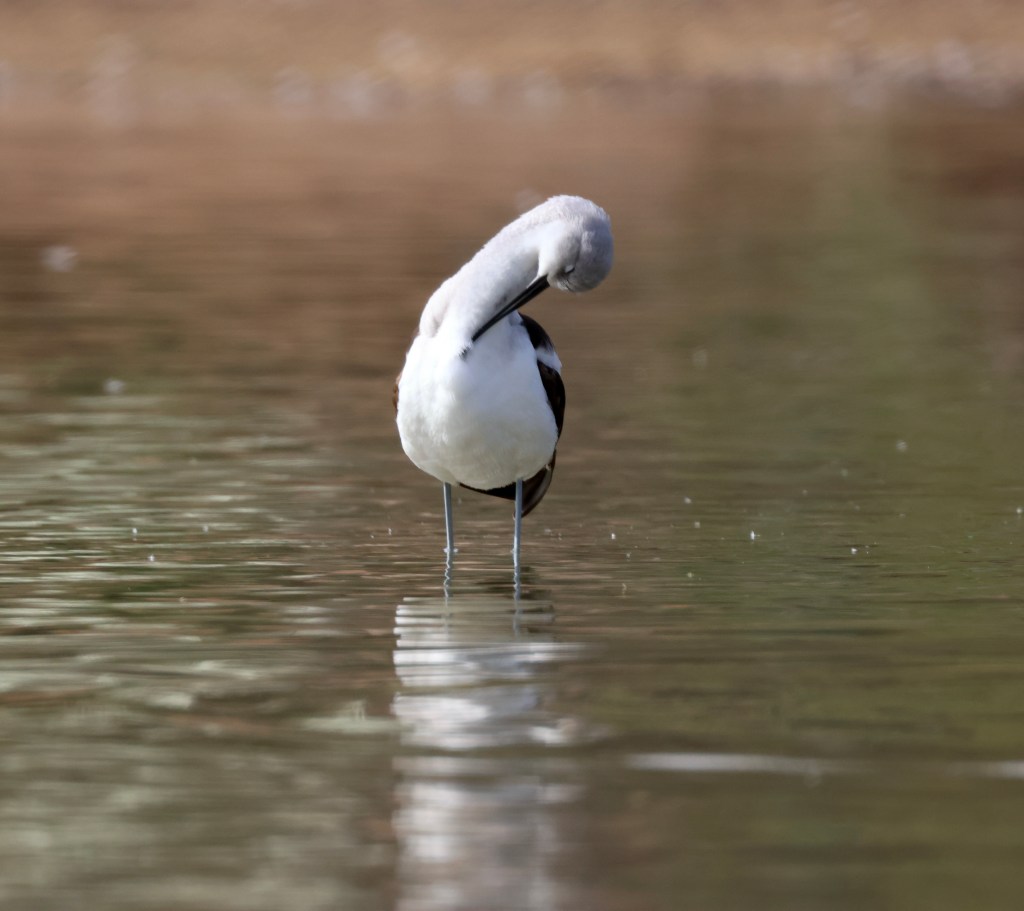
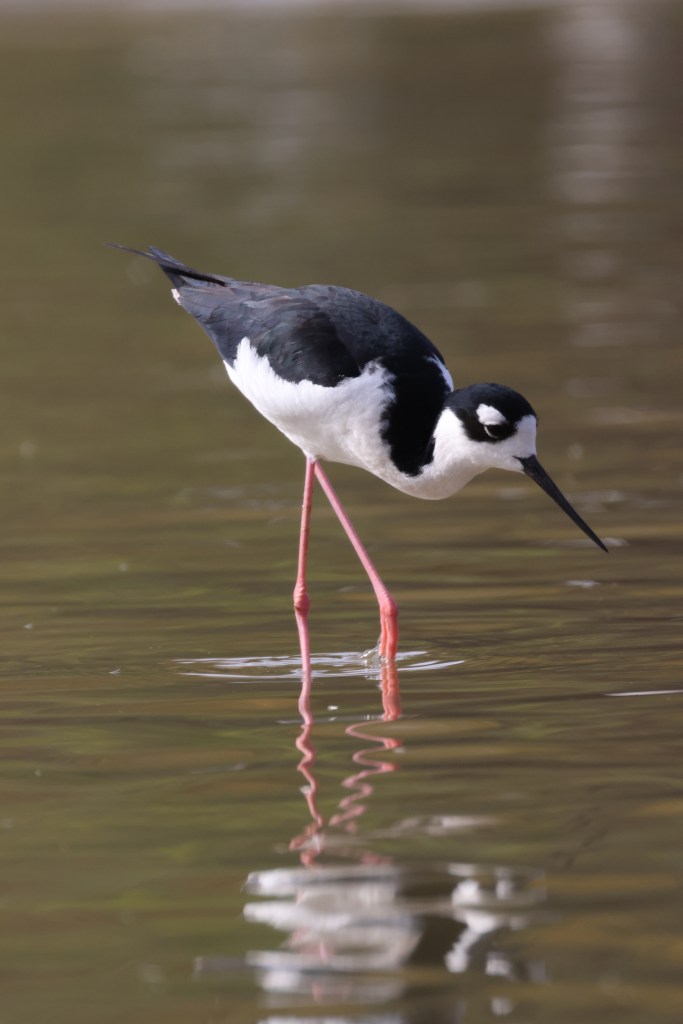
Next, we visit a riparian wetland preserve called Gilbert Water Ranch. I am in heaven here, as we sit and watch beautiful water birds of all kinds. Long-billed Dowitcher, Avocet, Stilt, and other beauties – they are here!
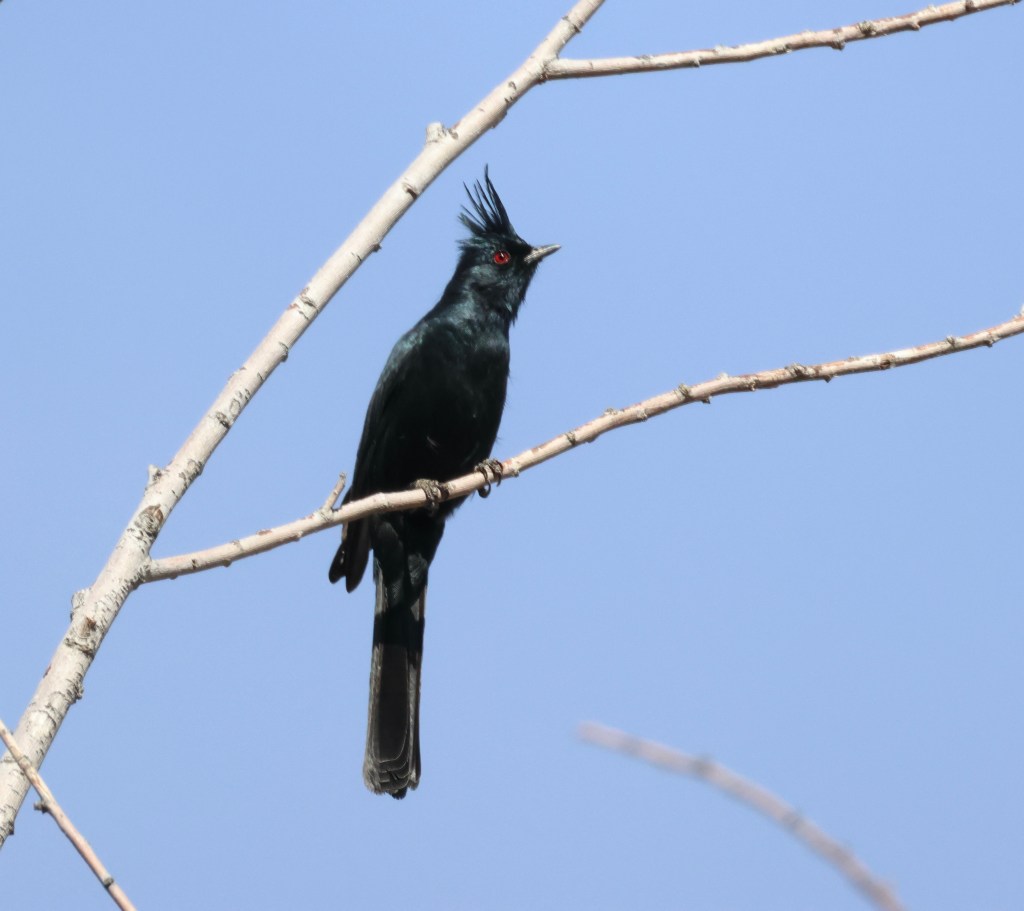
This bird, Phainopepla, is new to me. It has been described as a black cardinal with a red eye.
Wilcox and Whitewater Draw
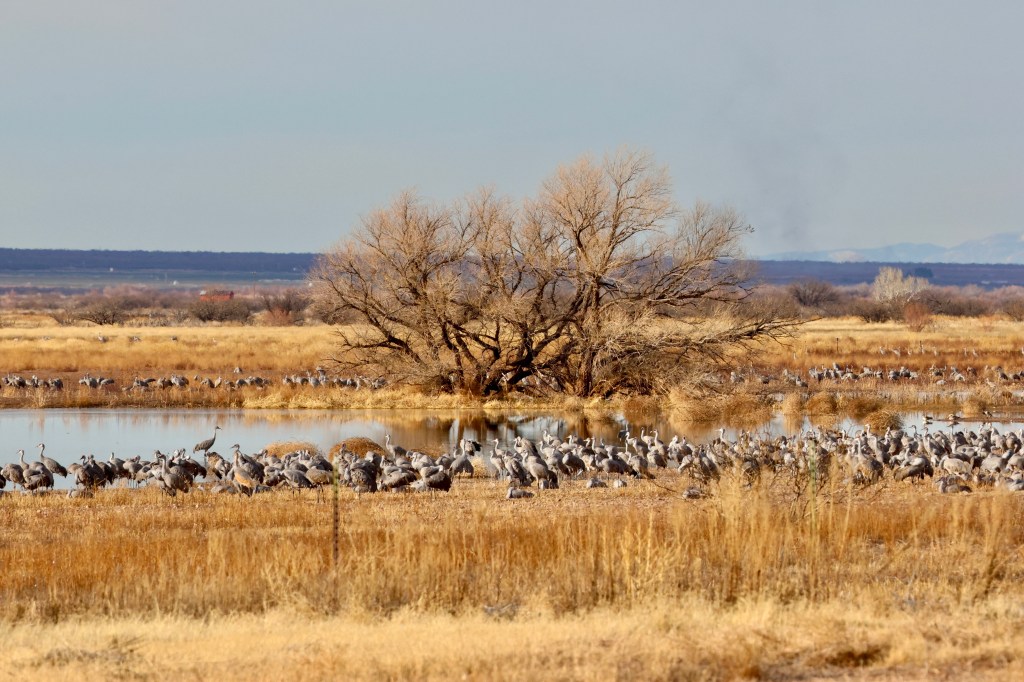
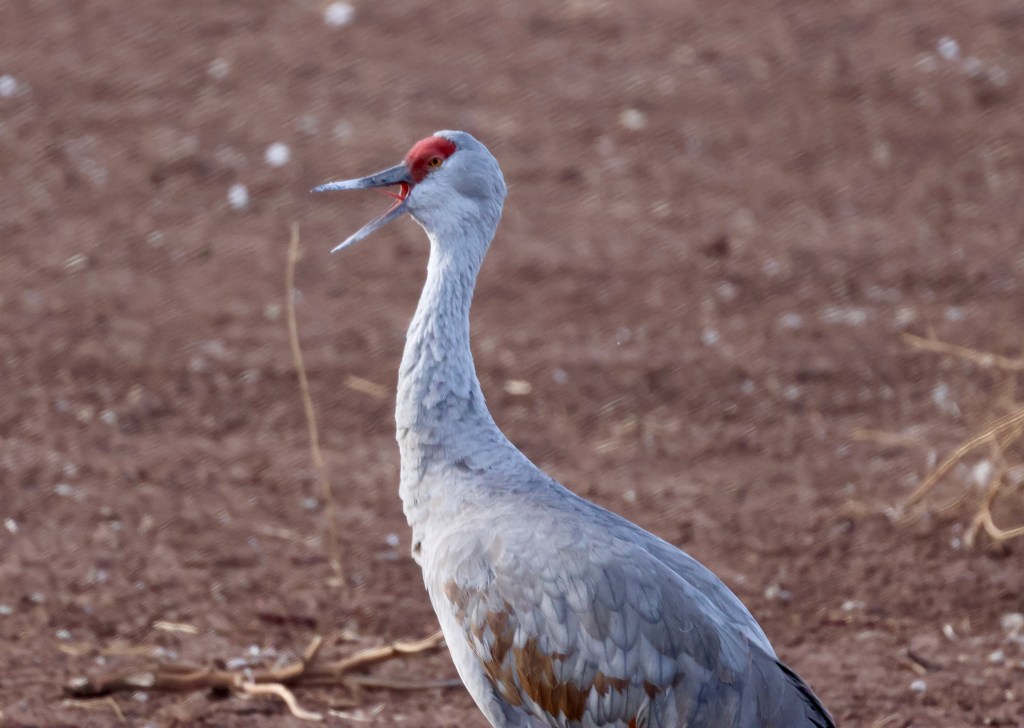
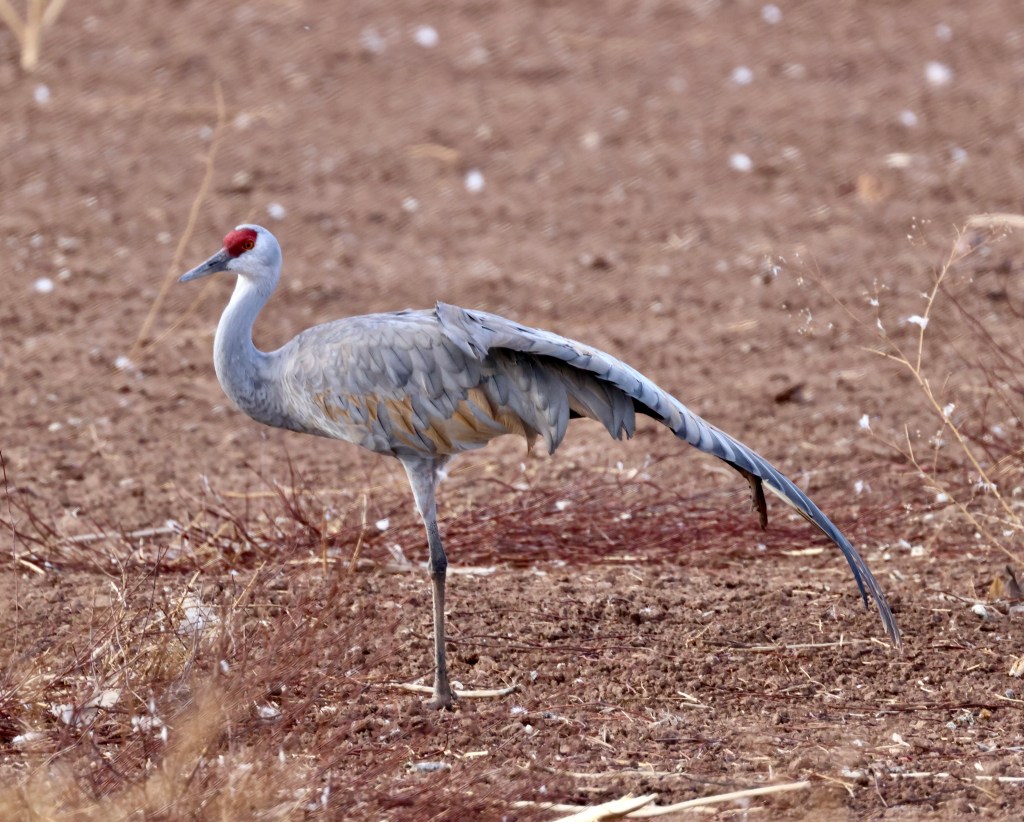
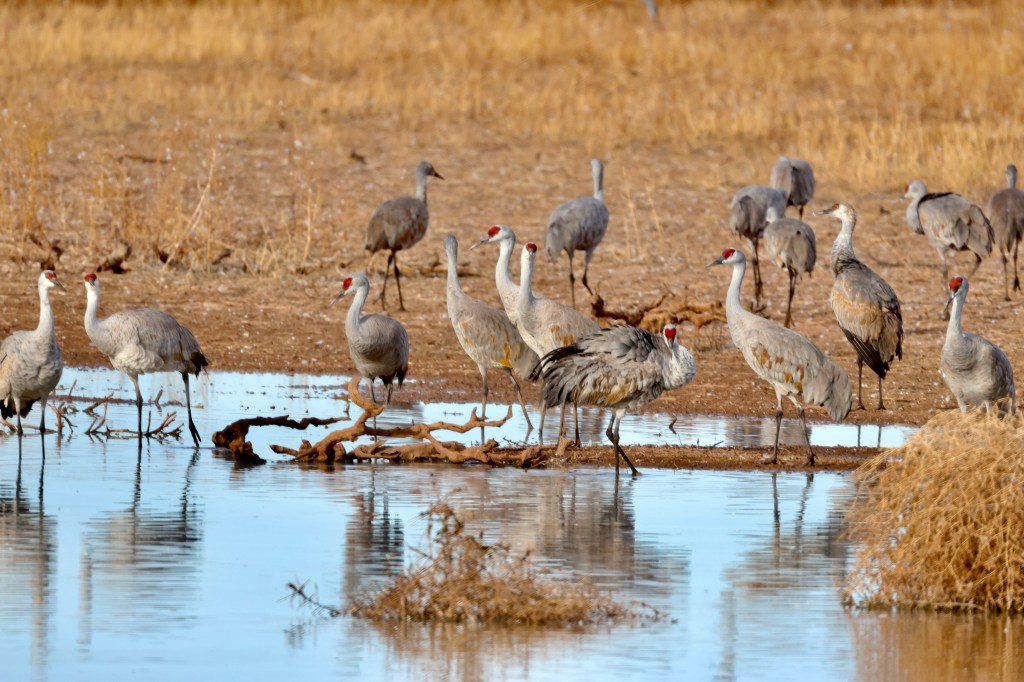
On Monday, we move south to the Whitewater Draw Wildlife Area, where thousands of Sandhill Cranes congregate. Our eyes glaze over at the sight of 7,500 cranes grooming themselves in the wetlands below:
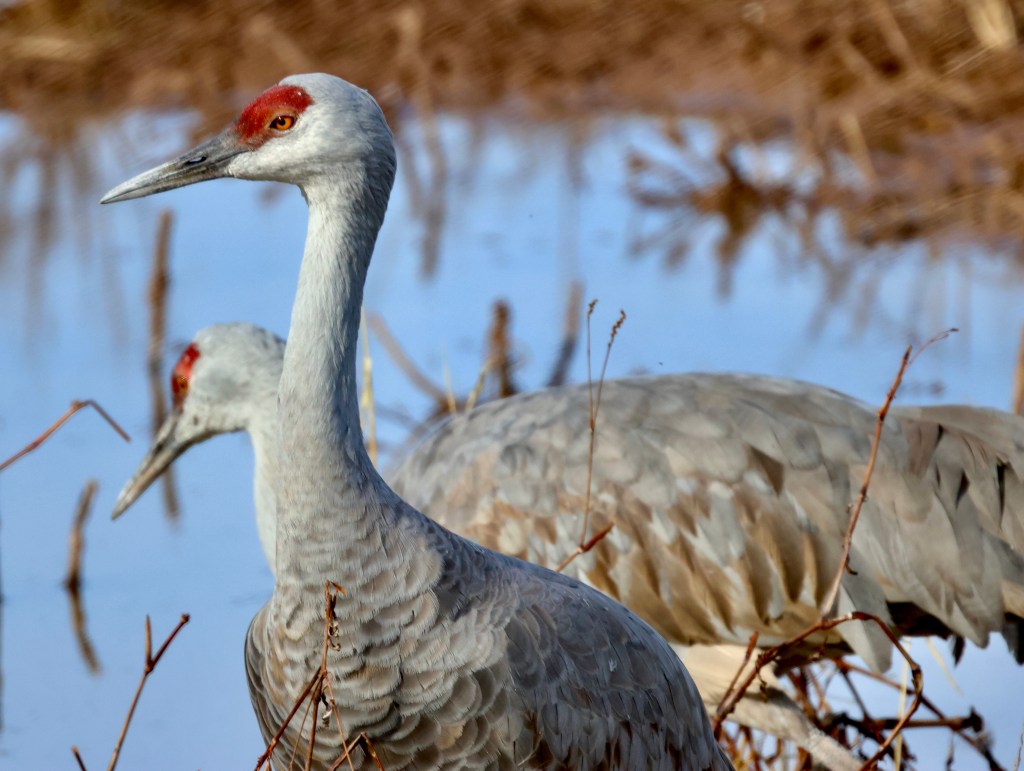
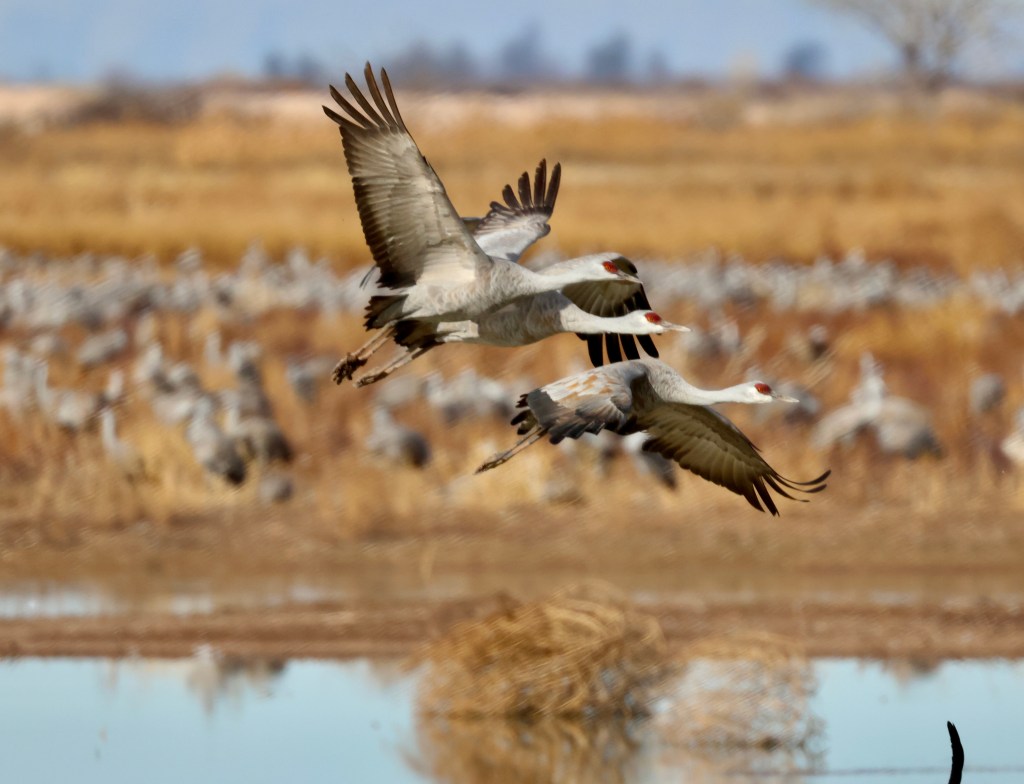
My friend Becky is soothed by the sound of the Sandhill Cranes.

Above photo by Justine Hanson.
Thank you so much for reading my blog. Stay tuned for Arizona: Part Two next week. Please scroll down and look for ‘Follow’ to receive my posts in your e-mail inbox. If you receive this via e-mail and would like to leave a comment, go to “View this in Reader” at the top of the e-mail.
 birds fly free
ABSOLUTELY beautiful photographs!! What a great trip you had.
LikeLiked by 1 person
Thank you for reading my blog Grace! Hope you are well!
LikeLike
Diana, thanks for capturing our memories together in photos and captions. Better than a scrapbook.
LikeLiked by 1 person
My pleasure, Becky…. so glad you like it!
LikeLike
Diana, nice write-up and some good birds. For me, it brought back some good memories as I have spent time in that area. The thrasher spot is great, I’ve been there 2-3x, had to go down the road a bit to get the Crissal’s Thrasher. Have had the Rosy-faced Lovebird at Encanto Park and I bet the GHOW you had was in the same barn we had it in Whitewater Draw area! Such good memories. Thoroughly enjoyed your “story” as much as the photos. Think I will be headed to the Rio Grand Valley in early March for Mottled Owl and Bare-throated Tiger-Heron (have had both in Panama). Keep up the good work!
LikeLiked by 1 person
Thanks so much, Charlie. So happy that you enjoyed it!
LikeLike