
Botswana, Africa – In 2015, National Geographic filmed scientists and researchers who spent over four months tracking the source of the Okavango Delta, one of the largest wetland areas in the world. It led them up to the Cubango and Cuito rivers and, ultimately, to the highlands of Angola in the north which revealed small tributaries, peat bogs and even old land mines from years of civil war. Below is a United Nations-created map that shows the entire Okavango Delta Basin.
About the Okavango Delta:

This iconic, broom-shaped wetland floods annually by June and then sinks into the Kalahari Desert and disappears. According to unesco.org, it is a land locked delta that does not empty into any ocean or sea but instead ends in the southern Kalahari Basin. This freshwater marsh is home to some of the world’s most endangered species such as cheetah, white and black rhinoceros, African wild dog and lion.
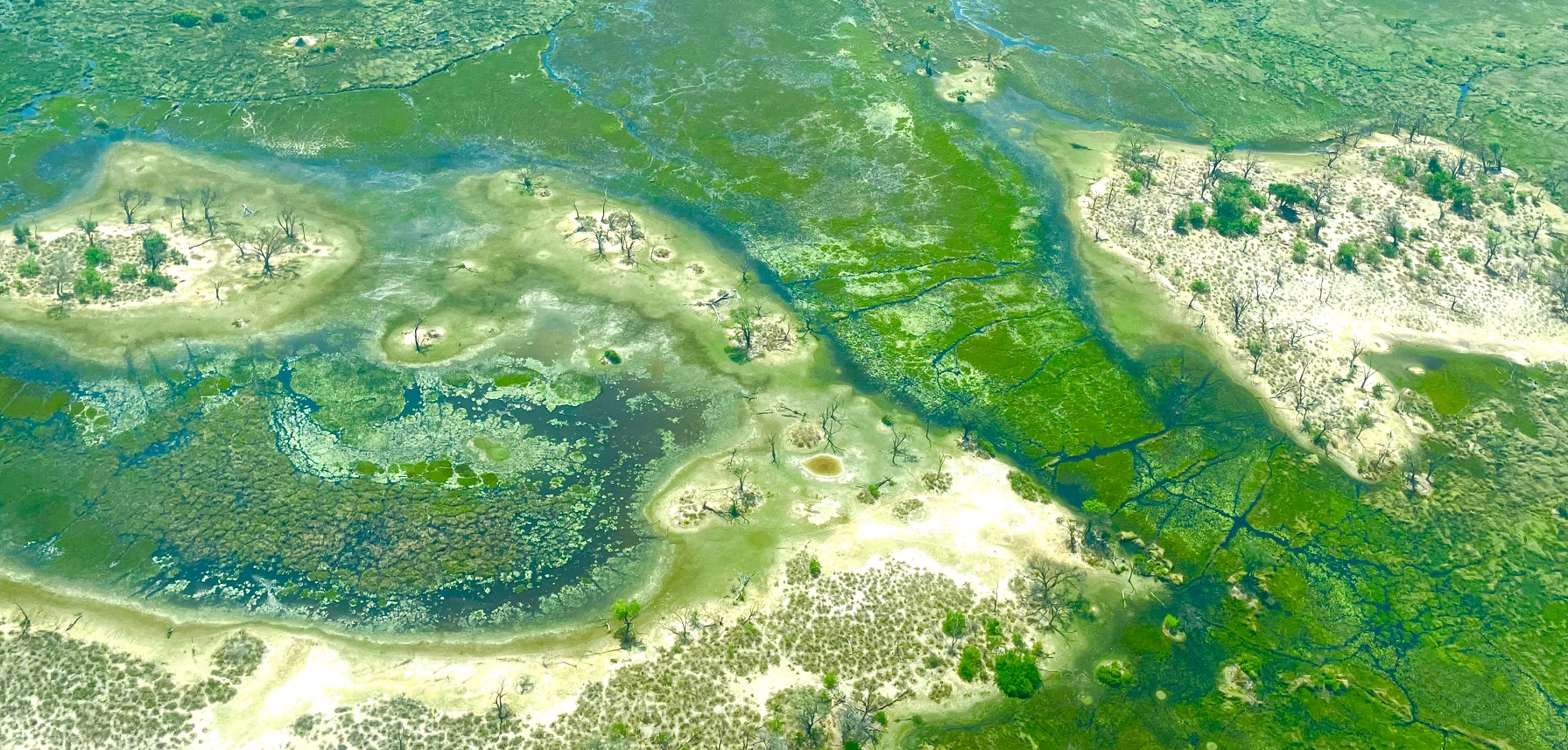
Even at the end of the dry season, it is the greenest spot on our journey. As our group flies into Maun, we witness a beautiful sight from the plane; a vast region of emerald, sapphire and sand that is the Delta. When completely flooded, these wetlands cover 1.2 million hectares or almost 300,000 square miles. (unesco.org)
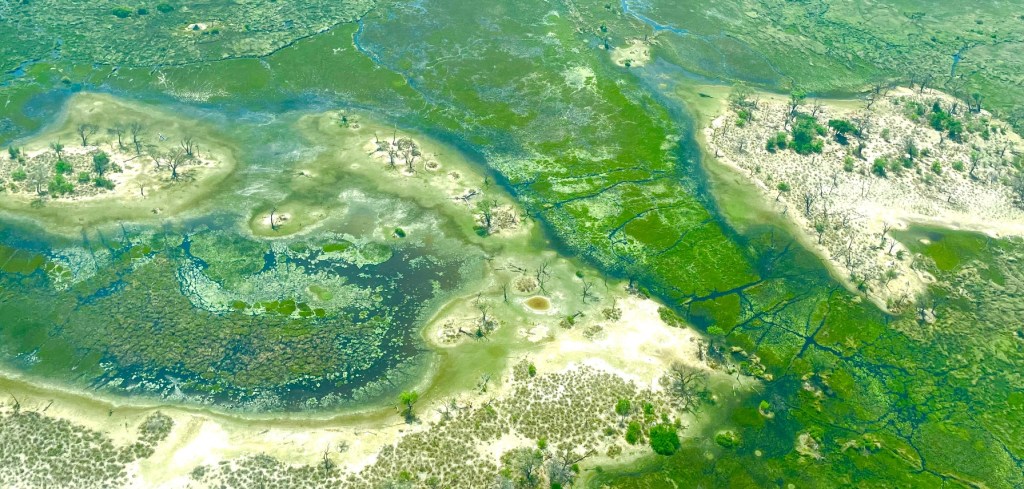
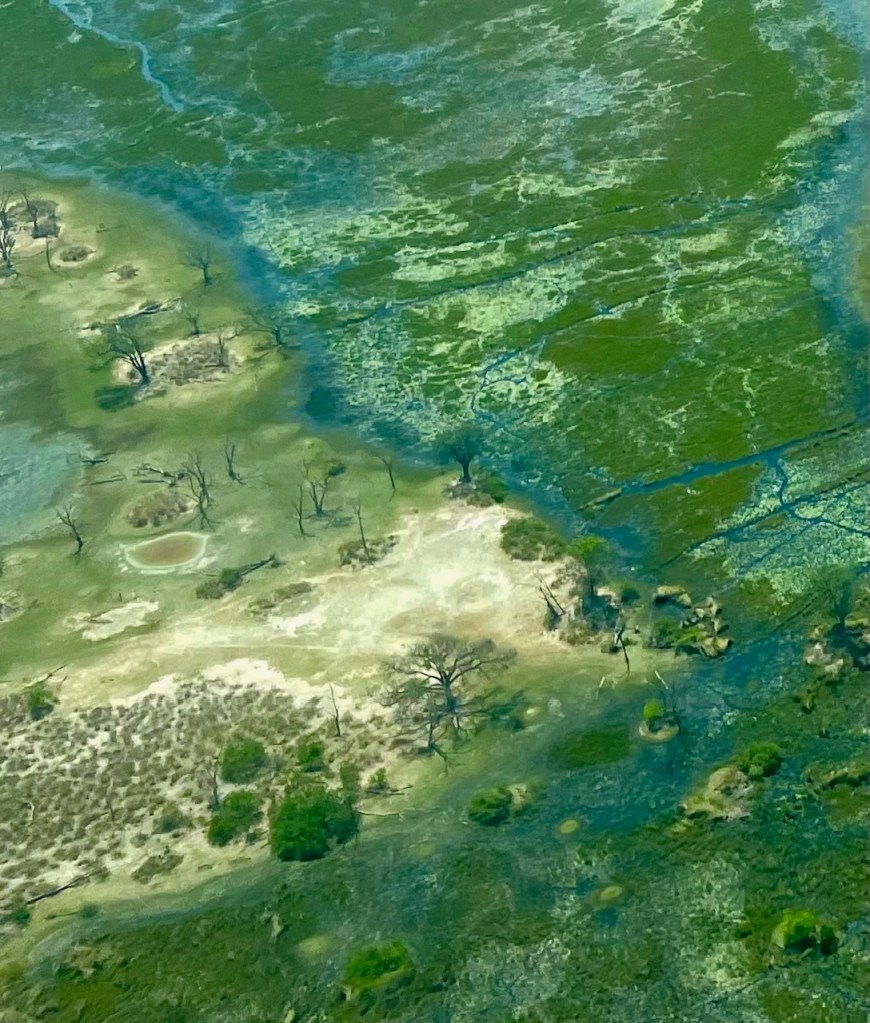
This is what it looks like when I zoom in even closer:
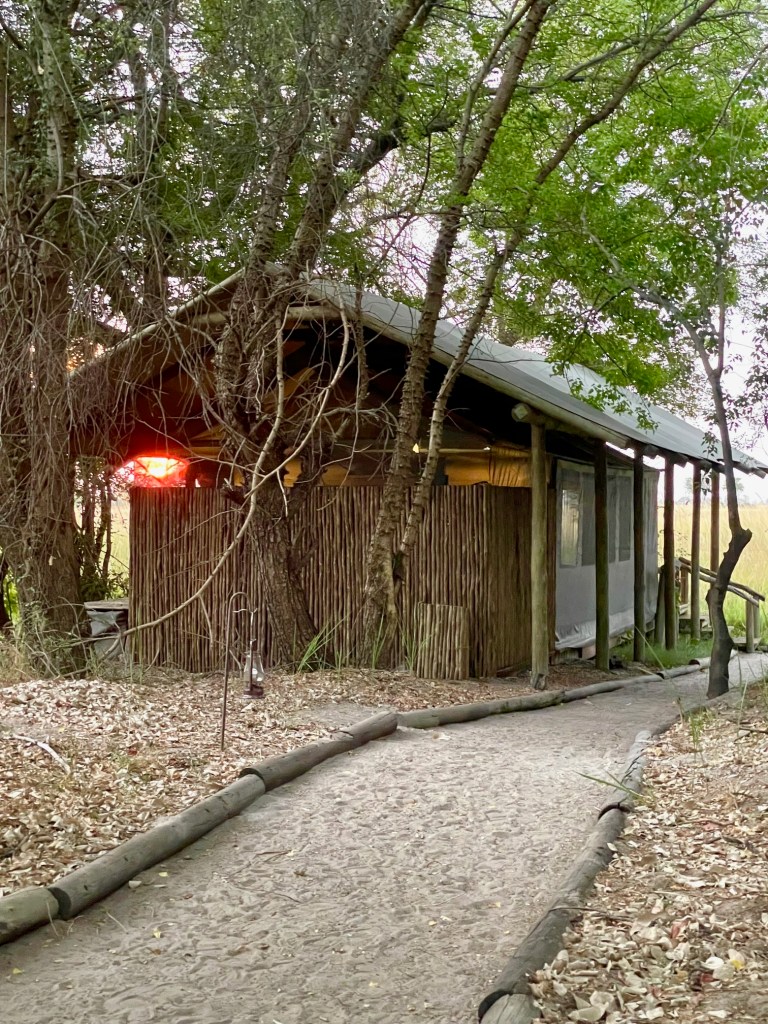
Camp Xakanaka sits on the Southeast edge of the delta. When I try to pronounce the name of the camp, our guide Onx Manga says “just call it Camp X” which makes me laugh. One of the bumpiest- roads-ever leads to the camp where my tent stands next to the river. Fortunately, the lions are NOT roaring outside my room tonight, so I sleep like a child. On the way to the front door of my tent, however, I still have to be aware of potential lion, hippo and alligator.
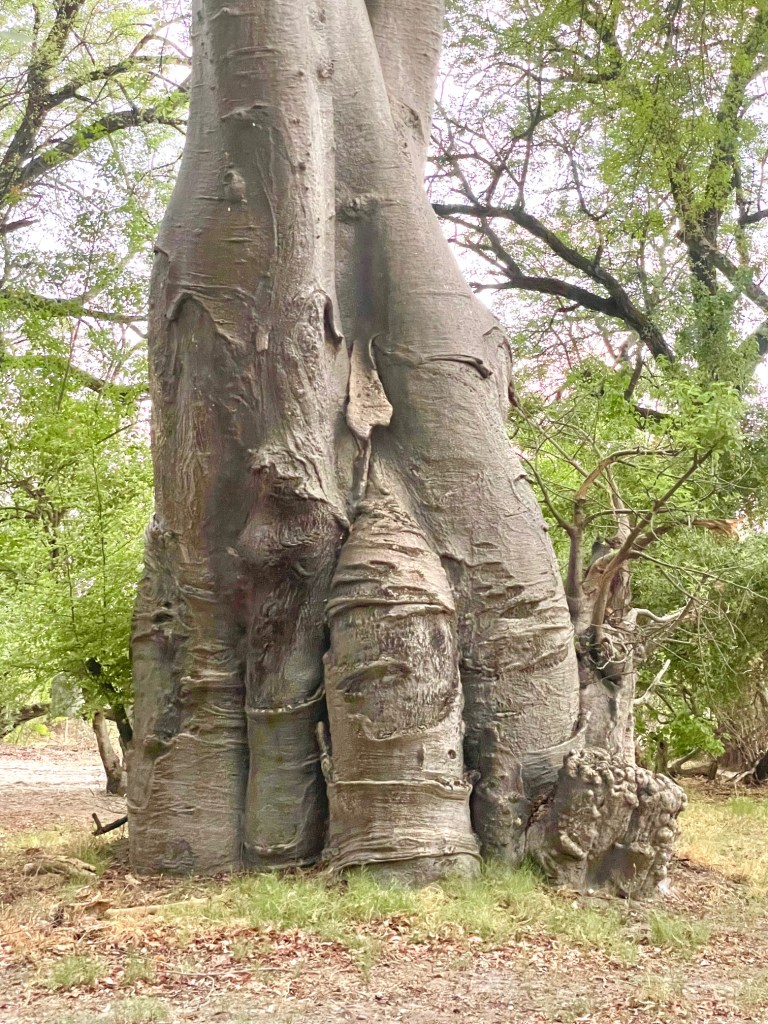
This Baobab tree stands across the path. Seriously … the tree trunk looks like elephant’s feet?
Into the Canals and Lagoons
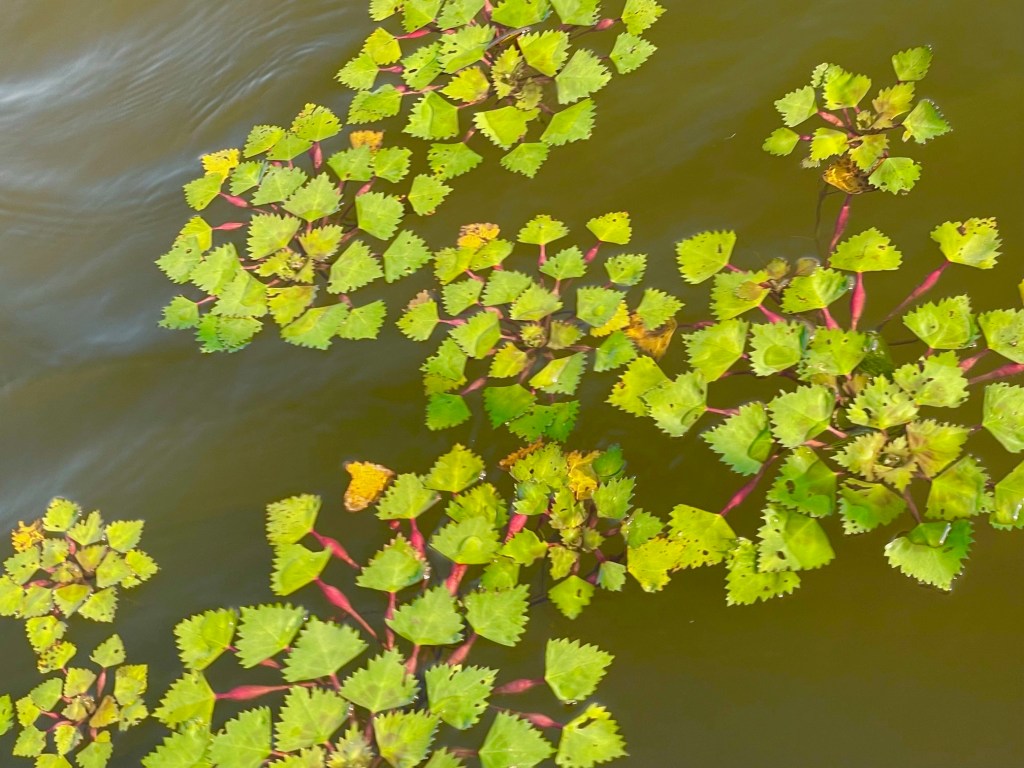
In the afternoon, it is by covered boat that we begin to explore the myriad canals and waterways. Water Lily and Papyrus plants grow and thrive here. These plants, along with the hippos, help create all the channels. In the delta, boaters are required to install a tall metal pole with a red or orange flag on top so that other boaters can see them coming.
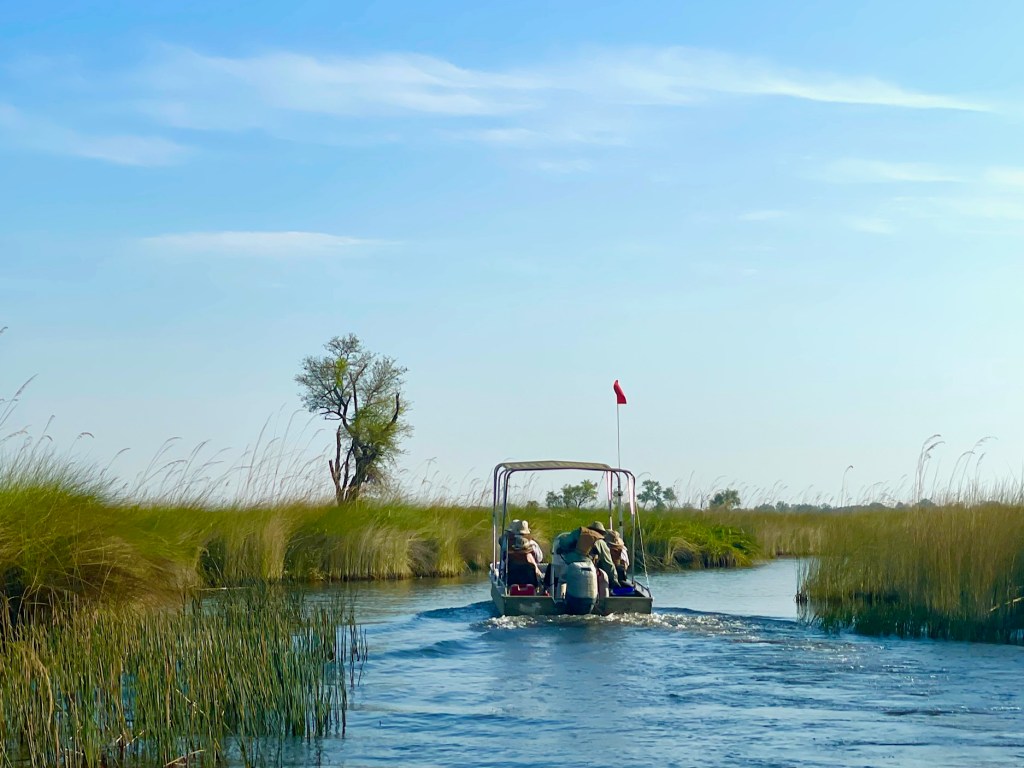
The tall grasses line the river delta.
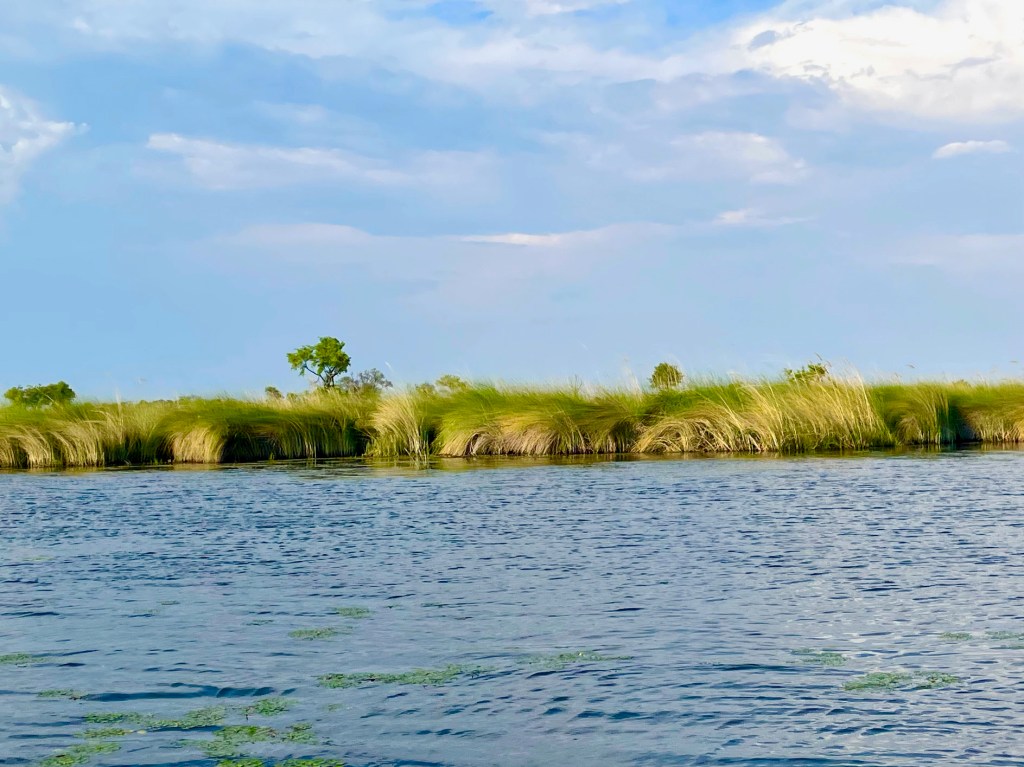
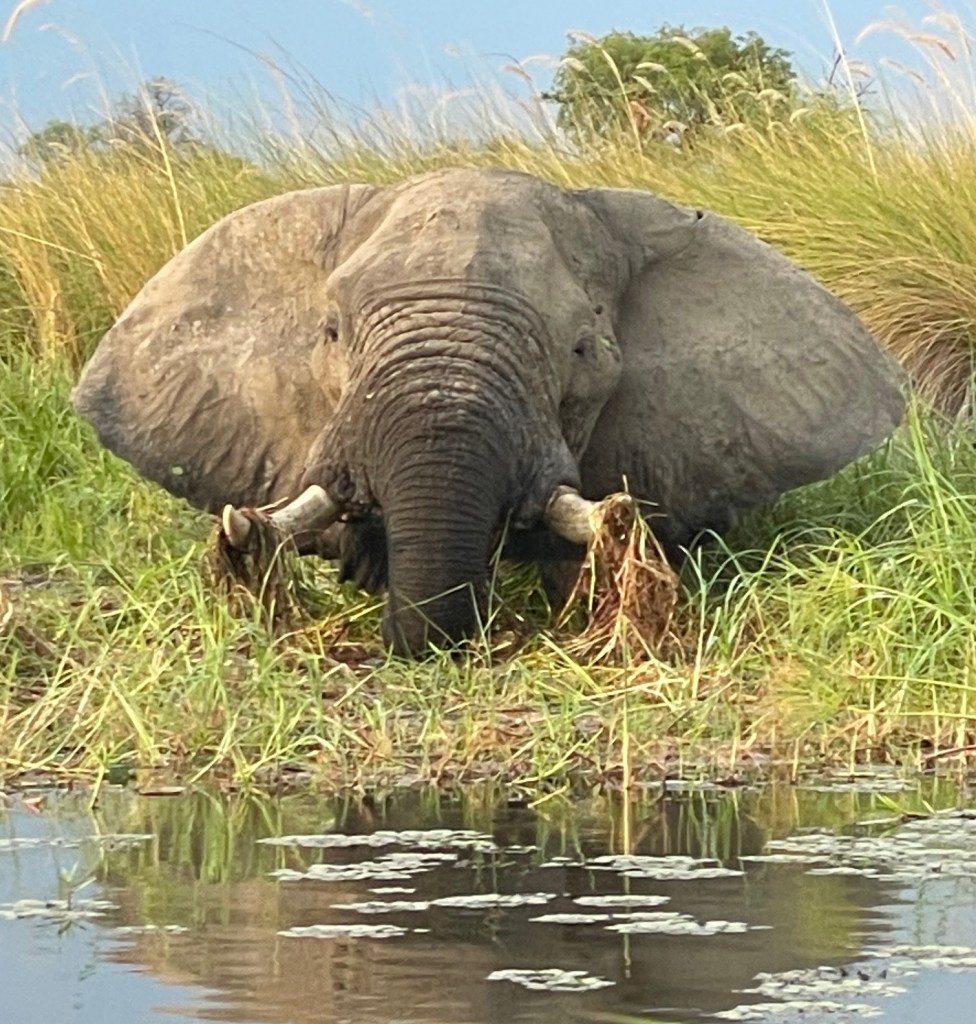
We head out in search of animals, birds and other wildlife. We spot Goliath and Squacco Heron, Pied Kingfisher and Black Crake. And then, out of the great green and blue, this big guy appears.
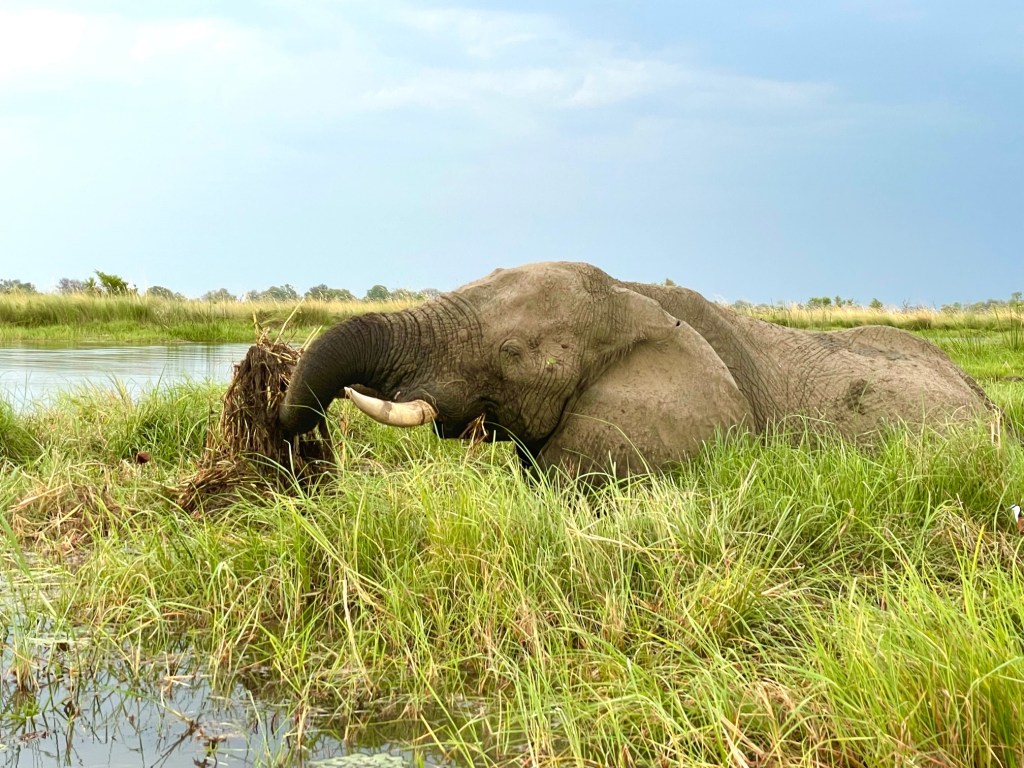
This Savannah Elephant uses its tusks to dig up grass roots for dinner. It swishes the roots back and forth in the water to rinse off the dirt and then uses its trunk to place the roots in its mouth.
Since we are in a metal boat, we decide to head back to the lodge because we notice rain clouds, thunder and lightning in the distance.
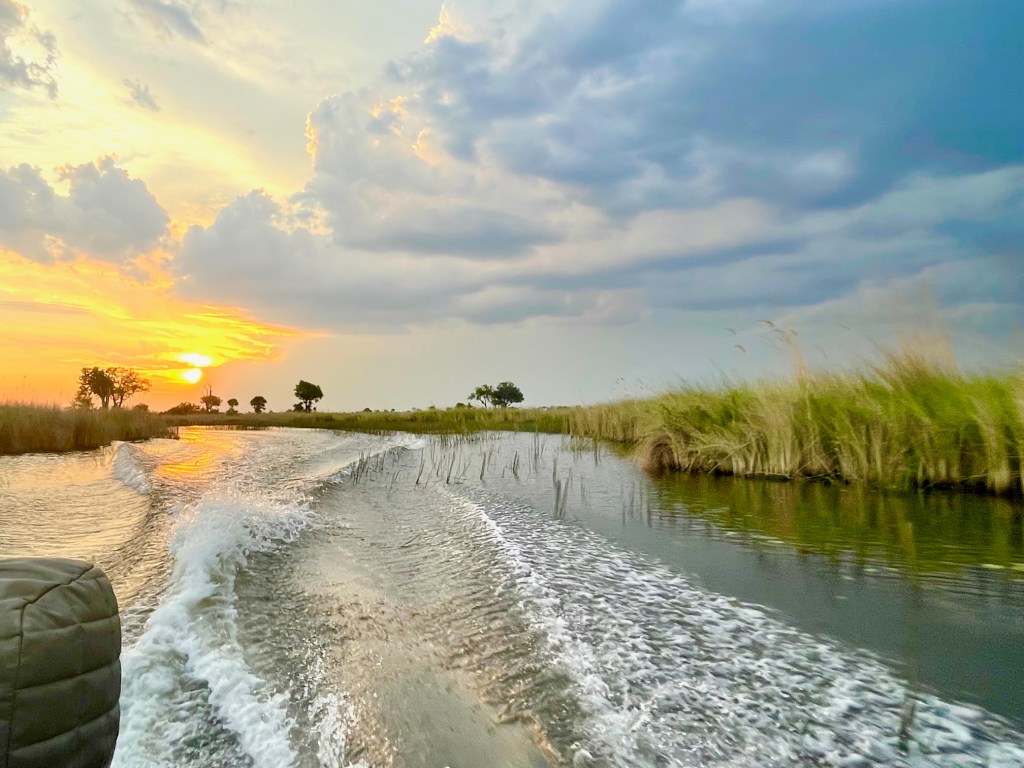
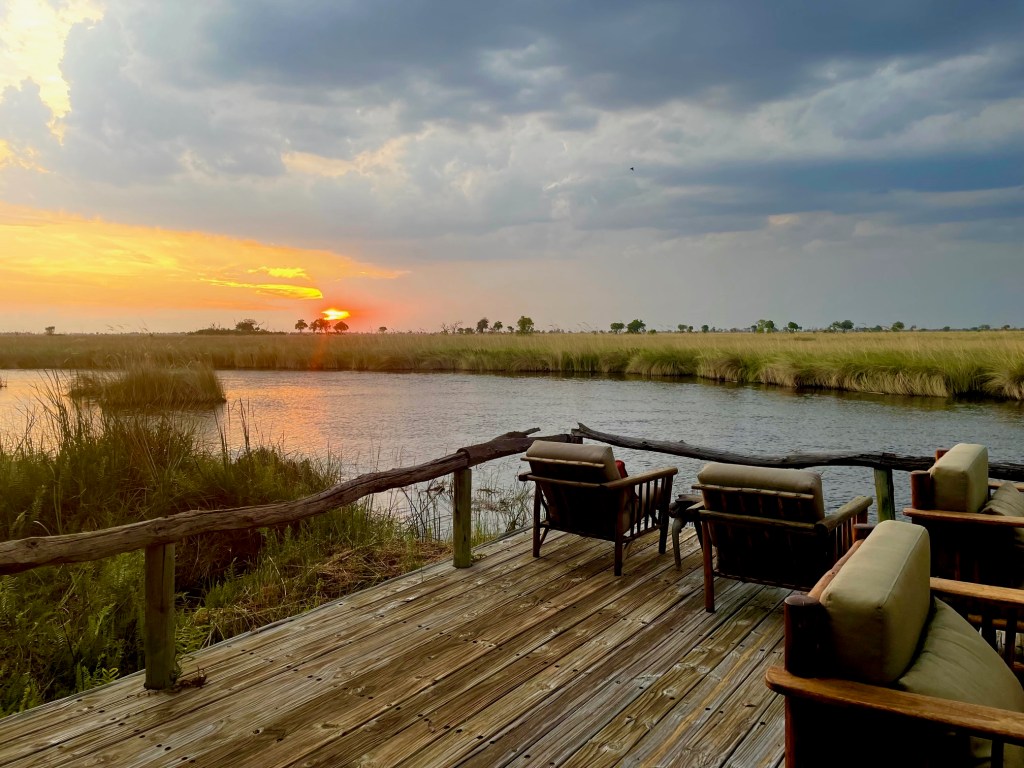
Back at the lodge, we watch the sun set over the Okavango.
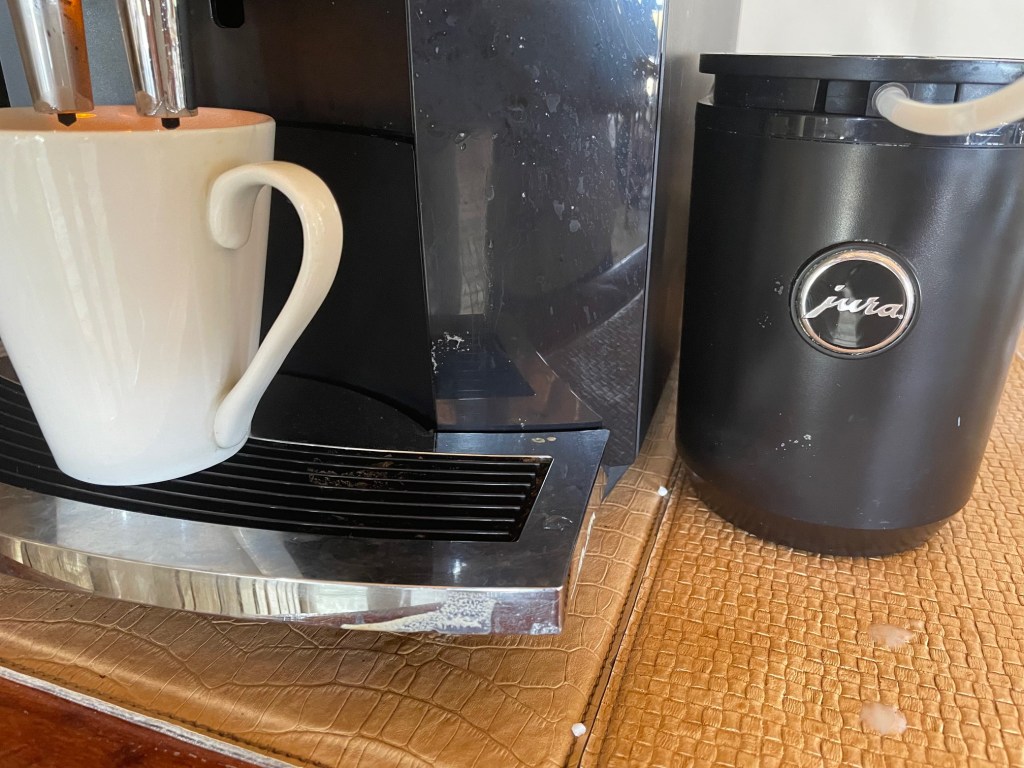
One special thing they offer here in Africa that is of the utmost importance early in the morning are Latte machines in every camp. I finally figure out how to use the machine on my own without the help of the wonderful staff. 🙂 It helps to NOT be asleep when you encounter lions.
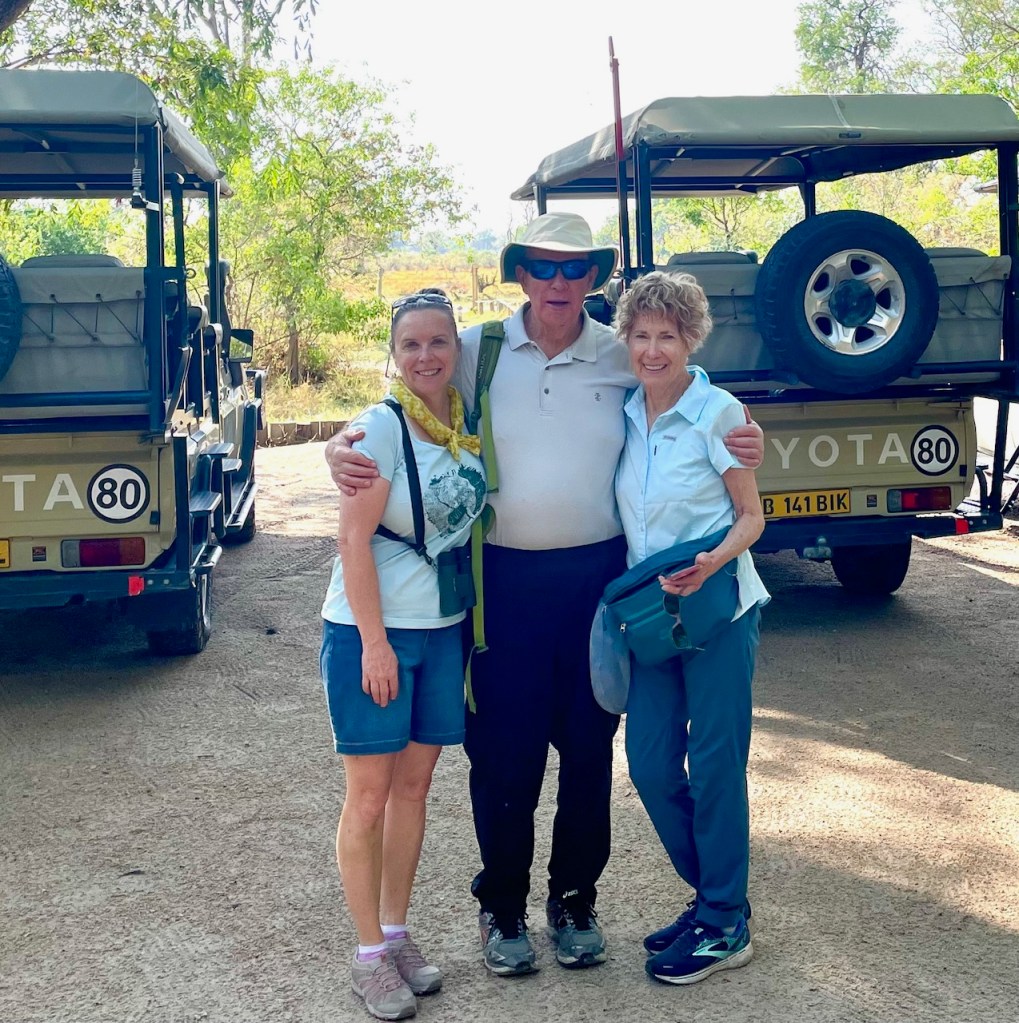
We are about to climb into the safari trucks. But first, a photo with my new Canadian friends, Bob and Judy!
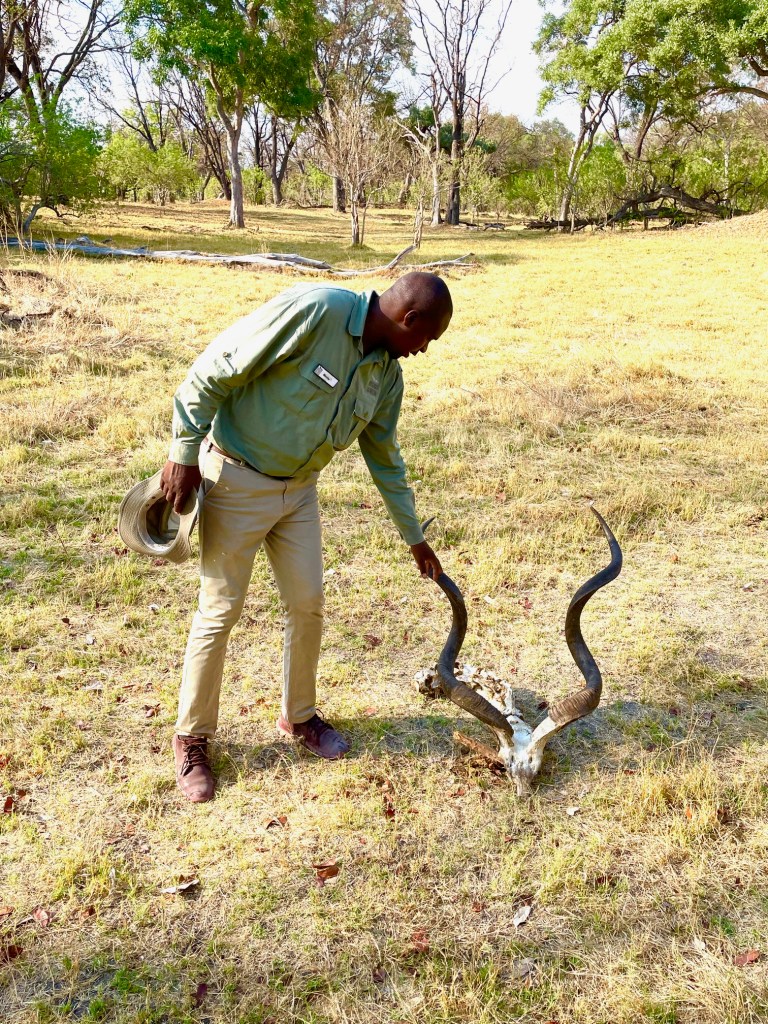
The first thing our guide wants to show us is the skull of a large, male impala. Some of us are determined to find a Leopard today, although we have been looking for two days now. So, not holding my breath.
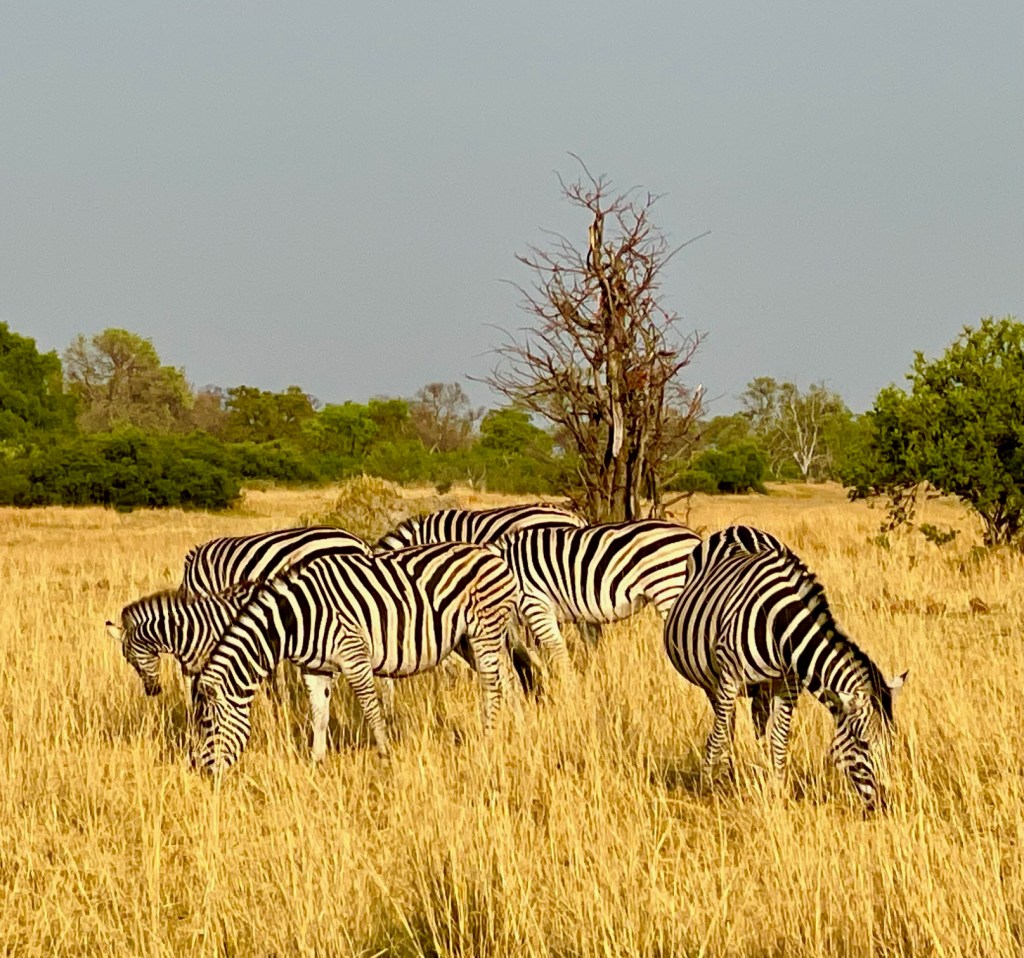
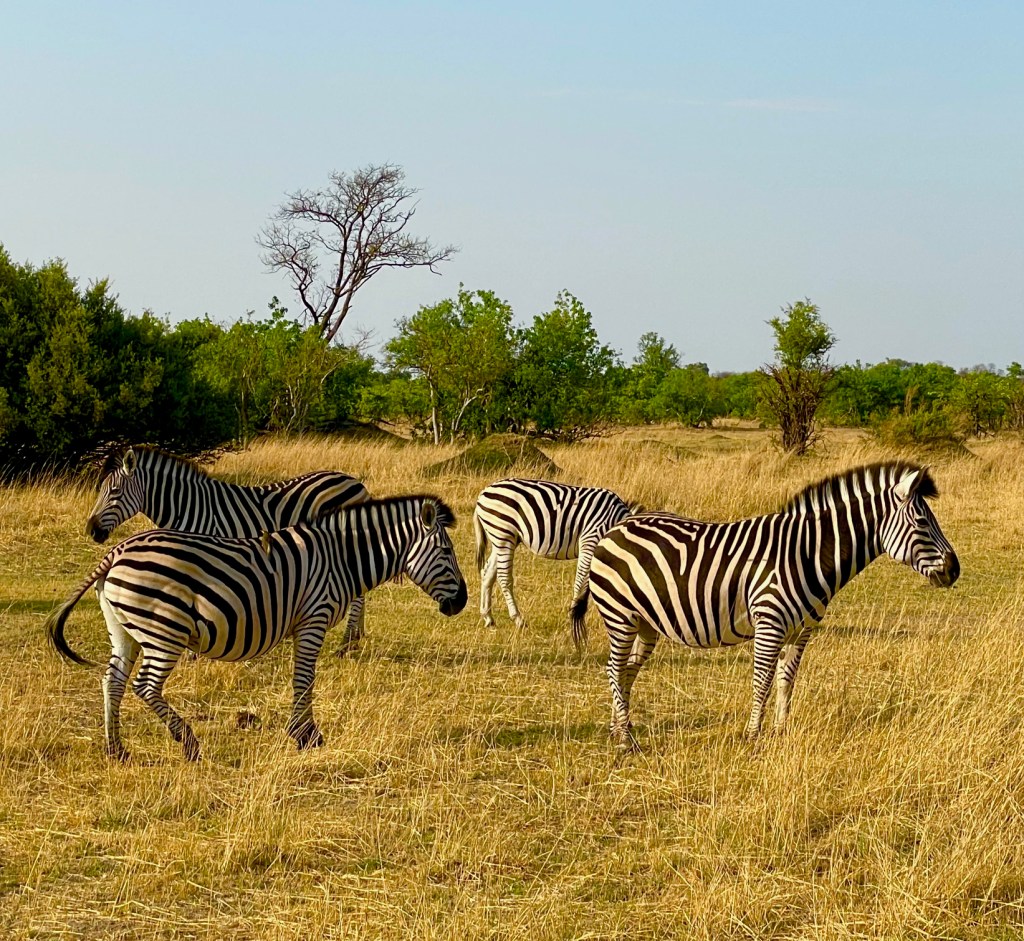
Zebras
Our guide catches wind of some zebra in the area. He finds them for us exactly where the other guides said they would be.
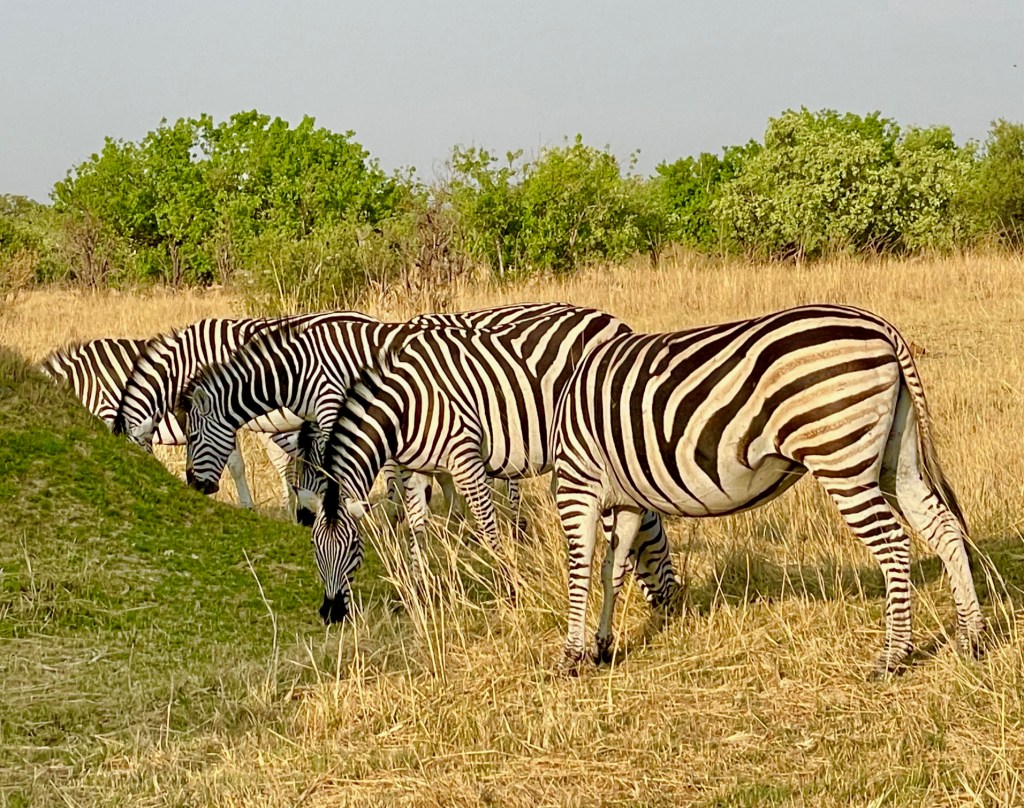
Beautiful Zebras in the morning light.
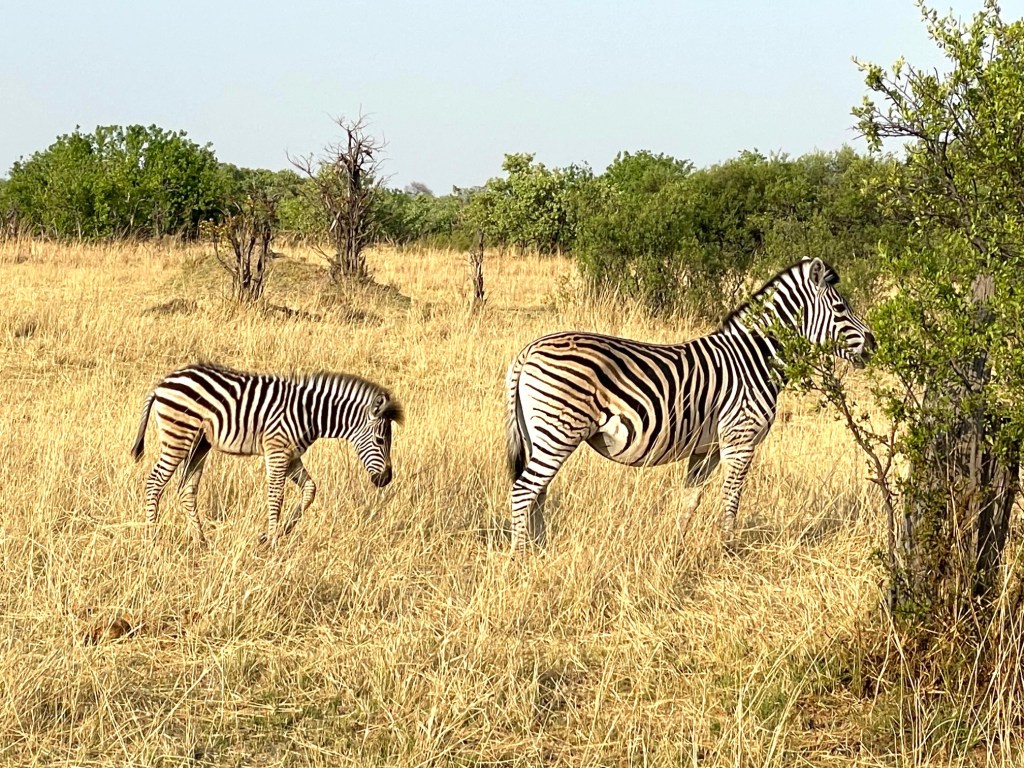
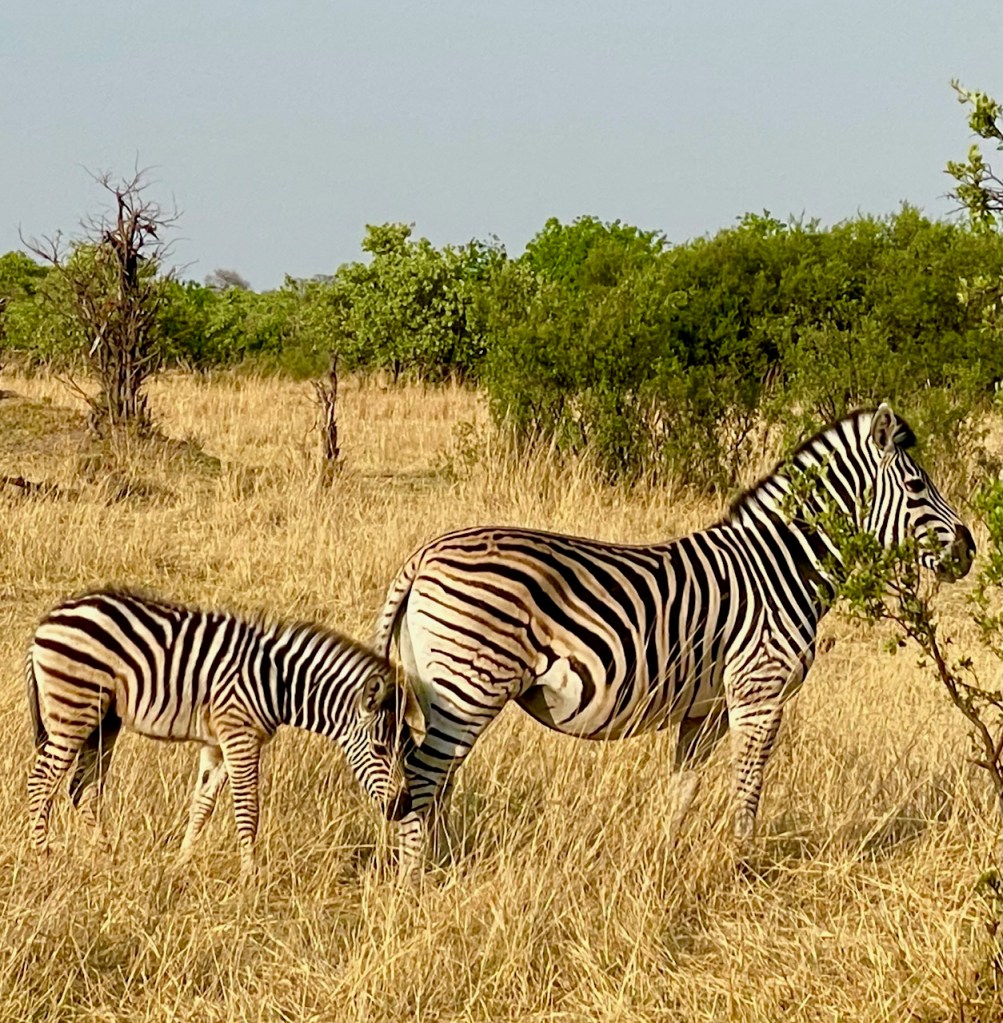
A baby Zebra, below:
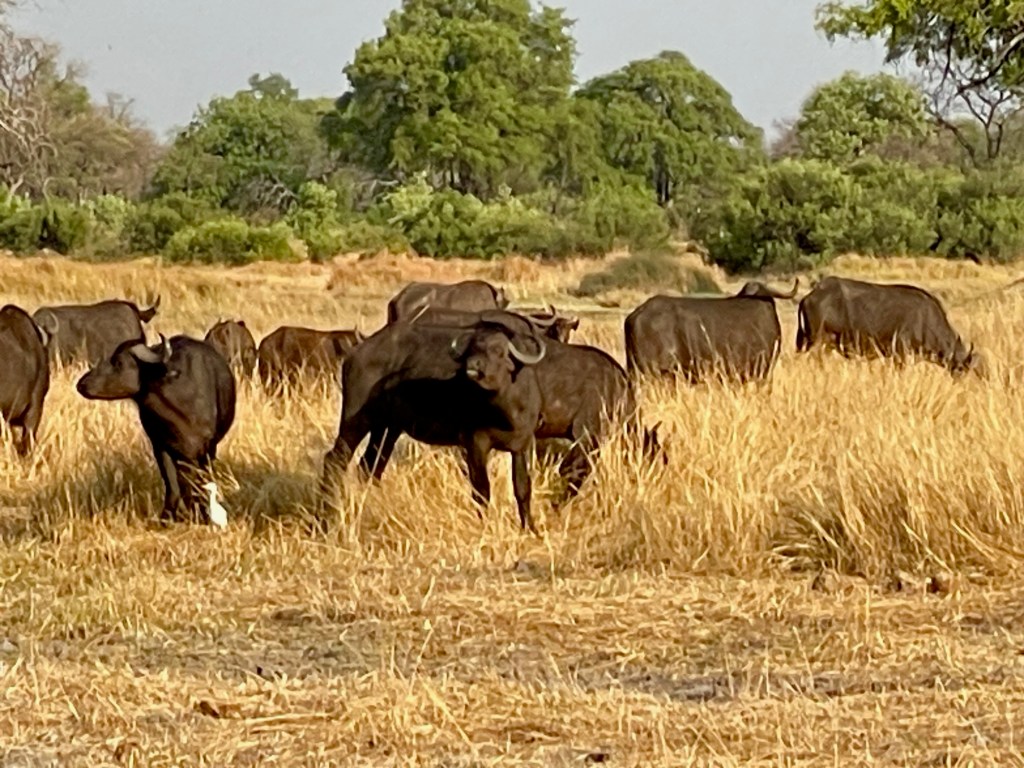
Below, we see Cape Buffalo in the same area as the zebra. I forgot to tell you in my first post, that 2-3 lions chased 80 buffalo into the Chobe River in late October (2023) and unfortunately all 80 buffalo drowned. On the other side of the Chobe River lies Namibia and so the Namibian authorities arrived to help divide up the carcasses. I am sure the lions only needed one or two buffalo for their pride, so the other 78 were available to the Namibians for food.
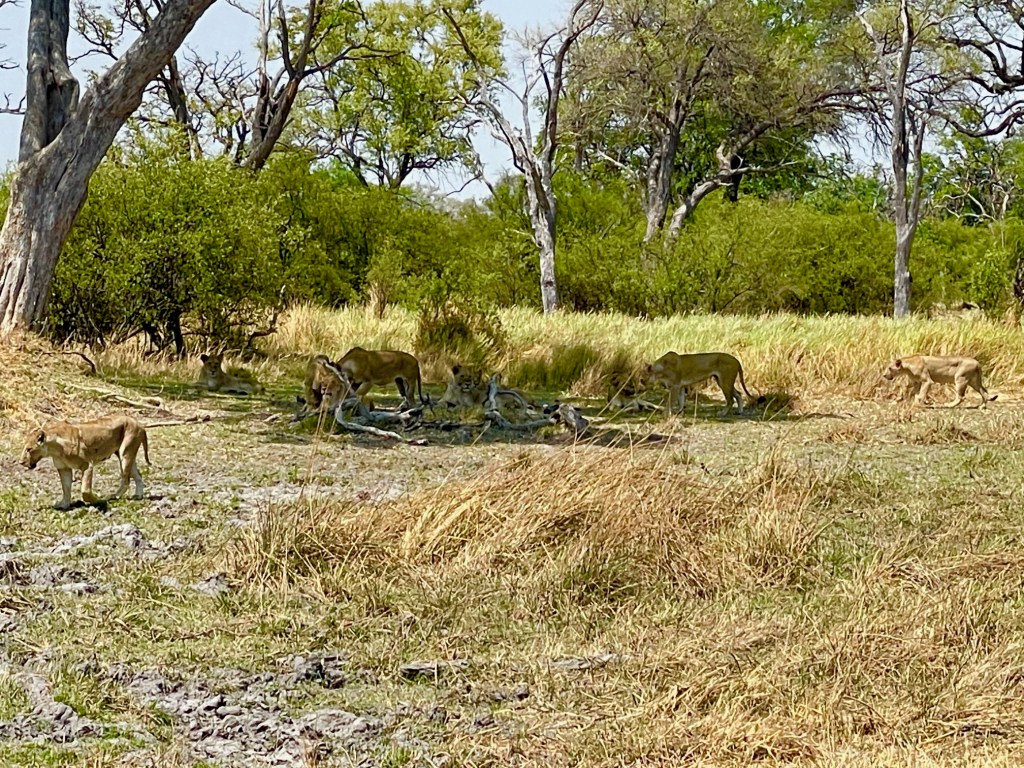
We hear there is a lion pride in the area. On the way to see the lions, we stop to see two Wattled Cranes. These cranes are endangered because of agricultural expansion and degradation of its wetland habitat, according to the African Wildlife Foundation, a conservation group working to protect the species. Wattled cranes depend upon healthy wetlands. Below, they are foraging in the moist grasslands close to the delta.
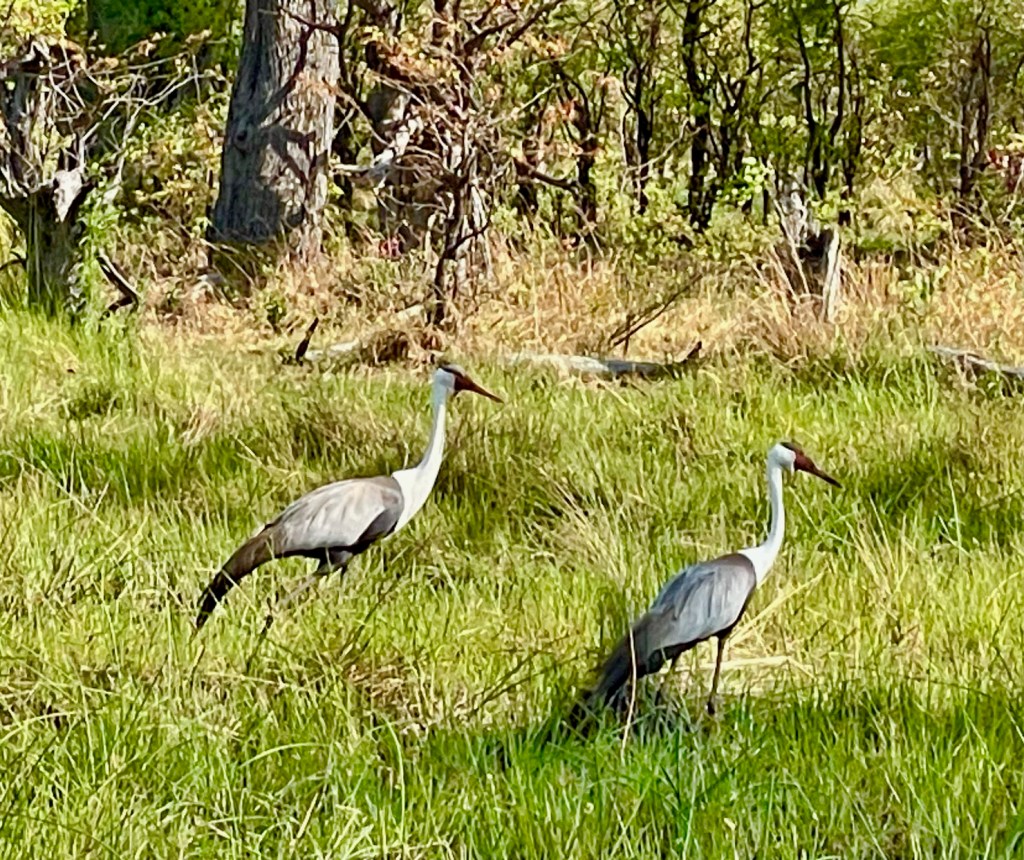
The Wattled Crane is the largest crane in Africa. This large bird stands 5 feet 7 inches tall and its wingspan can reach 8.5 feet wide. They once ranged from the West Coast of Africa to the African Horn down to the southern tip of the continent. Now it is found concentrated in the Okavango Delta.
Lions
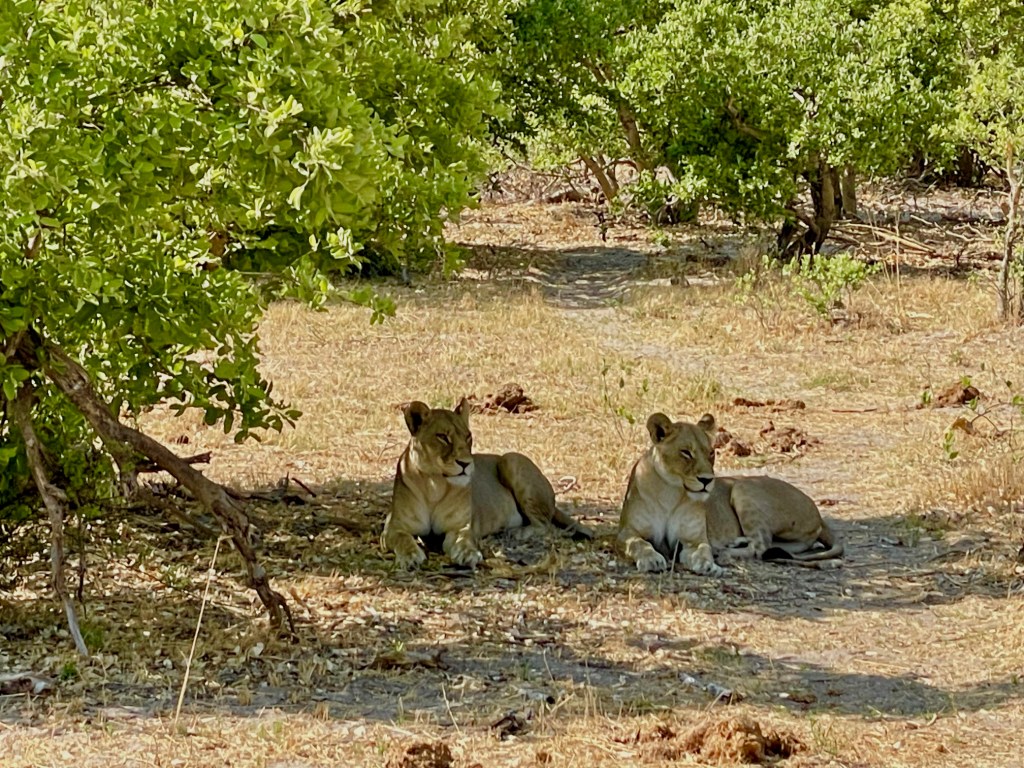
Above we find mama lions relaxing in the shade, escaping the 100 degree temps.
Below, two young lions relax and play on the grass.
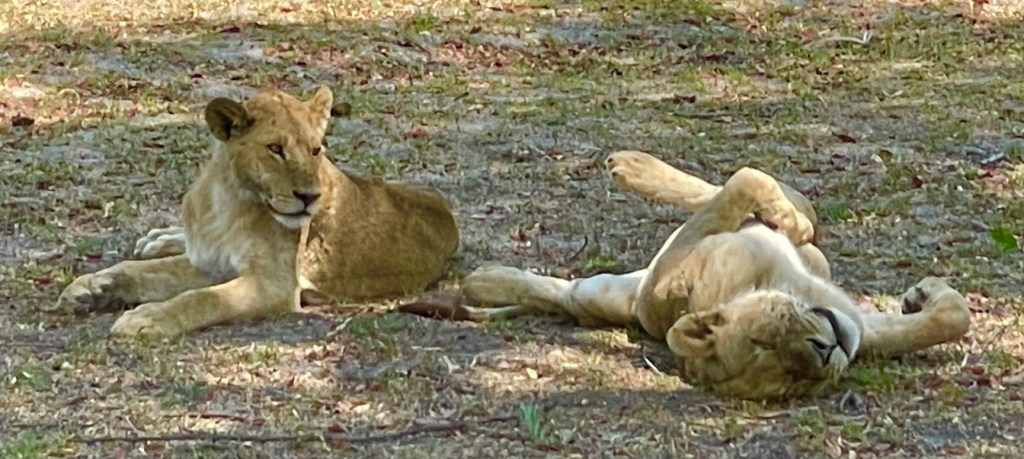
In the wild, the trees are their scratching posts.
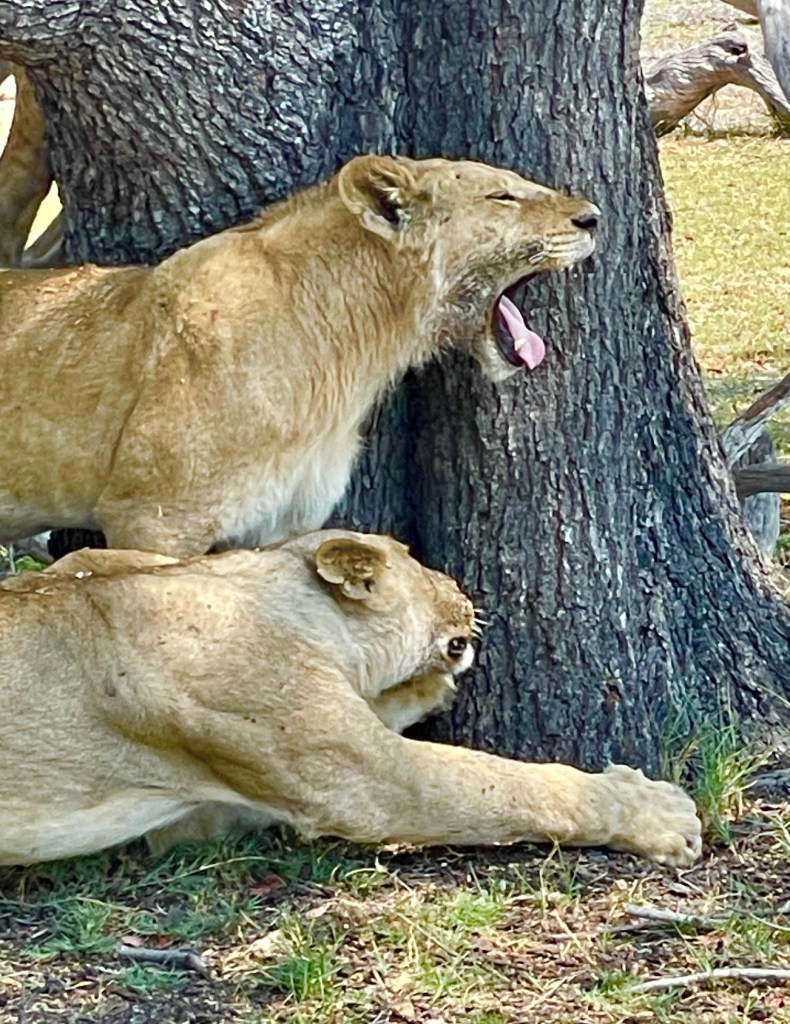
Here, kitty kitty!
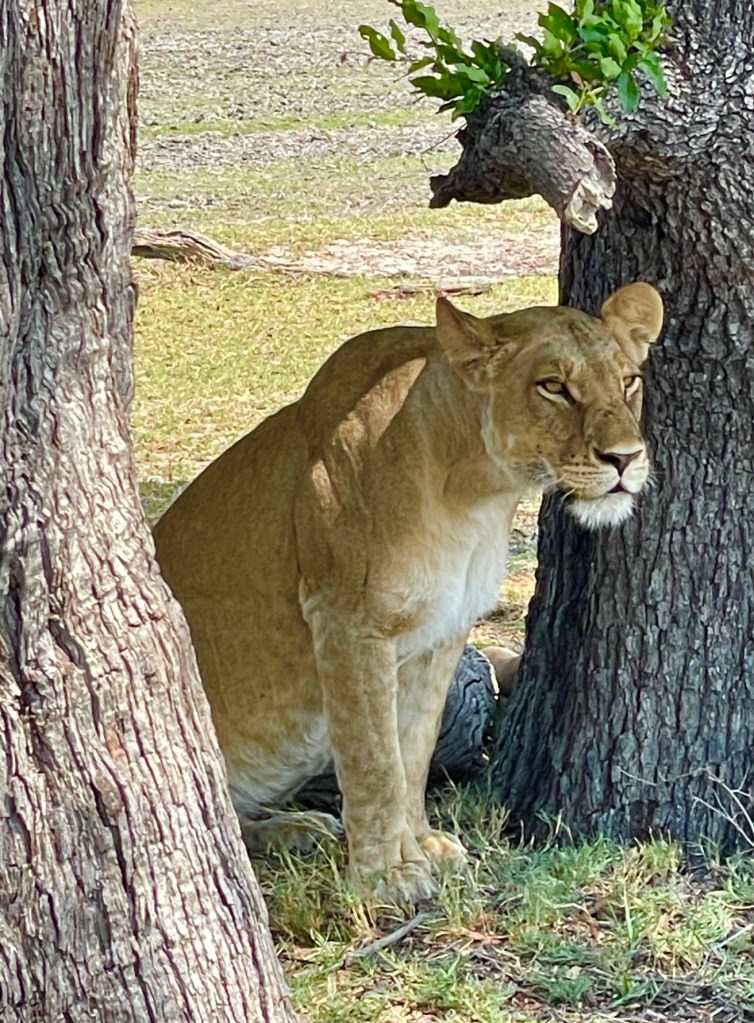
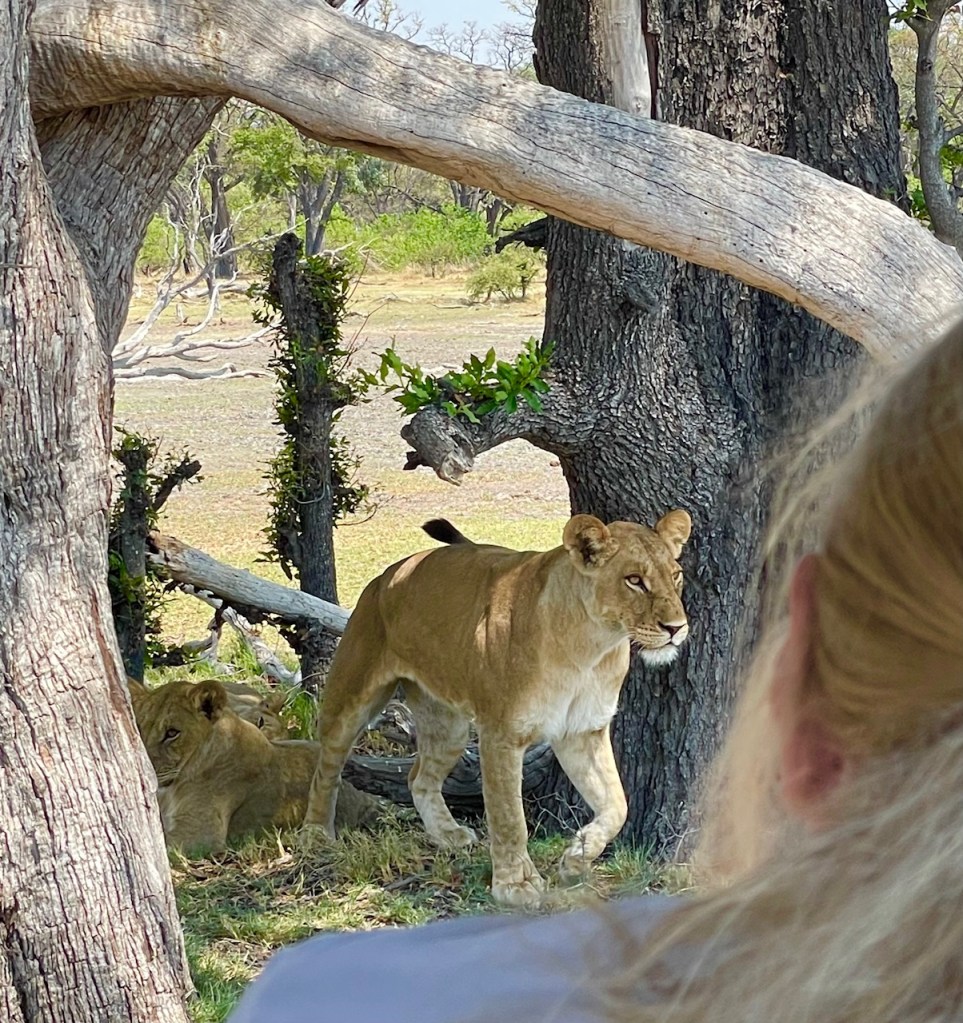
Here, we are about twenty feet away from the cats. One week earlier, a female lion walked extremely close to our vehicle and some of our group got very nervous. I think that sometimes we can have a false sense of security around animals in the wild. We have to remember that they are still wild animals and we should respect them and give them their space.
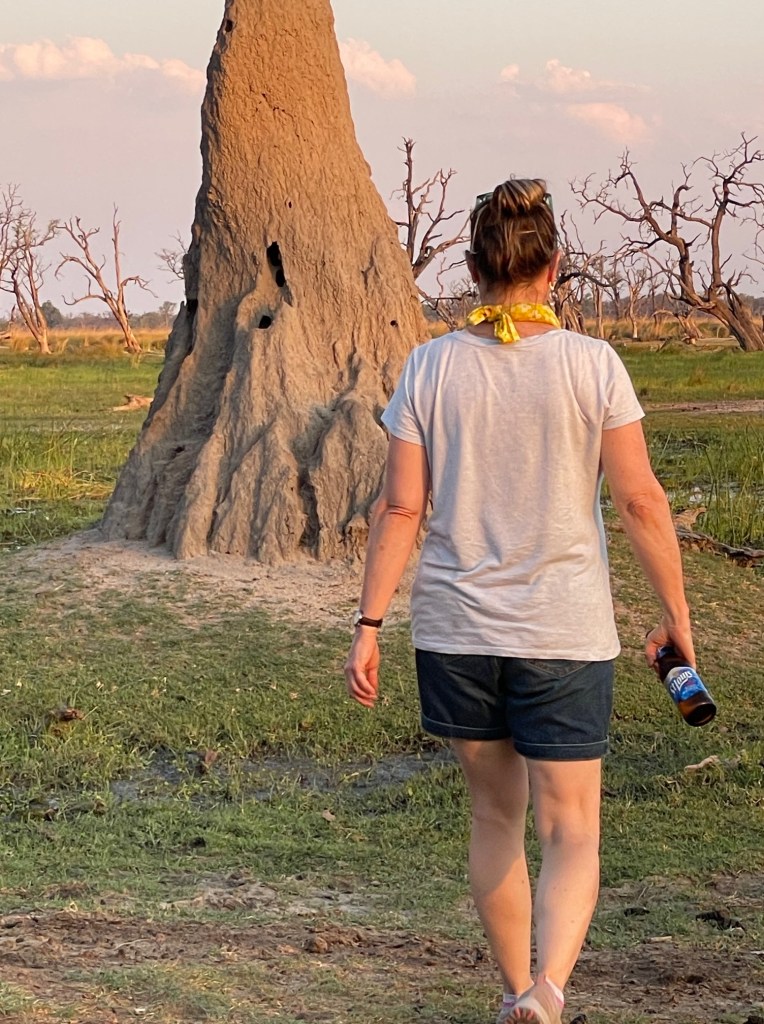
In the afternoon, we stop at a beautiful spot near one of the waterways to enjoy snacks and drinks near a termite mound. There’s nothing like ending the day with good beer and a termite mound!


So glad you had a wonderful time! Can’t wait to hear about your wonderful trip in person when I see you in June this year 🙂
LikeLiked by 1 person
Hi Chris, text/pm me about your dates so that we can make sure I am not away then and you can stay w/ me on those dates, okay? Hopefully it is later in June… 🙂
LikeLike
Another brilliant set of photos – the game continues – will you be back in the US in 2025?
Peter
LikeLiked by 1 person
I’m already back in the U.S. Peter!! Ha ha
LikeLike