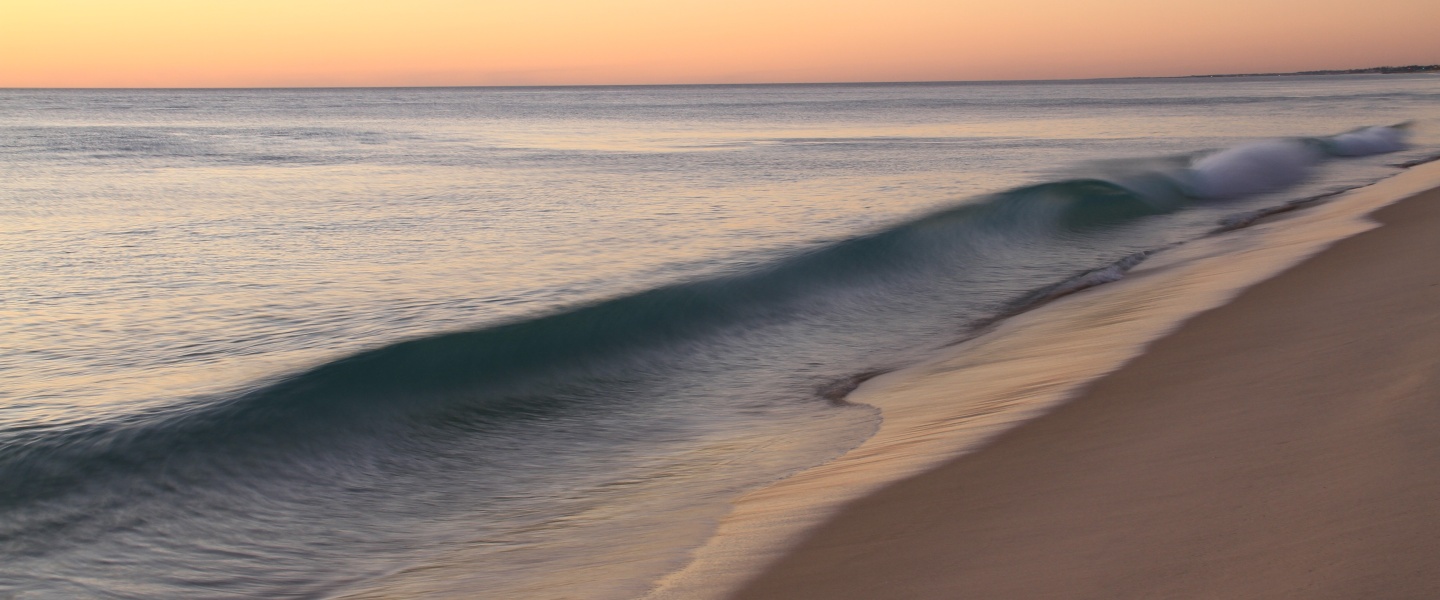

The Savuti Region of Botswana is situated between the Chobe River and the Okavango Delta in Southern Africa. It is the end of the dry season and all of the water holes are empty. As our group flies over the Western portion of Chobe National Park, I look out the window of our small puddle jumper and notice the parched water holes on the ground below. All of the animals that remain in Savuti at this time of year (unless it has flooded) go to man made water holes to drink, and they are waiting for the rains to come.
From The Air
This is what the water holes look like from the airplane. Notice the paths the animals trod during the wet season (from December to May). When I visit, in October, there is no water and it is bone dry.

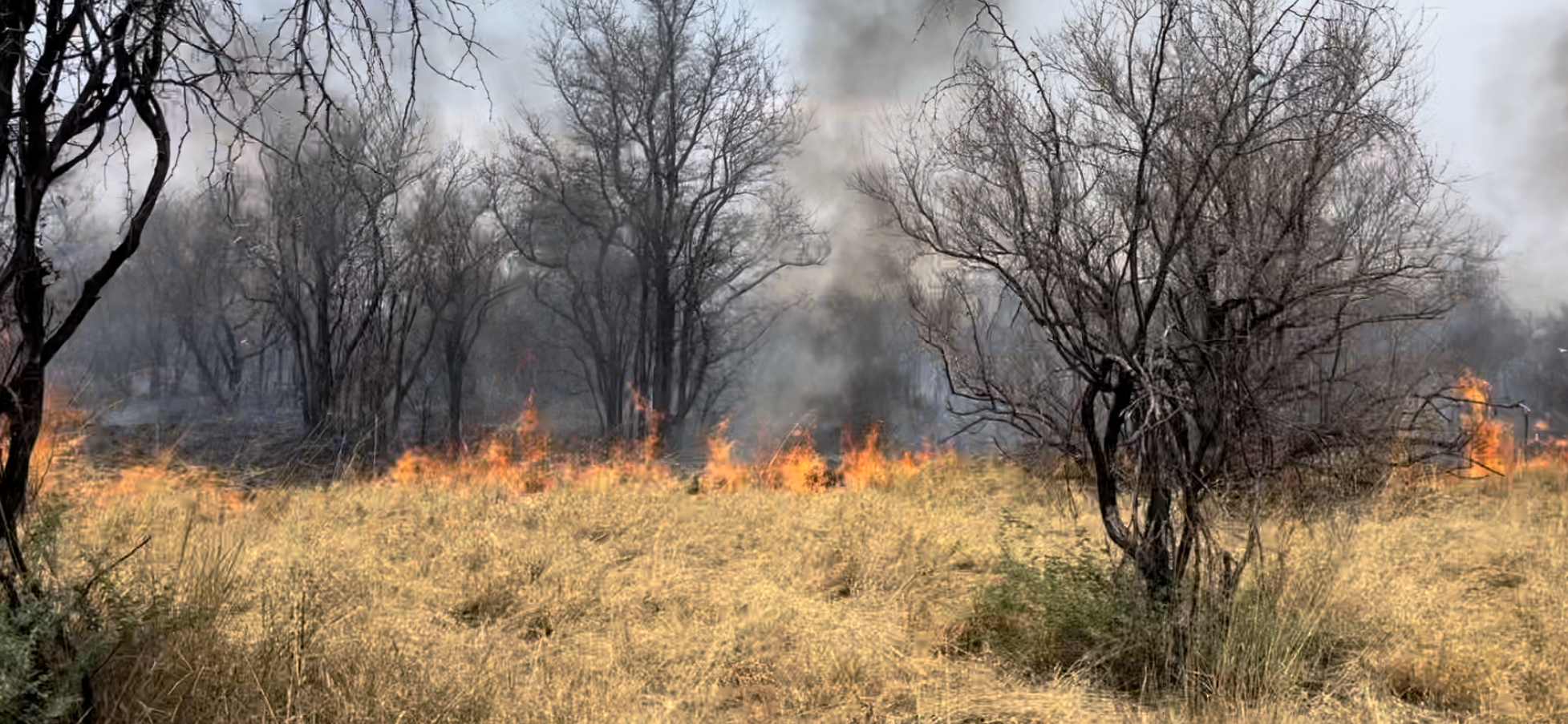
Our group looks out the window again and we see wildfires burning. Wildfires! I have never in my life seen a wildfire in person and I begin to get nervous. See the huge area that has already burned …. and there are no fire departments out here in the savannah. This is the dry season in Africa.
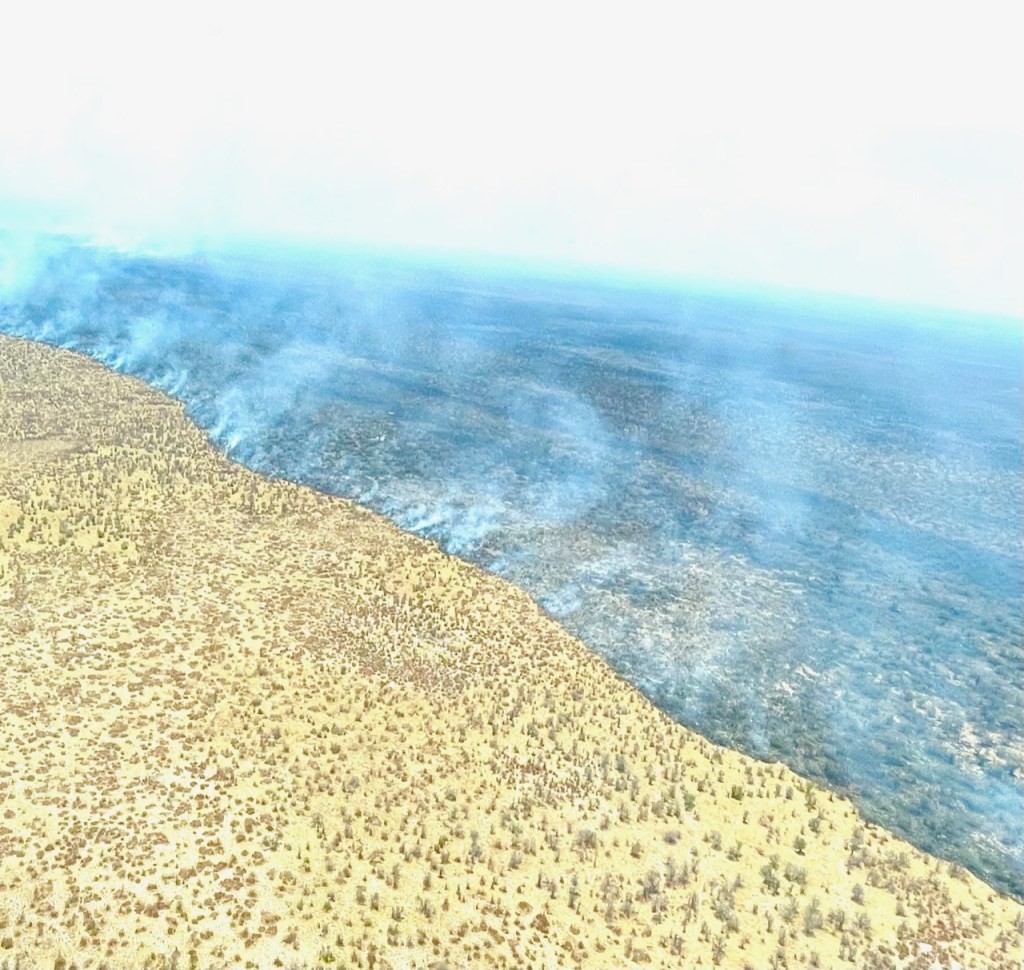
Our plane begins to descend and we get closer to the wildfires.
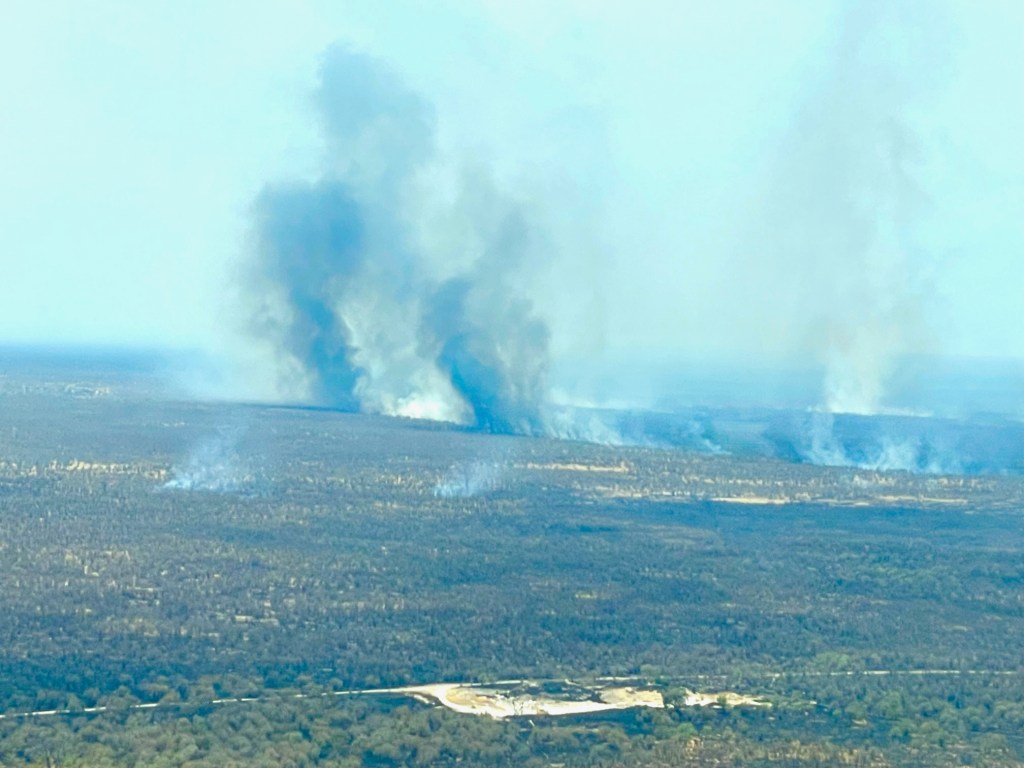
Through The Fire
Before we know it, we are landing. This is a desolate area in the middle of the African Savannah, and the airport is comprised of a dirt airstrip and a small shack. As soon as our plane touches down, someone in our group spots this sign:

Below is the “International Terminal” 🙂

The smoke from the wildfires is reaching us. We climb up into the safari vehicles, and the next thing you know we are driving right through the fire. Luckily, it only lasts for a minute or two. It is so dry here that the grasses are like tinder and everything is burning. It wasn’t dry like this on the Chobe River.
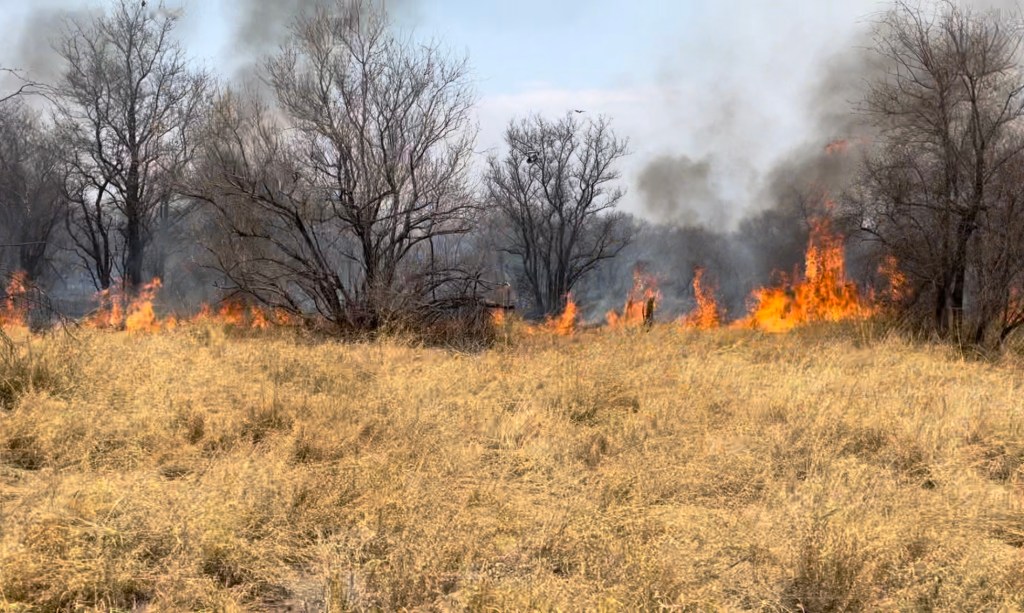
Okay, now, this wasn’t in the brochure…
Thirty bumpy minutes later, we arrive at the Ghoha Hills Savuti Camp. Oh, I may want to mention that on the third day of the trip, my Nikon camera leapt off of the seat (of its own volition of course) and broke. So, from here on in, I must make do with my iPhone 12. I will make the best of it, I say to myself, after crying into my lap for 24 hours.
On The Ground at Ghoha Hills Camp:
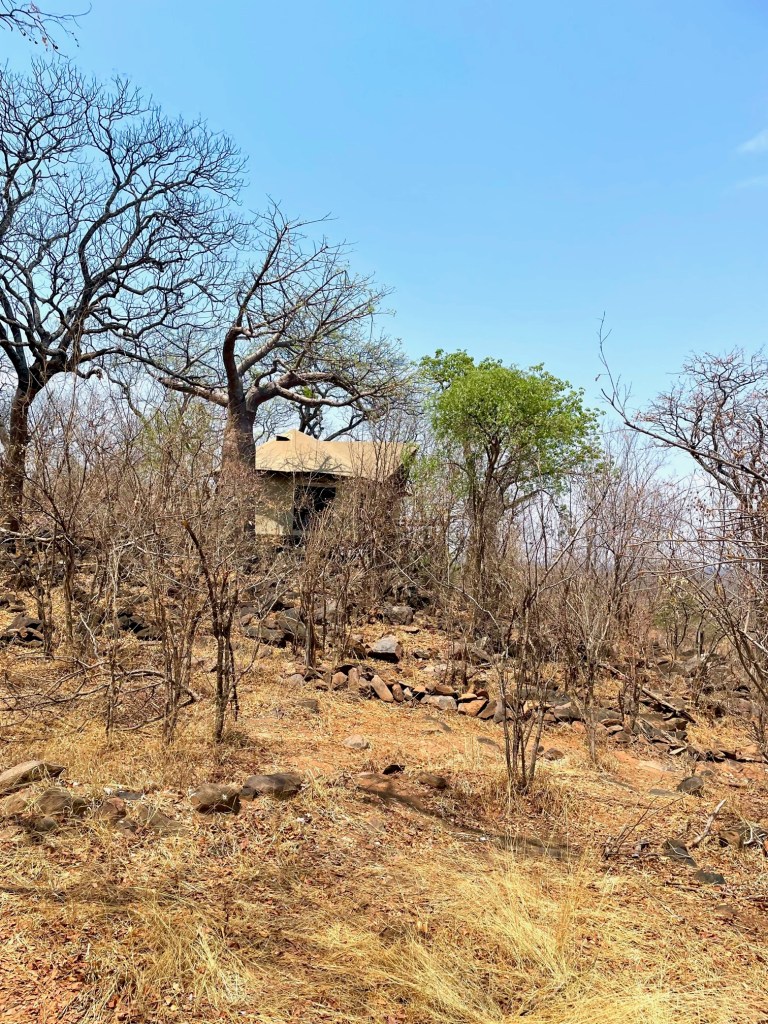
That night, I hear a lion roar outside of my tent. This is new for me, and I am temporarily terrified. I grab the Red Horn they set on top of the shelf in case of an emergency. I wait. The lion roars again. Okay, it is probably more of a growl, but to me it sounds like a roar. If the fire doesn’t kill me, the lion probably will. I wait and listen again. How close is the lion? Does it smell me inside of the tent? Is it going to claw through the canvas mesh and jump on me? How am I ever going to fall asleep with lions outside? It growls again. I freeze. I decide to place all of the metal cans I can find that have any weight next to me on the bed just in case the lion tries to enter the tent. After two hours of this, the lion finally stops growling. It is 11 pm. This wasn’t in the brochure either.
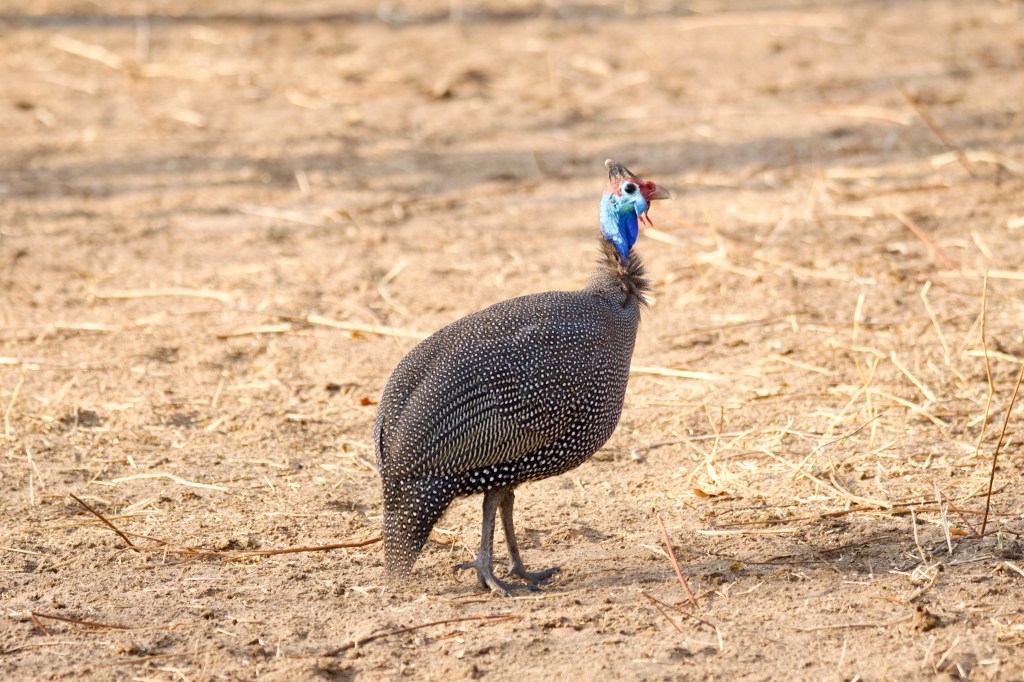
Morning arrives and we set out on another game drive. We spot these Helmeted Guineafowl.
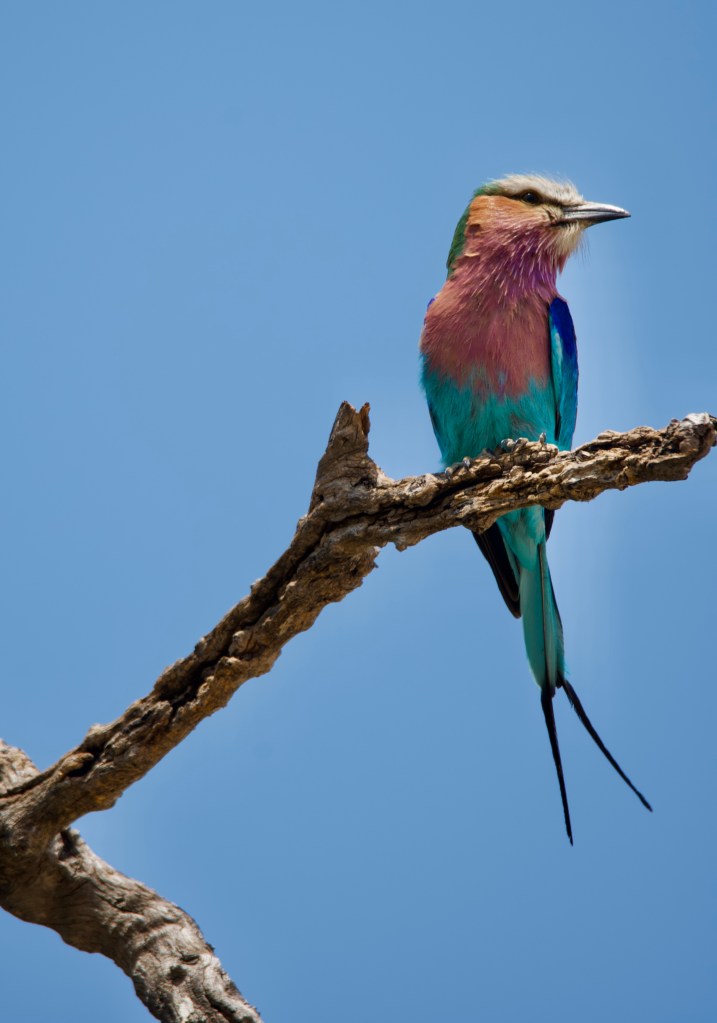
And some Lilac-breasted Rollers. When these birds fly, their gorgeous blue and turquoise colors are truly seen. This bird has been scratching around in the dirt for insects.
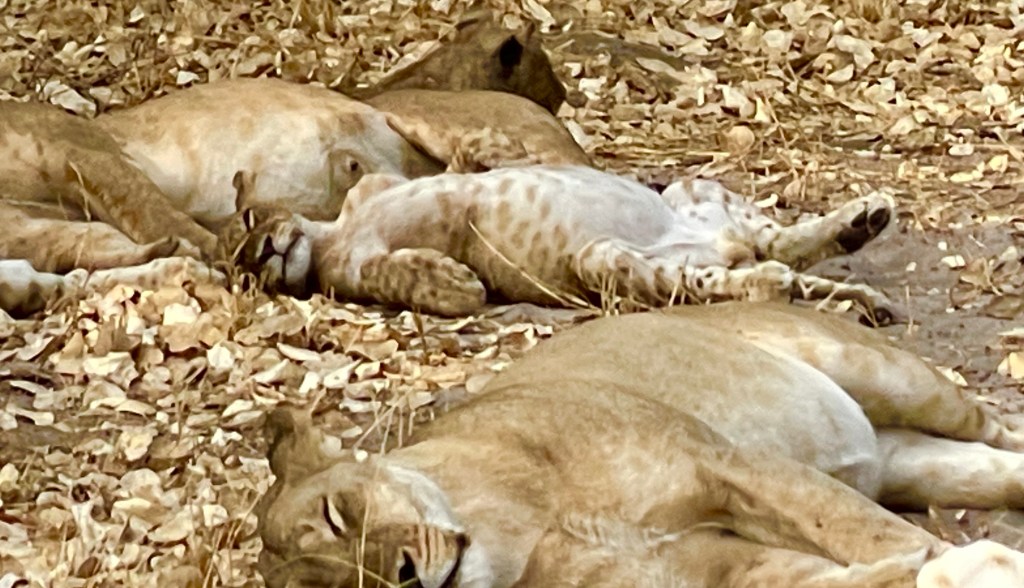
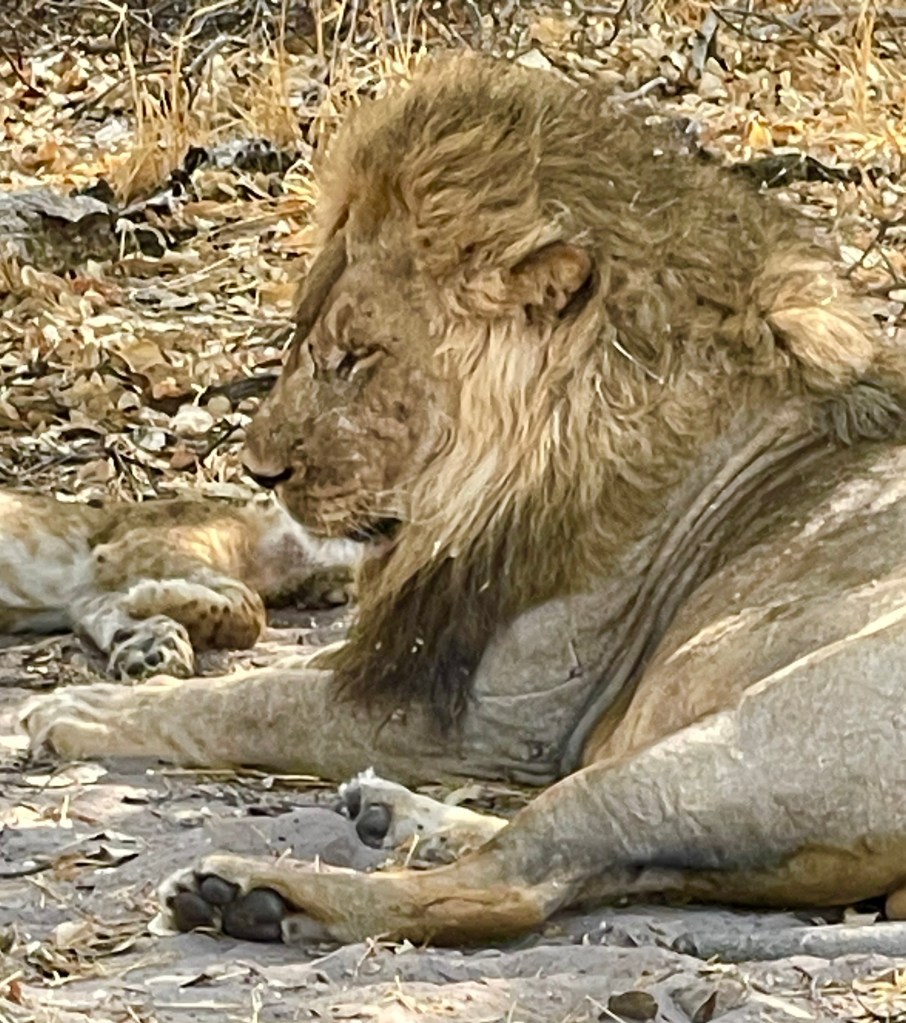
We come across a sleeping pride of lions and now we are safely inside of the vehicles. I am no longer scared, as they are used to seeing vehicles nearby.
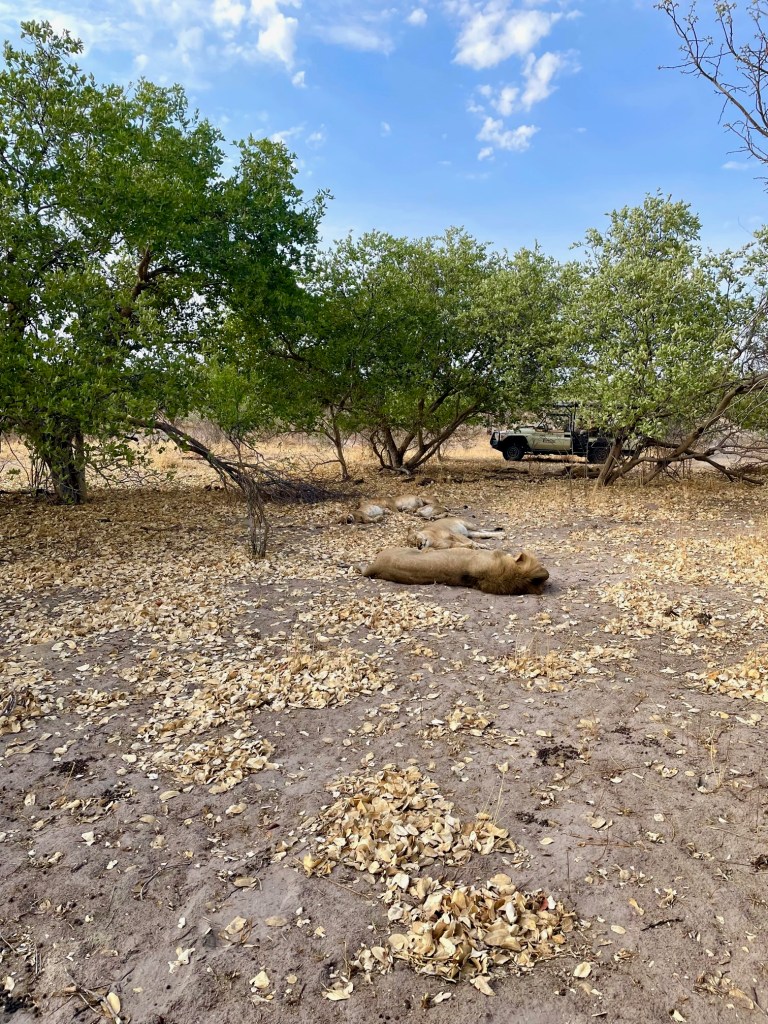
I look through my binoculars to see several young lions sleeping near their parents. Once in a while, the male or female lions lift their heads up and look around. Then they fall back asleep.
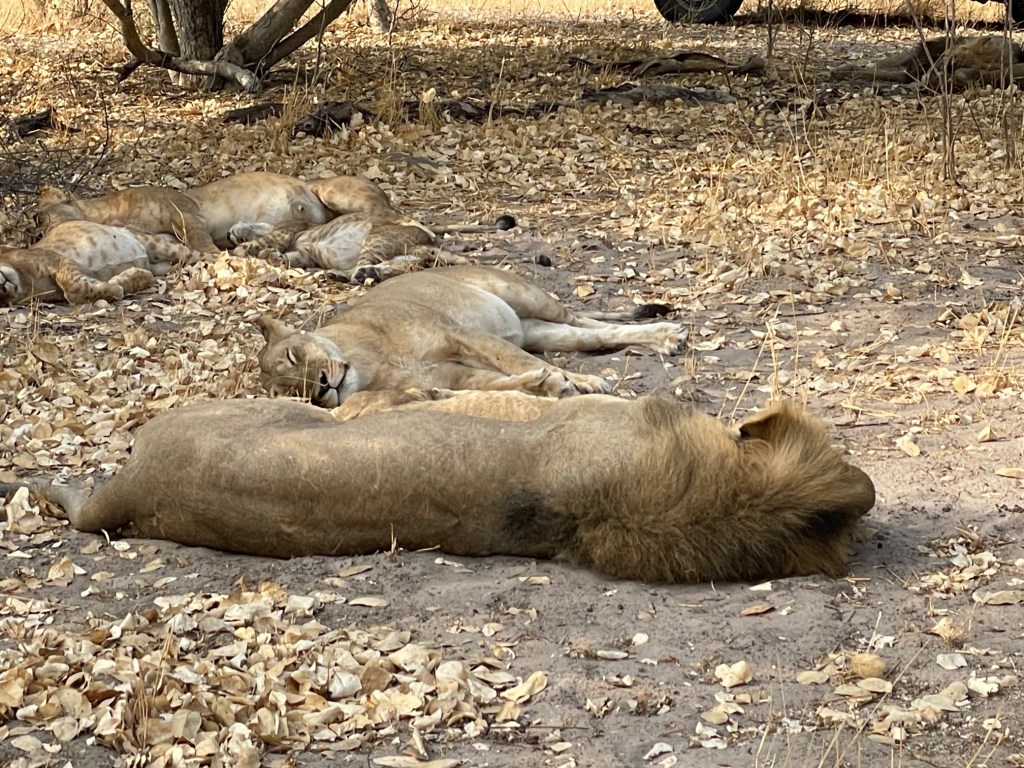
This beautiful cub feels safe with its family, and it is not worried about us being there.

Another family group within the pride lies on the ground nearby, and this male lion is awake.
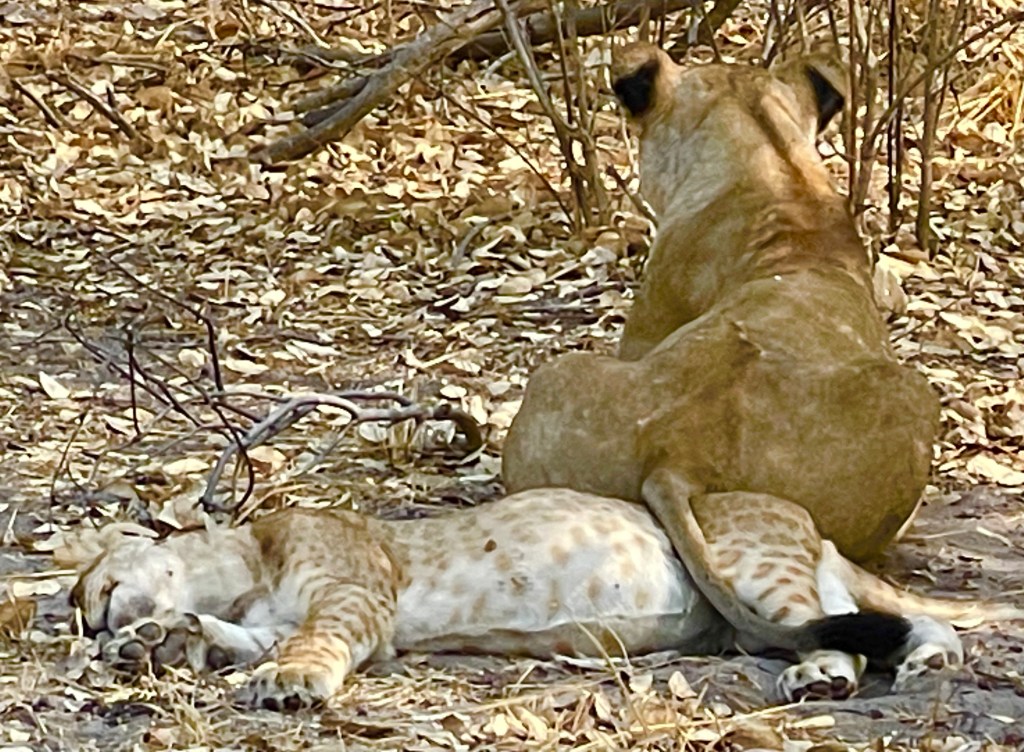
Momma and her cub.
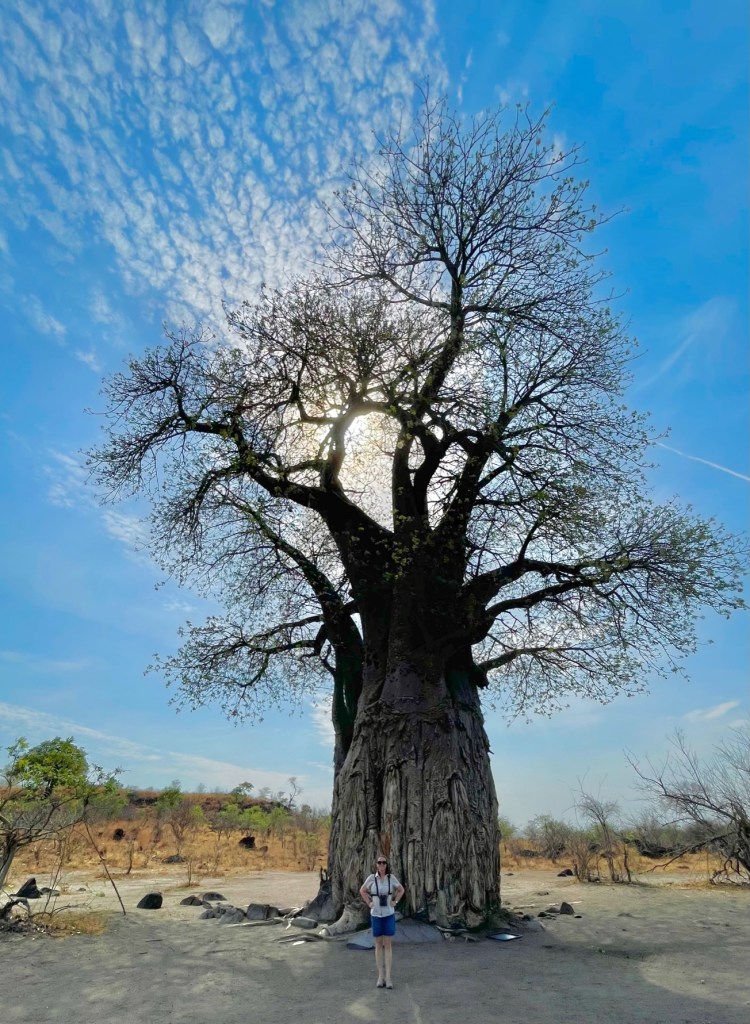
We take leave of the lions, and our group stops to have cold drinks underneath a Baobab tree near Bushman Hill. These majestic trees have been called the “Tree of Life” and have ecological and spiritual significance on the African continent.
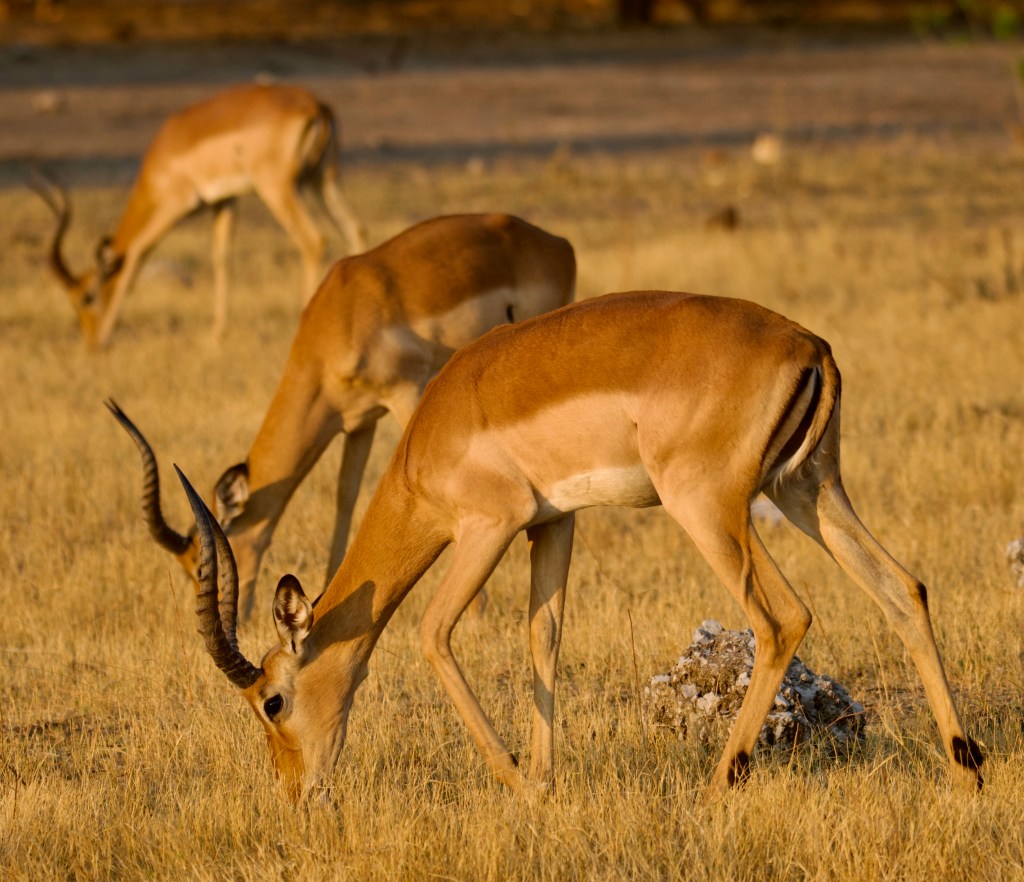
Impala grazing in the grass.
Below is a Kori Bustard. This is the national bird of Botswana.

Little Bee-eater, below. Photo by Lindsey Emerson.
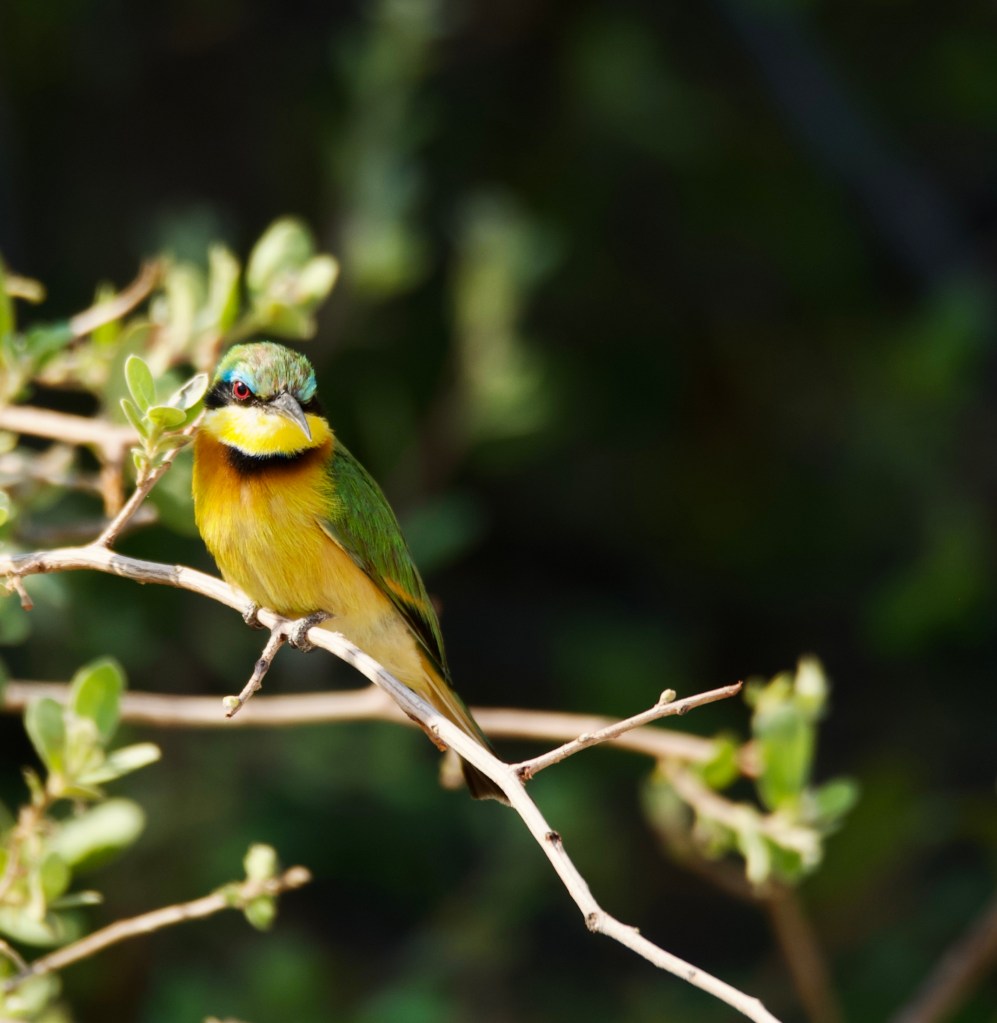
Below: a White-fronted Bee Eater.

At The Water Hole
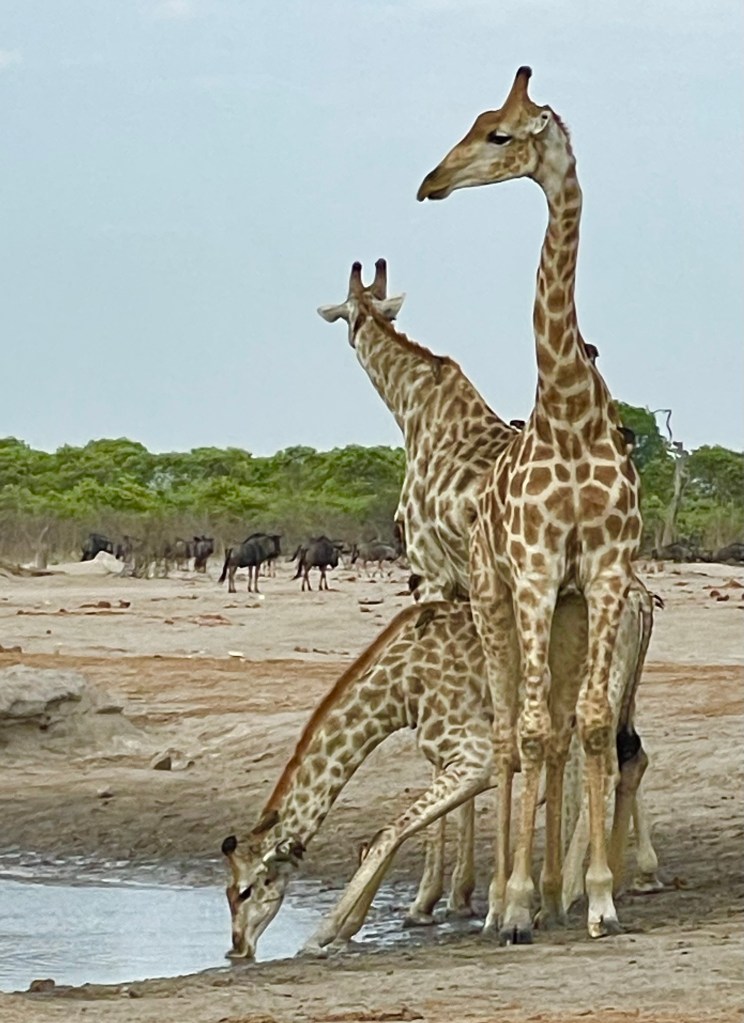
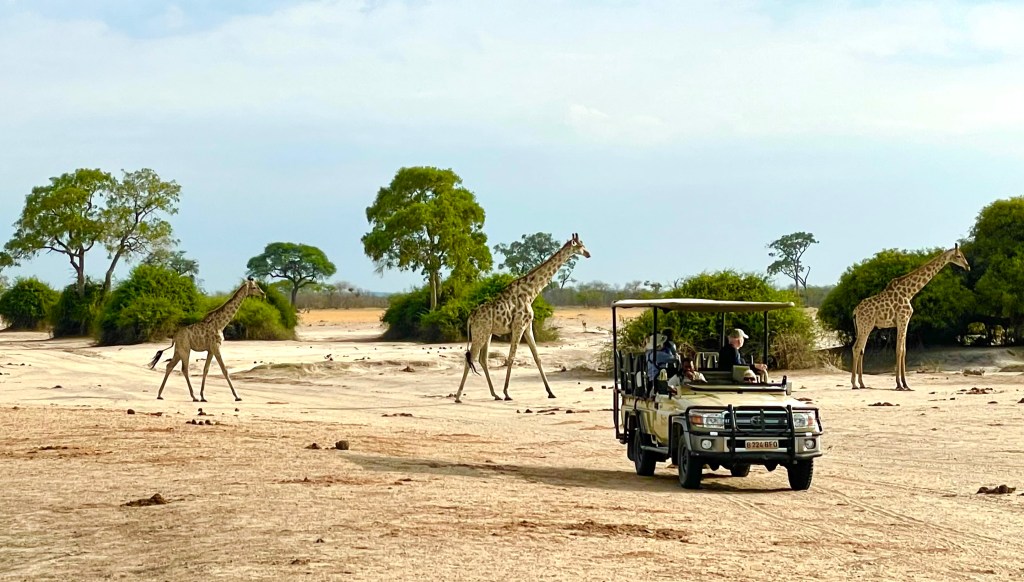
We are on our way to Savuti Marsh. I apply bug spray because I think I am heading out to a wet, marshy area. But once we arrive, there is only a water hole and it turns out that there are no bugs at all. At this particular water hole, we see Giraffes saunter by as well as other wildlife.
The Giraffes are now at the water hole, ready to drink.
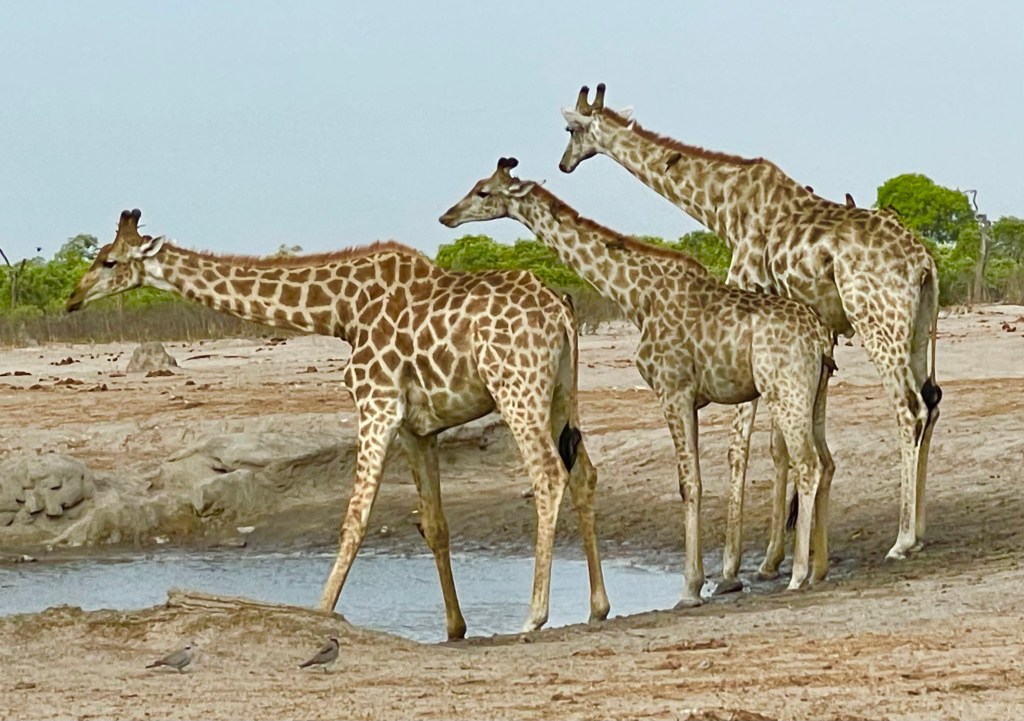
This is all that is left of the Savuti Marsh by the end of October. Hopefully, the rains come soon.
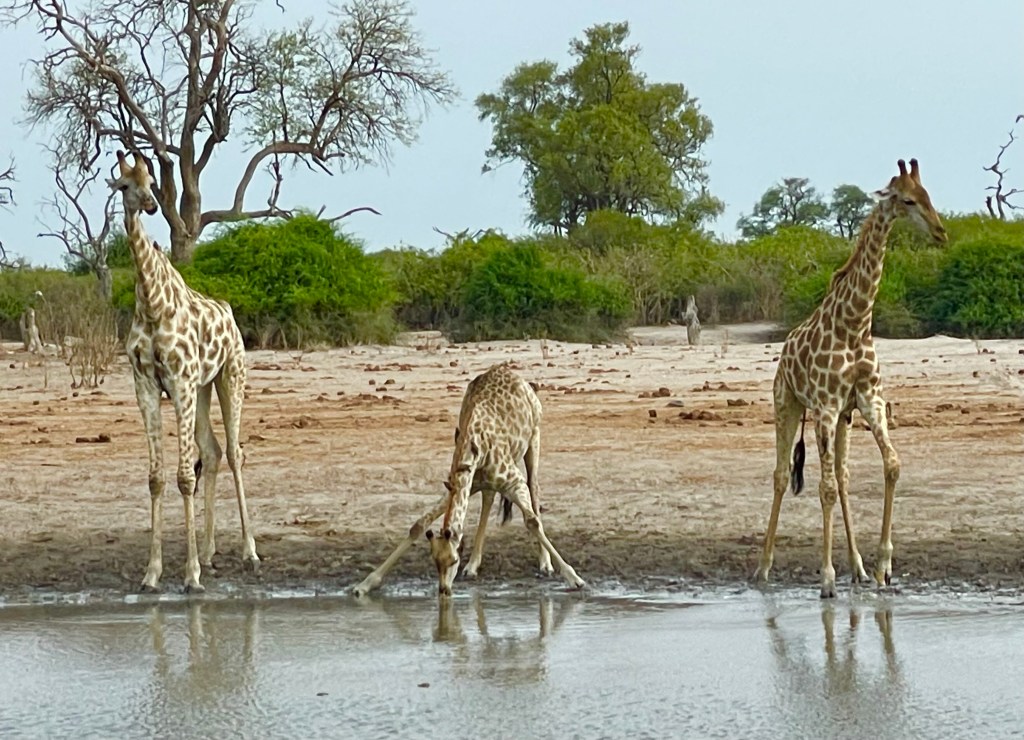
Giraffe with Wildebeest in the background.
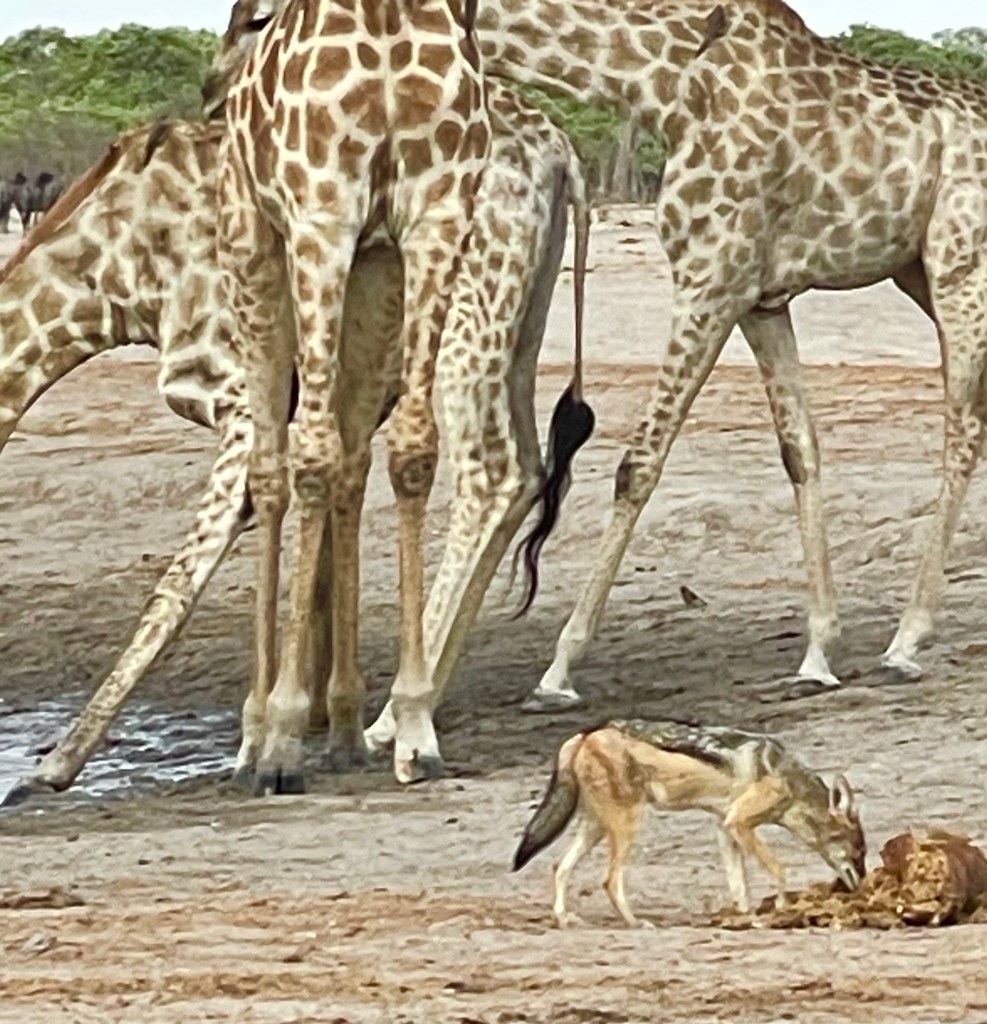
Below, a Black-backed Jackal looks for something tasty in the elephant dung. The jackal must be hungry!
Wildebeest

The three Giraffes decide to leave.
Once we arrive back at camp, I spend one last night with the lions and wildfires. By this evening, I realize that these fires are slow-burning, and that it probably won’t reach the camp by the time we leave. And I probably won’t be eaten by lions. But the best thing, by far, is that it RAINS for about one hour at about 3 o’clock in the afternoon. Yay!!
Next Up: The Okavango Delta and the Moremi Game Reserve. Thank you so much for reading to the very end. You must love animals!
 birds fly free
Diana,
Excellent blog. While the story was fun, the writing was outstanding! Sorry to hear about your camera 😞 as I know how much a camera means to a birder. I have not been to Savuti but if you liked Chobe, you should love the Okavango Delta.
Safe travels, Charlie
LikeLiked by 1 person
Thank you for the comments Charlie! My camera is currently being fixed, and I am looking to rent and try a Canon camera this time. 🙂 The one I have is just too bulky to bring on trips!
LikeLike
Not sure of your price range, etc. but in late January before a birding trip to Hawaii, I bought a Canon R7 with a 100-400mm lens and have very much enjoyed it. The animal (incl. birds) tracking and eye tracking are terrific. And the weight is so good compared to my old Canon 77D with an EL 400mm fixed lens! But there is an excellent Sony out there, just cannot remember the name. Good luck with whatever you end up doing. Charlie PS: two local friends bought the R7 and have been very happy. There are more expensive Canon R series (mirrorless) for more serious photographers.
LikeLiked by 1 person
Thanks so much for the info. Charlie. I will be testing out a few different models. 🙂
LikeLike
Wonderful pictures – shame about the camera but you obviously do not need it – roasted by fire, nibbled by lions — just fabulous – love the giraffe family.
LikeLiked by 1 person
Thank you so much Peter. Hope to see you again on a trip soon!
LikeLike