
Our journey begins in late October at the end of the dry season. The rains have not yet arrived, and the animals are suffering from lack of water. Luckily, we get to see them because they all travel to the watering holes and rivers to drink. Hopefully, the rains will come soon.
The fifteen-hour flight from Newark to Johannesburg would tax even the youngest of travelers and I, being not so young, am happy to finally walk around and get the blood moving once we land. The next morning we fly from South Africa to Botswana and from there drive to our first Safari Camp in Chobe National Park. This article covers the Chobe Game Lodge situated on the Chobe River and the many animals that live in the wild there. It is the first in a series of 4 on Botswana.
Chobe Game Lodge
on the Chobe River
After landing on the tarmac in Kasane, our group climbs up into the Land Rovers that are waiting. These vehicles are specially outfitted by Toyota for group Safaris. Onx Manga of Maun is our trip leader, and he is a friendly and knowledgeable guide. Chobe National Park is one of the most pristine ecosystems in all of Africa, where one can see Elephants, Lions, Giraffes, Hippos and more.
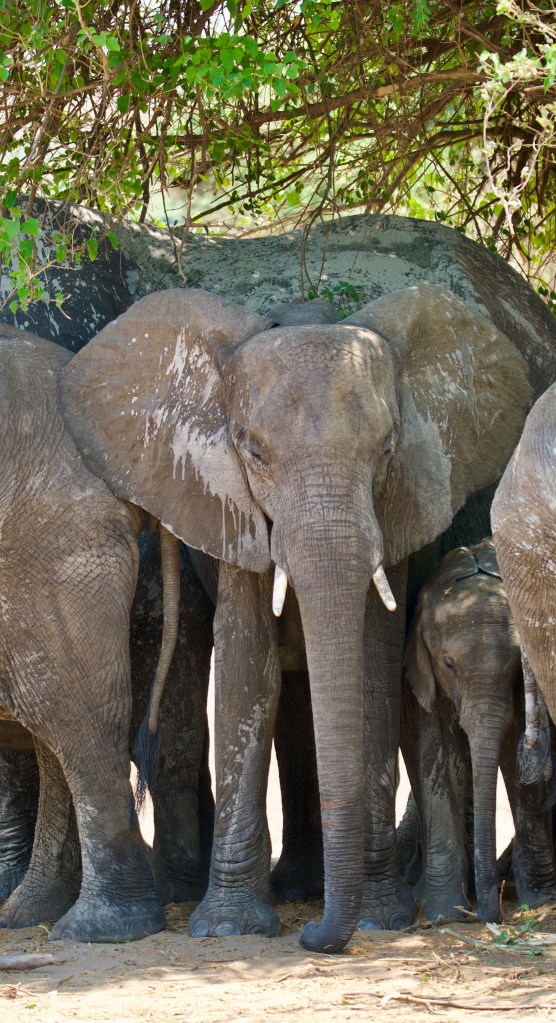
The roads consist of white sand and we soon spot our first gentle giants near the lodge.
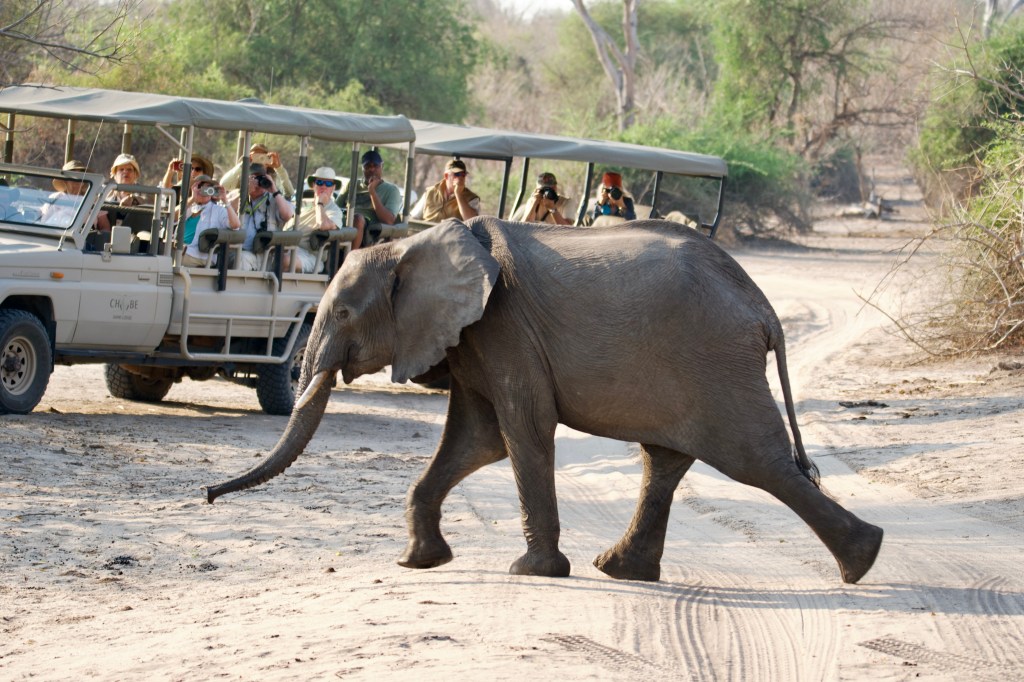
The African Savannah Elephant is the biggest elephant in Africa, and the largest concentration of these is in Botswana. We find this small herd under a shade tree attempting to stay cool in the 95-degree heat.
We finally reach the Chobe Game Lodge, and we are not disappointed. We will not experience this level of luxury for the rest of our journey. But for three days and three nights, this place is heaven on earth and it’s my favorite lodge of all.
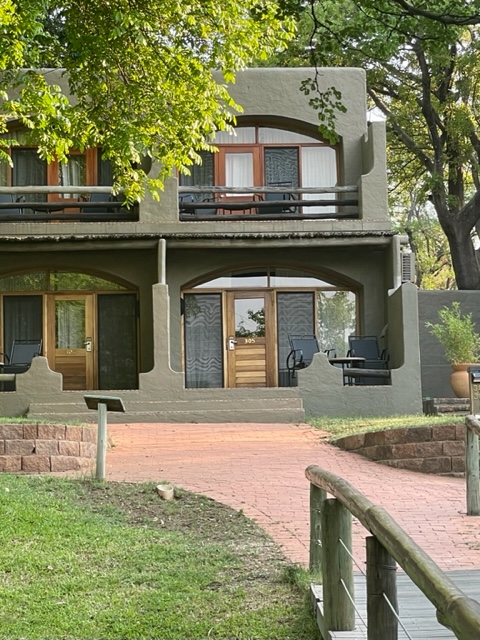
A gorgeous, clean pool allows us to escape the afternoon heat. Shade comes at a premium here…

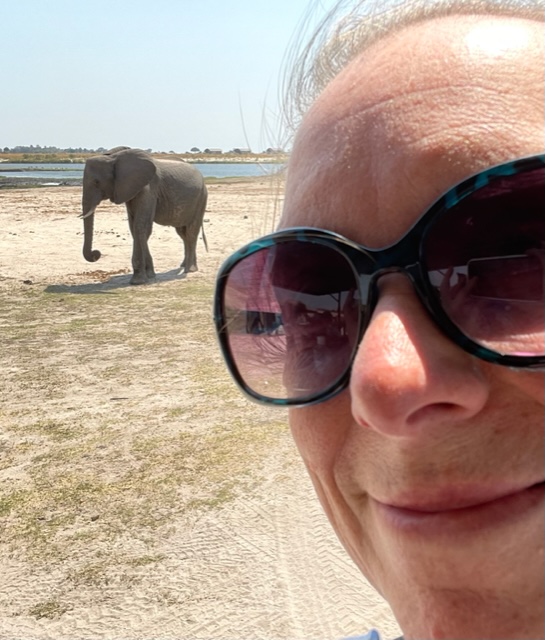
Around four o’clock in the evening, we head out on our first “game drive”, even though the animals are not game per se, and only limited hunting of wild animals is allowed. Most animals are protected within the national parks, which make up vast areas of the country. Our first drives (with a guide who knows the area) are some of the most incredible of the trip, as you will see. (This is not photoshopped … there really is an elephant behind me!)
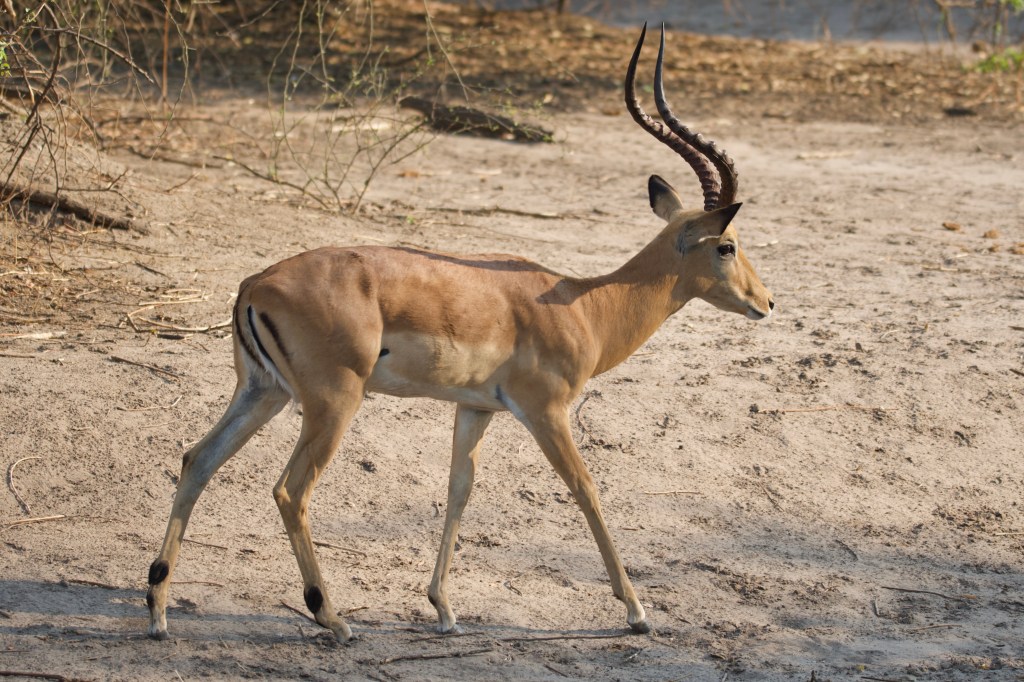
This is a male Impala with large horns. All of the antelopes hide in the bush during the day and also at night. They hide from predators such as the lion and leopard. All of the female Impalas are pregnant at the same time.
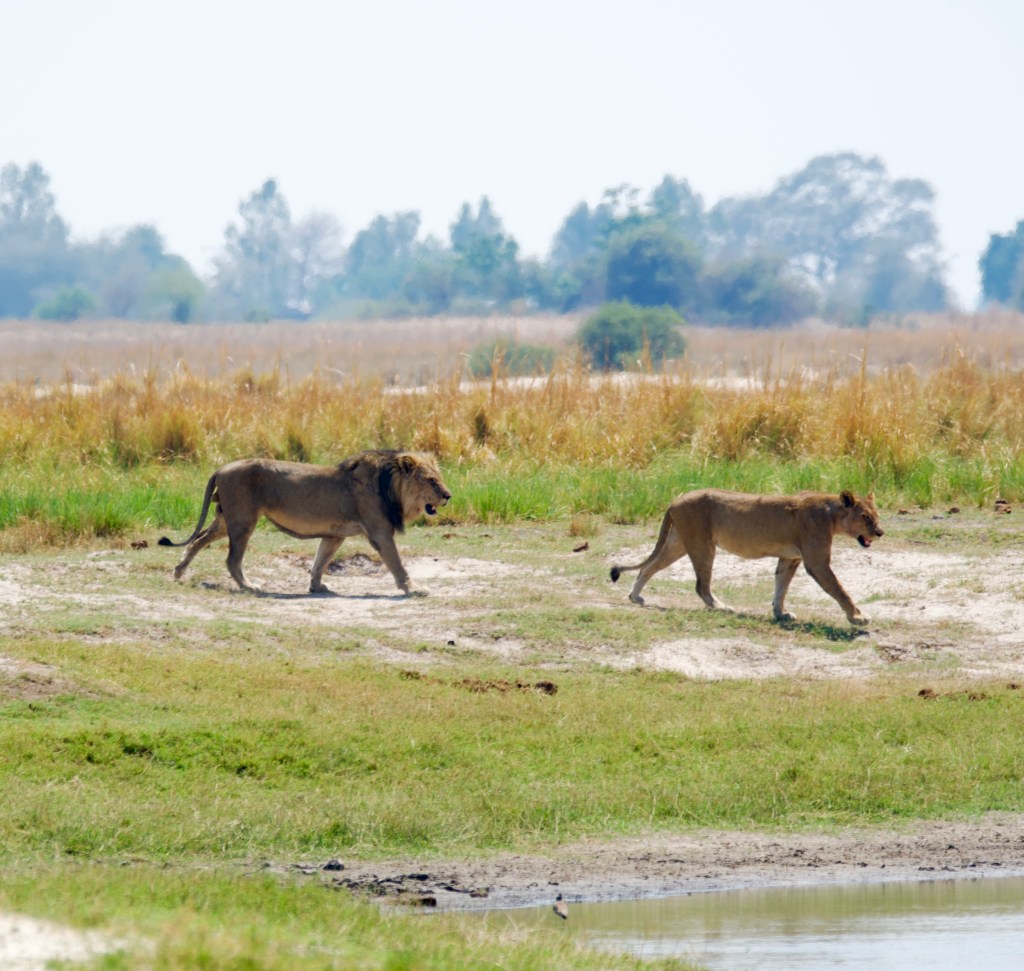
The lions begin to awaken on our first full day in Botswana. We are told there is a older male lion (Mufasa!) with female who is fighting with an interloper that is attempting to take his place in the pride. Mufasa does not allow the younger interloper to succeed. Here, Mufasa is seen walking with the female.
The older male lion has a full mane, whereas the younger interloper has just the beginnings of a mane.
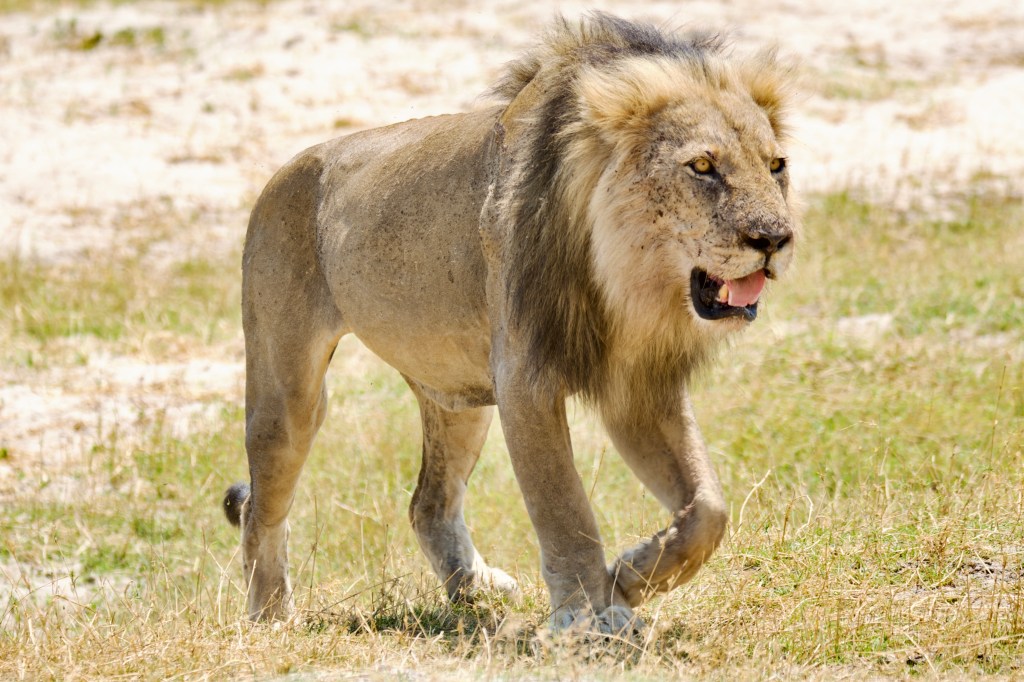
Mufasa roars in order to stave off the younger upstart. You never forget the first time you hear a lion roar. This is our first time, but will not be our last.

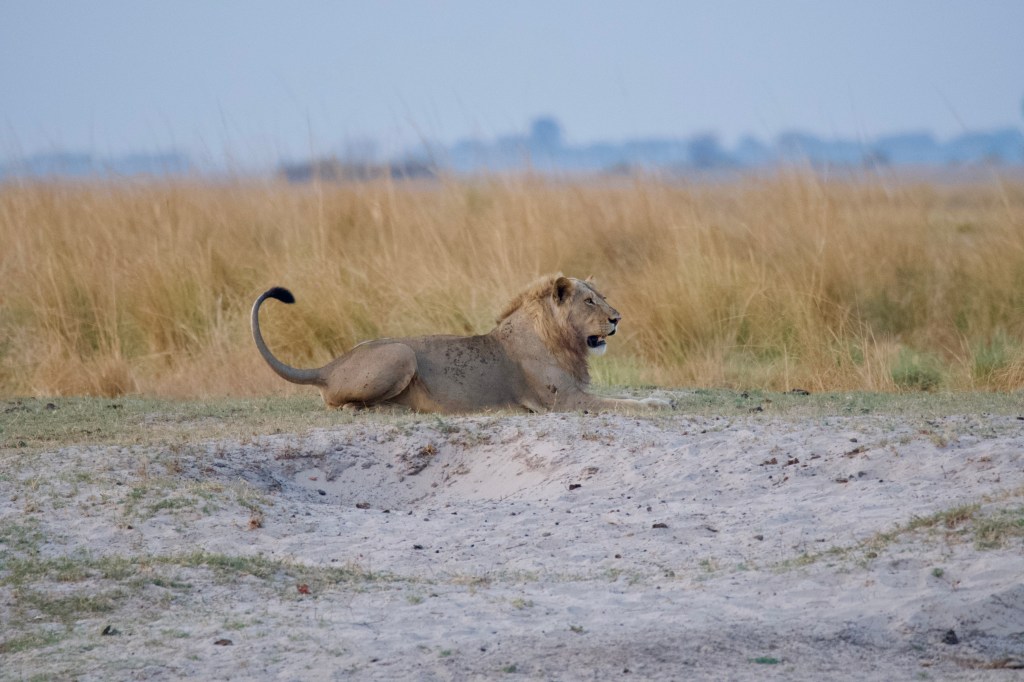
The young male decides to sit and wait it out, or maybe he decides to concede and stay out of trouble.
We see some neat, exotic-looking birds like these Lapwings:

Blacksmith Lapwing (above)
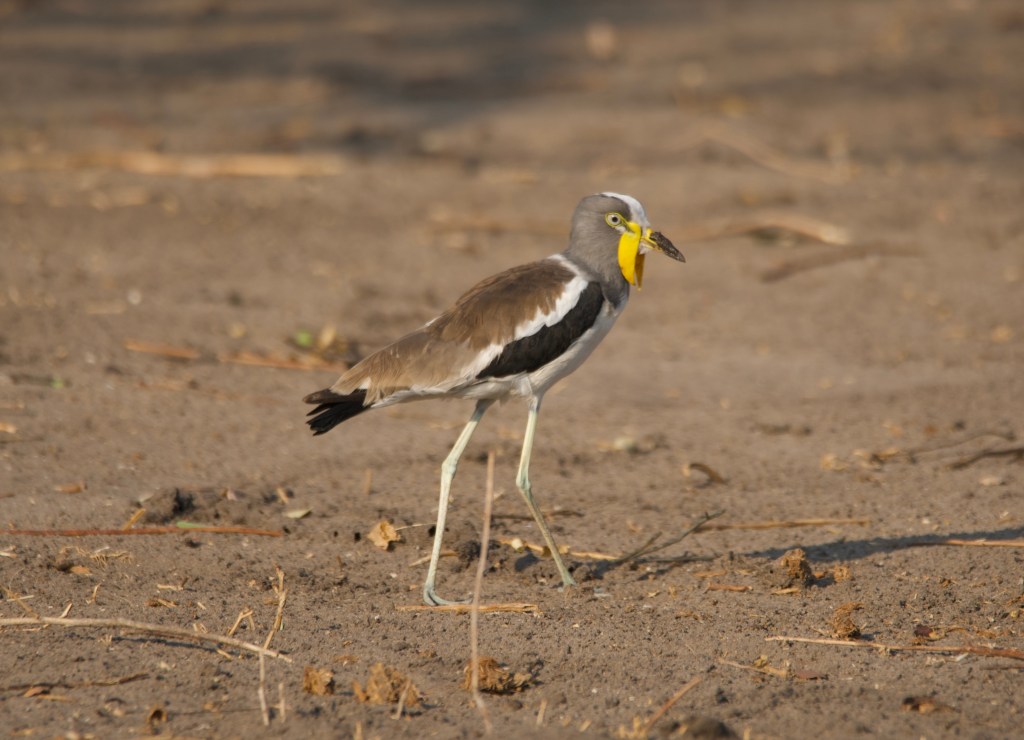
White-crowned Lapwing

We encounter many Baboons in Botswana. They even hang around the lodges, play and jump onto the roofs of our tents.
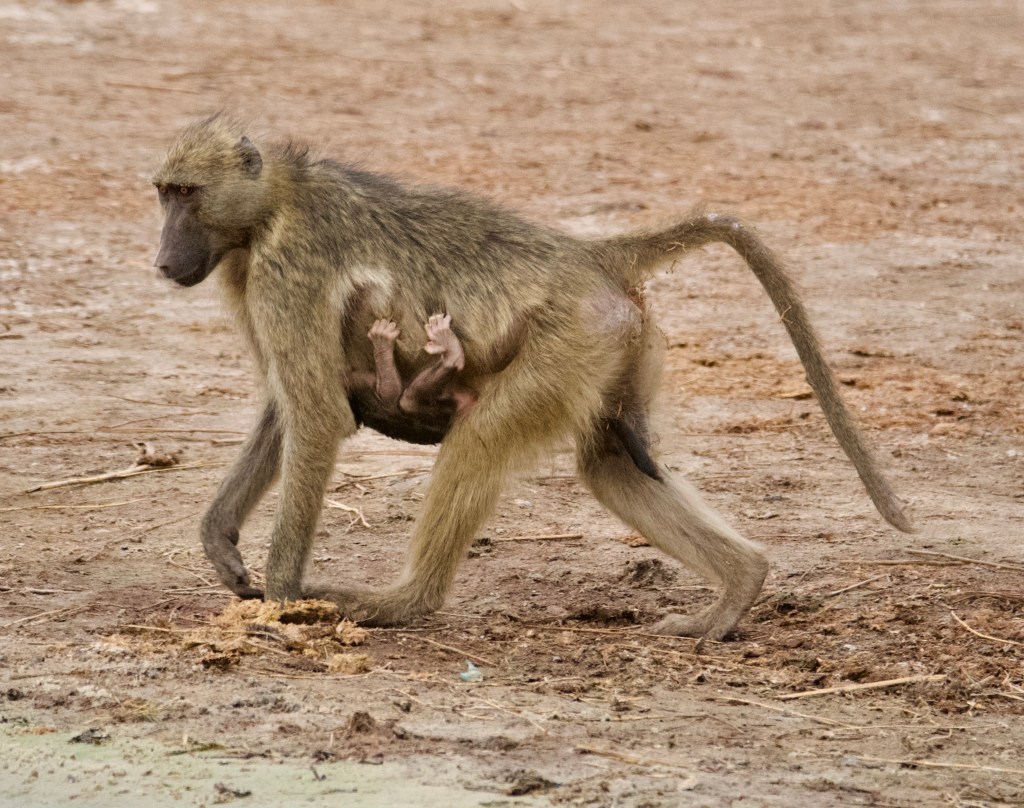
Baboon with its baby. I have so many baboon photos in my portfolio that I will have to do a separate blog article just on Baboons and also one on Elephants!
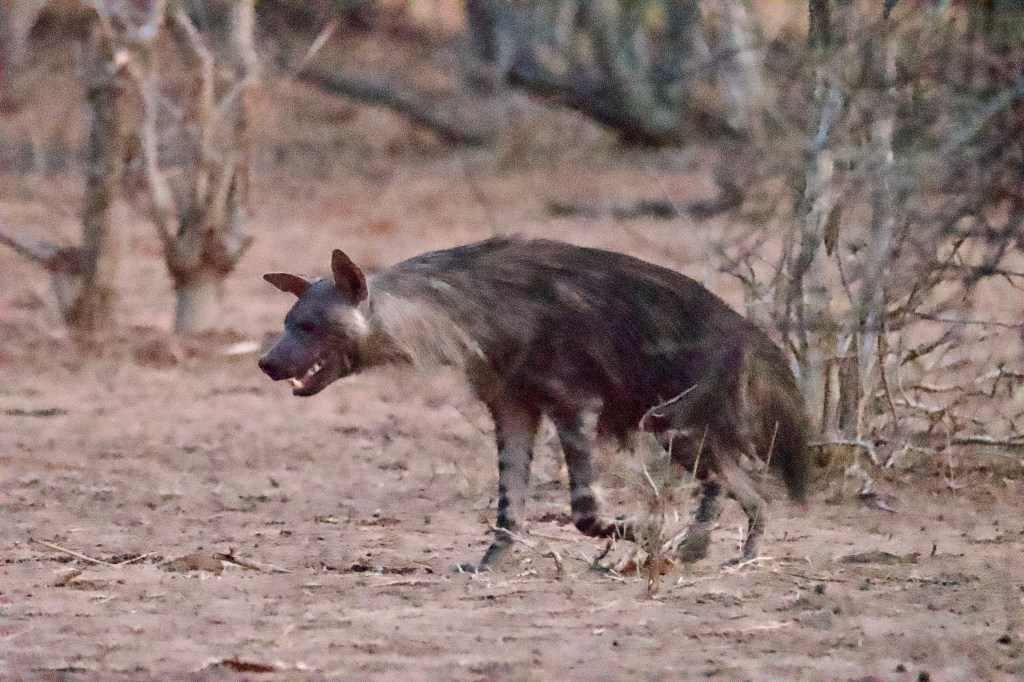
As we are heading out, we catch a glimpse of a Brown Hyena running around in the bush. Onx says they are a rare sighting in Botswana.
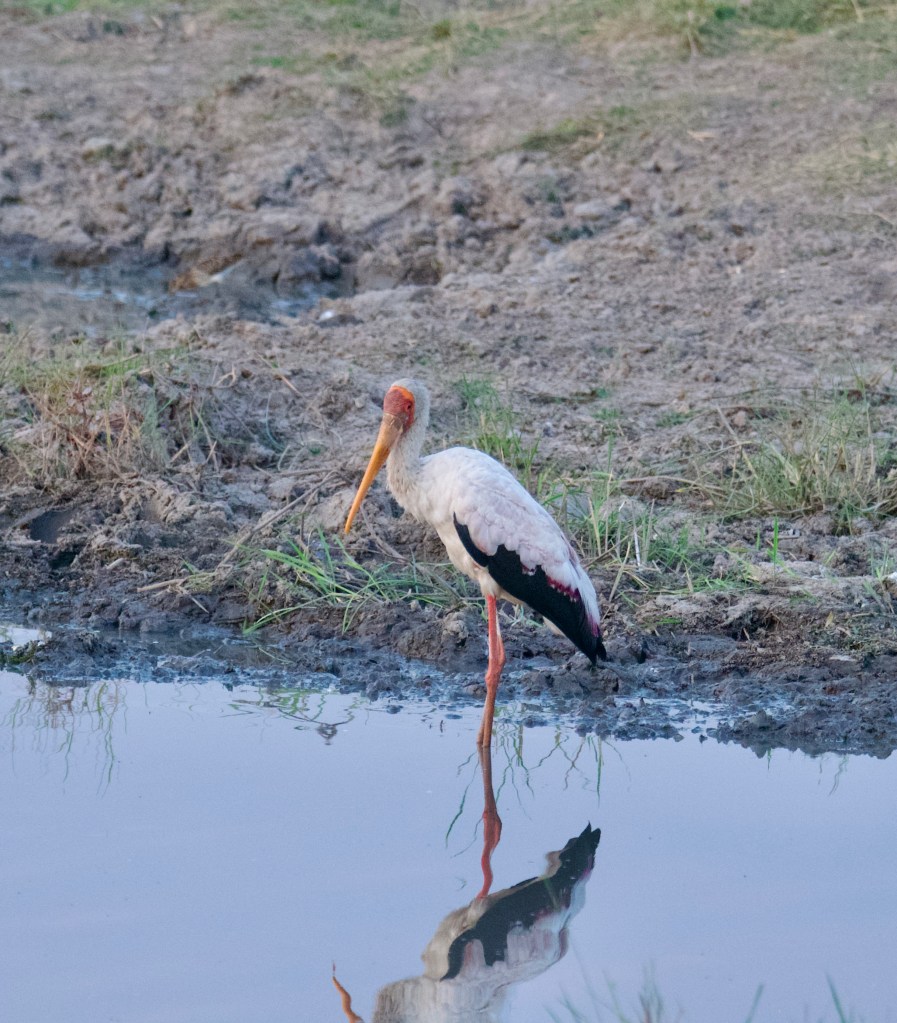
Another cool bird we see is the Yellow-billed Stork, below. (We also see many Maribou Storks, which are not as colorful as this).
We are thrilled to see our first Giraffe, seen here with a group of Impala in the background. They are so elegant.
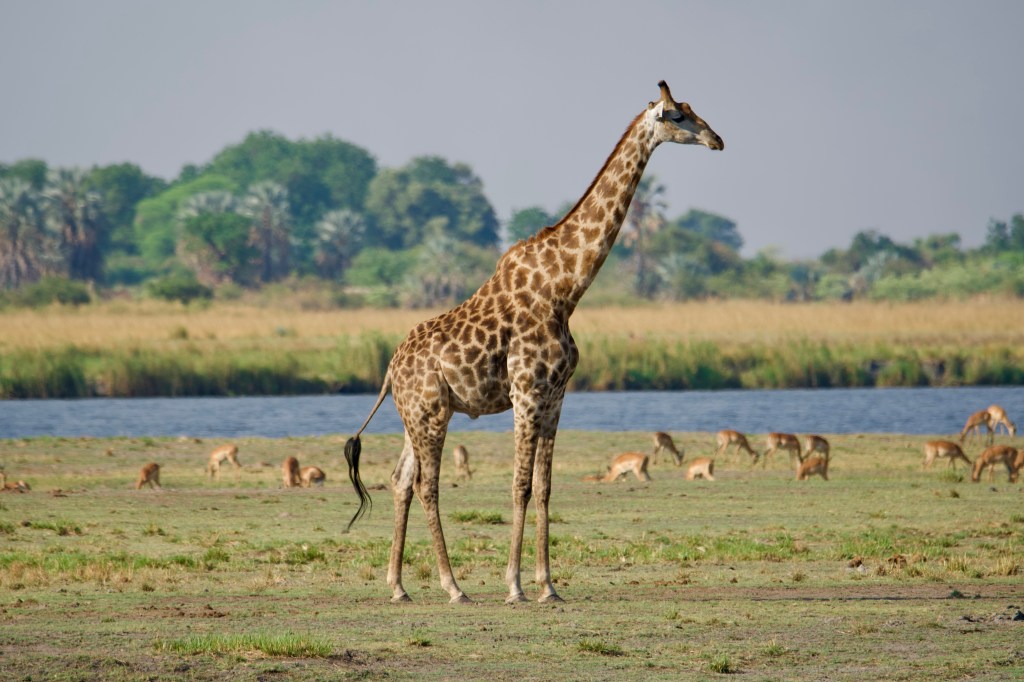
The Giraffe cannot easily lower itself to drink and must slowly and carefully spread its long legs to access a water hole.
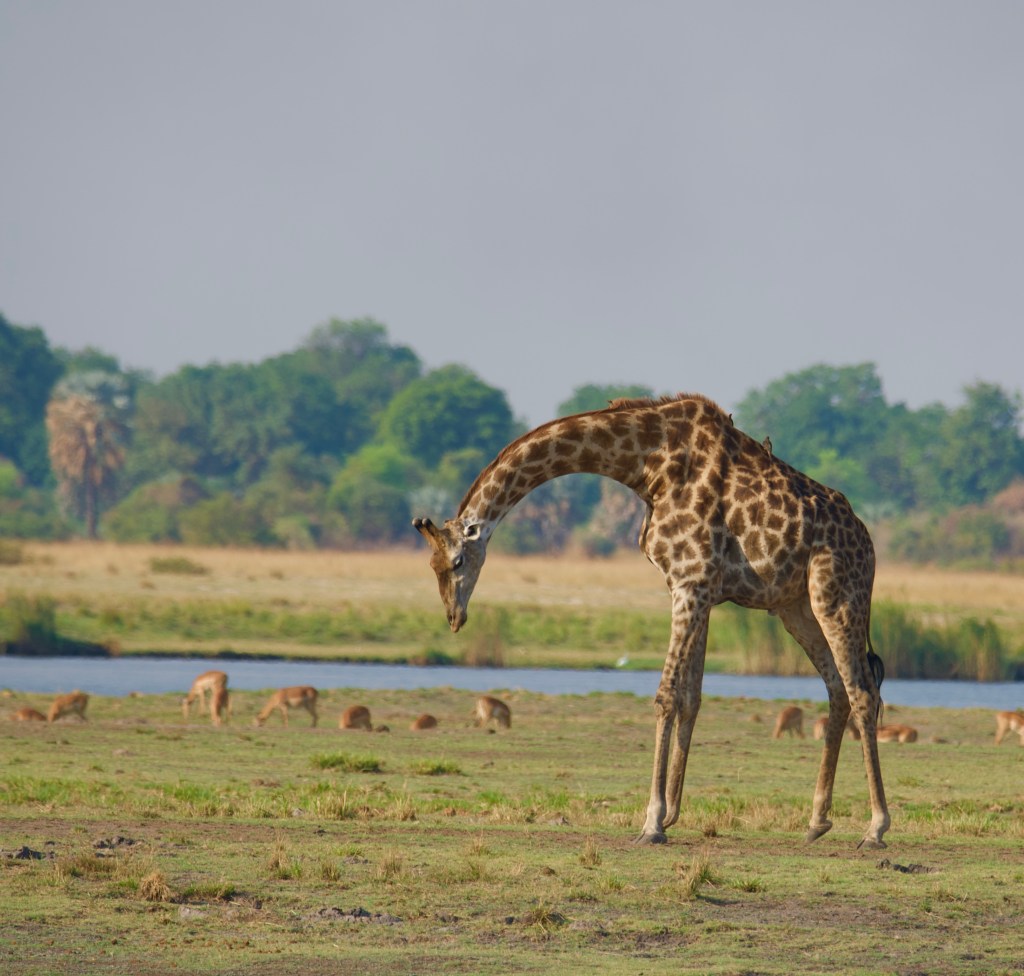
This places the Giraffe in a vulnerable position. They are always on the lookout for predators. Giraffes are vegetarian and quite fashionable with their iconic brown and beige skin patterns.

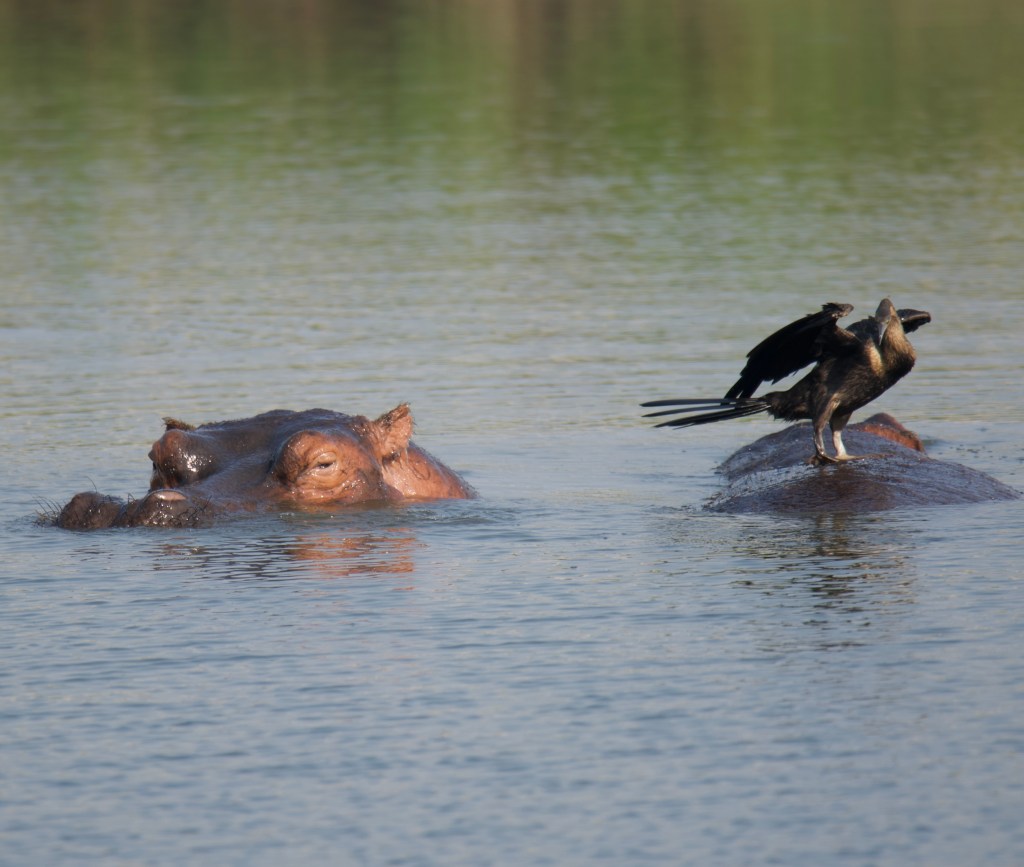
Hippopotamus or hip-hip-hop-opotamus as Rob Schneider would say. Hippos can stay submerged under water for over 5 minutes. Or was it 8 minutes? I can’t remember. But these are the first ones we come across.
I thought I would end with an image of an adolescent Baboon on its parents’ back. This one is cute, but getting too big to be carried around!

More to come next week about Chobe National Park in Botswana. I’m just getting started, so stay tuned and thank you for reading and commenting on my posts!!
 birds fly free
Thanks, Diana. It was enjoyable to re-visit this early part of our trip through your excellent photos and narrative.
LikeLiked by 1 person
Thank you Eleanor, that is kind of you to say! More posts on Botswana to come! 🙂
LikeLike
Diana,
These photos are superb! Congrats and thank you for producing such wonderful images!
Dan Wallace
LikeLiked by 1 person
Thanks, Dan – there are more to come!
LikeLike
Diana, very nice!!! Brought back good memories as I have been to Chobe and Okavango Delta. Chobe is great elephant country. Thanks for sharing. Charlie
LikeLiked by 1 person
You’re welcome, Charlie…. it is so amazing, I love to share the beauty of nature w/ others.
LikeLike
I’m so thrilled you visited my home continent Diana!
I’ve been to Botswana but not to Chobe – the country is beautiful and the wildlife even more so. For me visiting a game reserve restores my soul and I feel I can breathe deeply once again.
Thank you for sharing this – it was lovely to read about your impressions.
Take care, Liz
LikeLiked by 1 person
Thanks Liz! I am also thrilled to have visited, but I only spent one day in Johannesburg. Would love to go back and see more of Africa someday!
LikeLike
Wonderful photos and description. So glad you had a great trip!
LikeLiked by 1 person
Thanks David! How is the birding up north?
LikeLike