
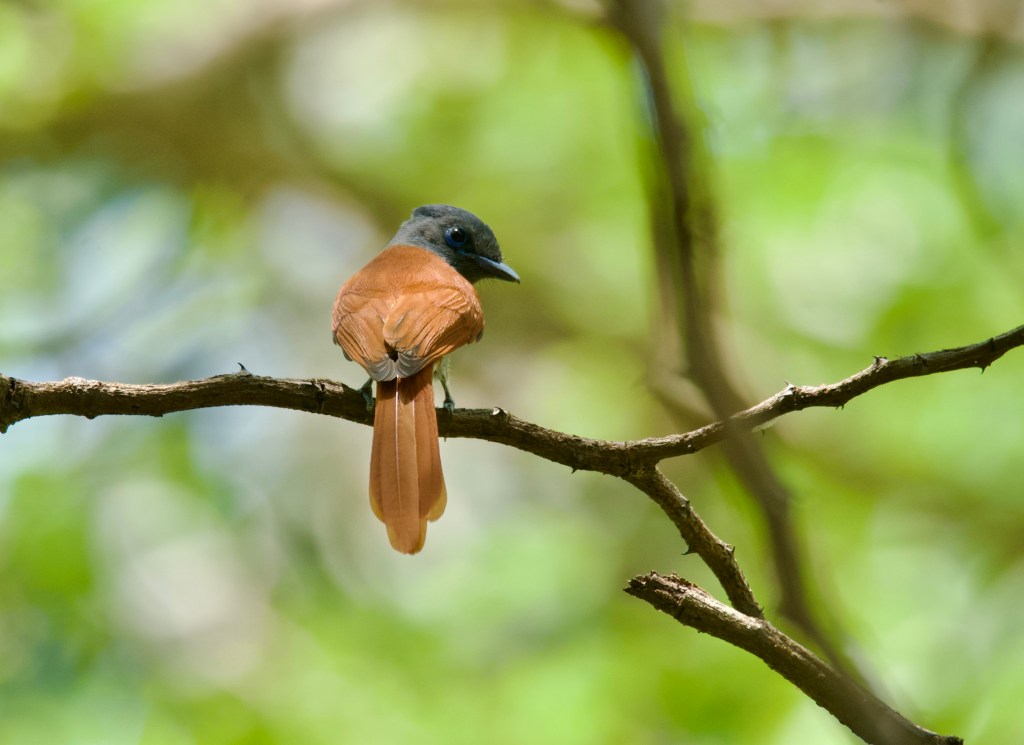
At six a.m., before I have a chance to take my first sip of coffee at Chobe Game Lodge, I see a bird flying around in a tree with its orange tail flapping in the wind. We don’t have birds like this in New England. I find out later that it’s an African Paradise Flycatcher. It takes me two days to get a decent photo, as this bird is very fast and eludes me at every turn.

The Paradise Flycatcher is fairly common in Botswana. Nature has devised many ways for male birds to attract their mates. The female is not too far away. Notice that she doesn’t have the same stunning features as the male bird.
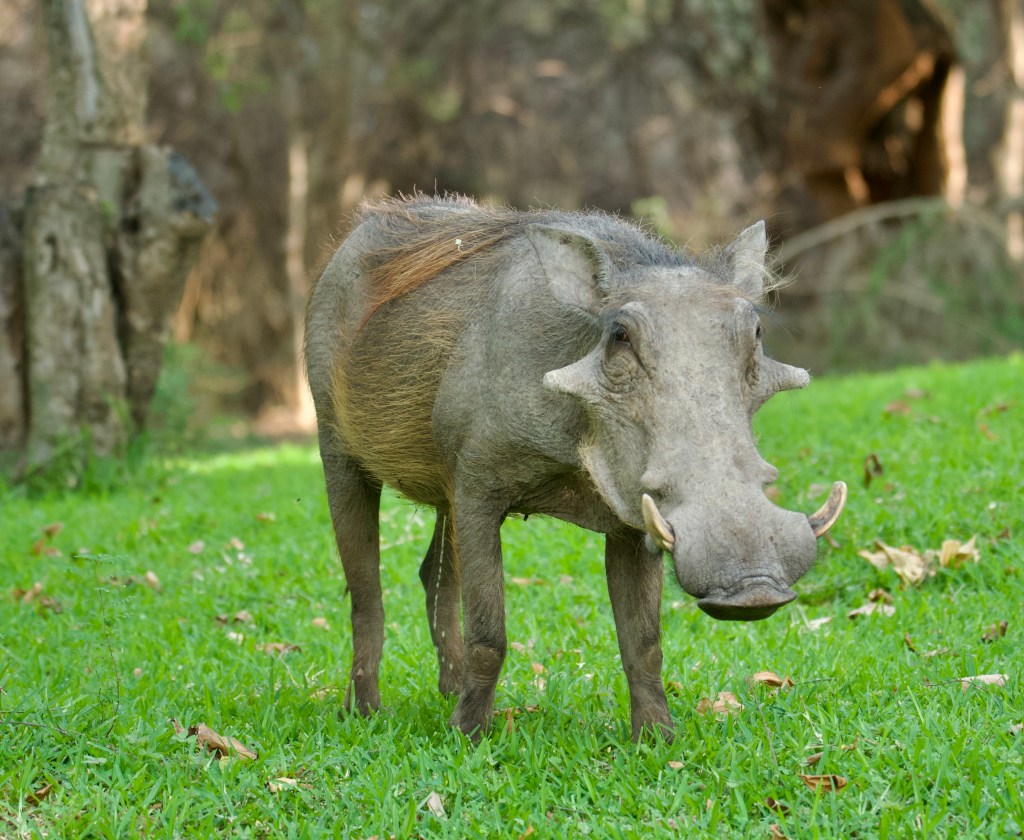
Warthogs like to hang around on the lawn in front of the Chobe Game Lodge, near to where the lions enter the property. One thing that nobody ever mentions before you go on a safari is that at the lodges, no one is allowed to walk to their room alone at night without a guide. This is because there are lions around!
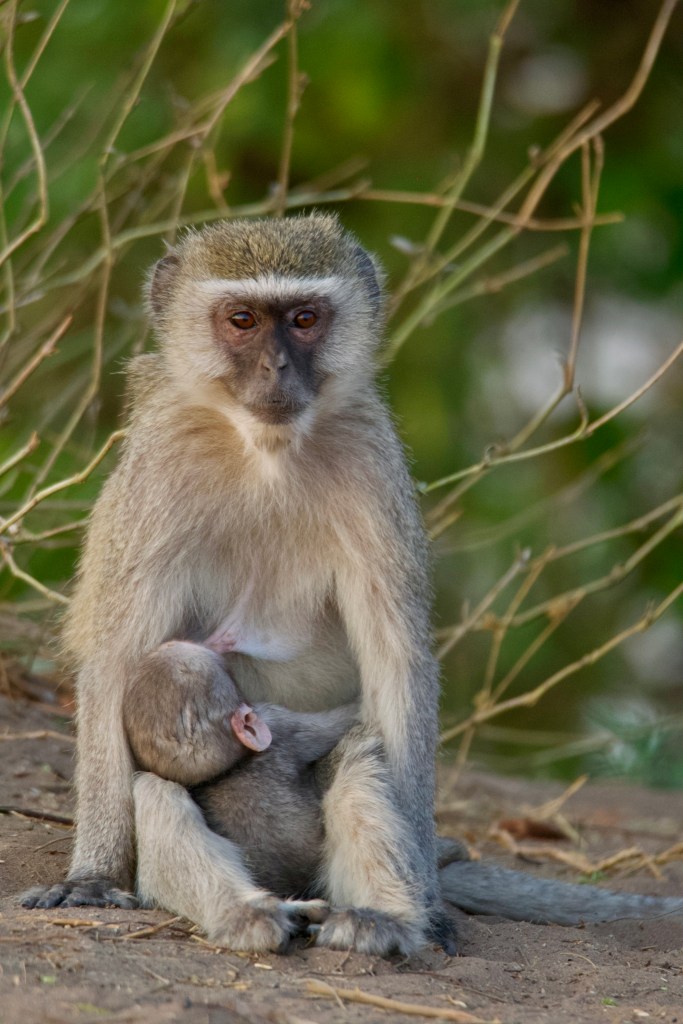
We leave for the game drive at 6:30 a.m. On our way to the Chobe River, we spot a Vervet Monkey mom with her baby. How precious and beautiful each life is.
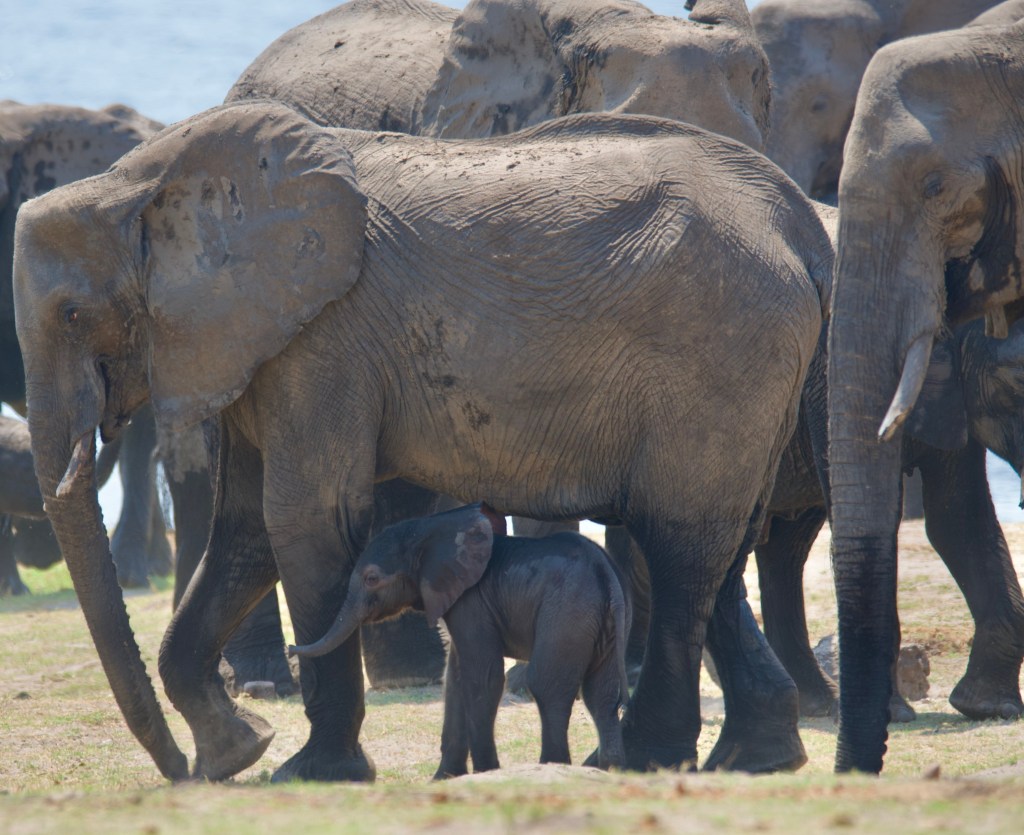
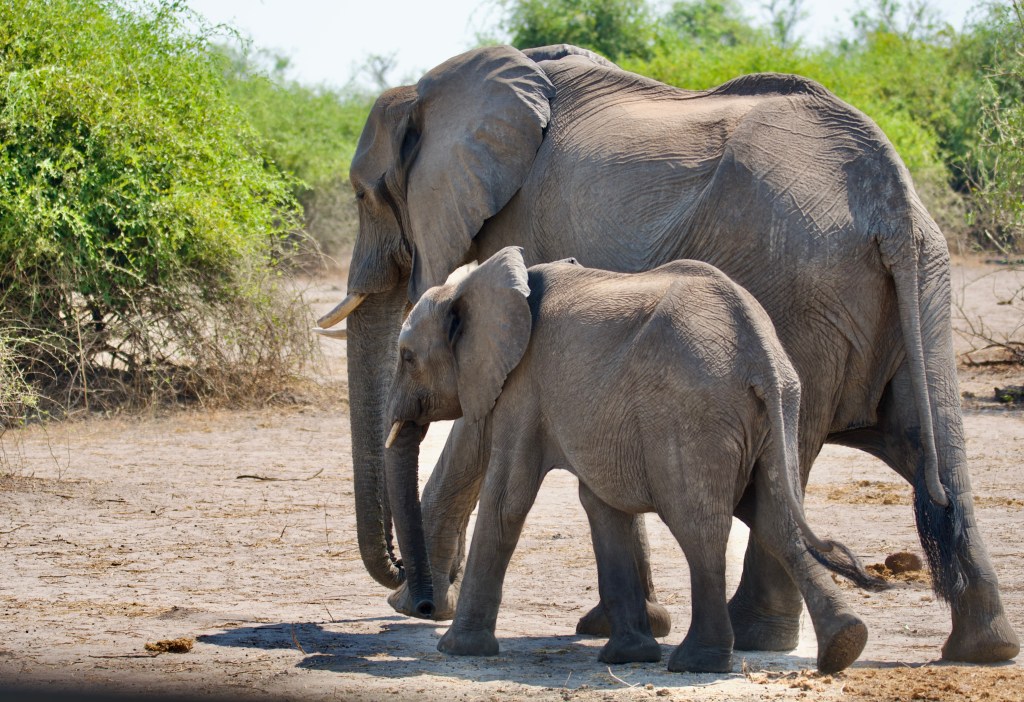
We soon witness our first large herd of elephants coming down from the savannah to the river to drink. They have young in tow, and the large adults keep a close watch on the babies, surrounding and protecting them from predators. We watch as they run down towards the river. They must be very hot and thirsty.
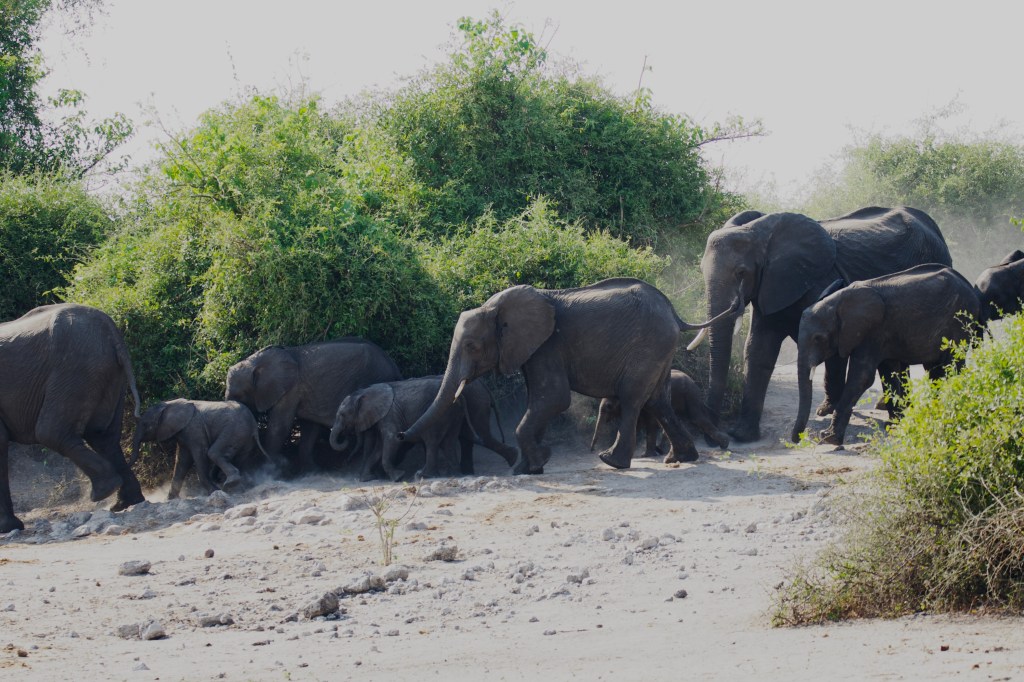
The elephants are good parents, watching over and protecting their young.
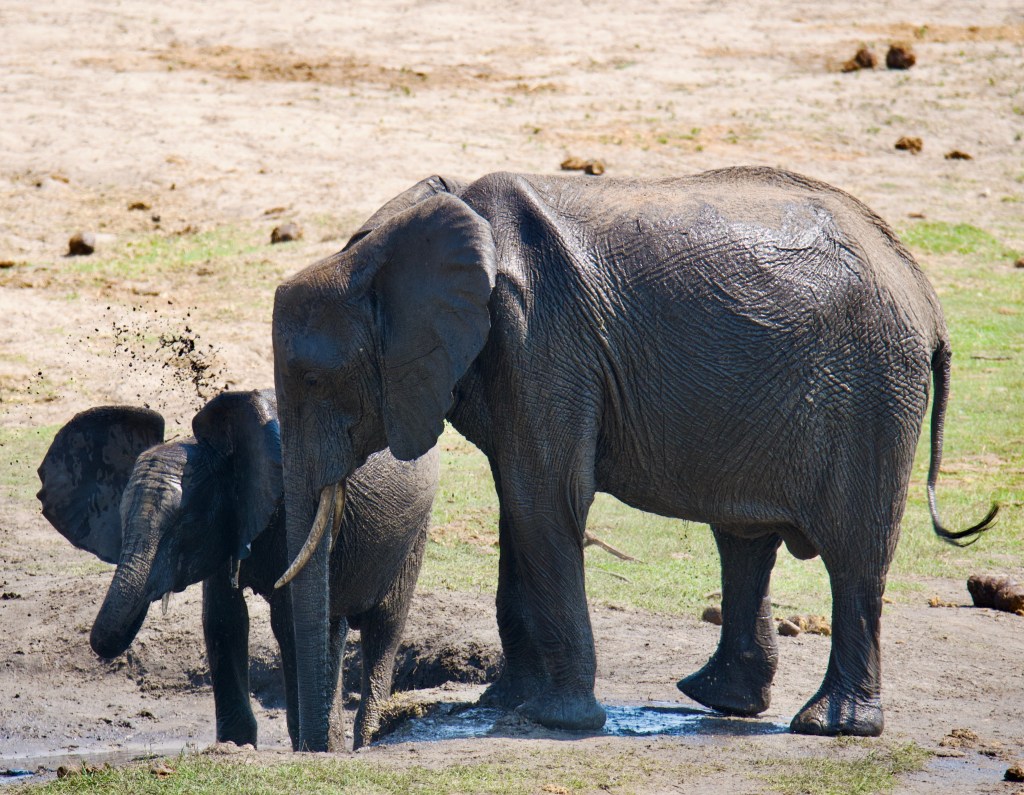
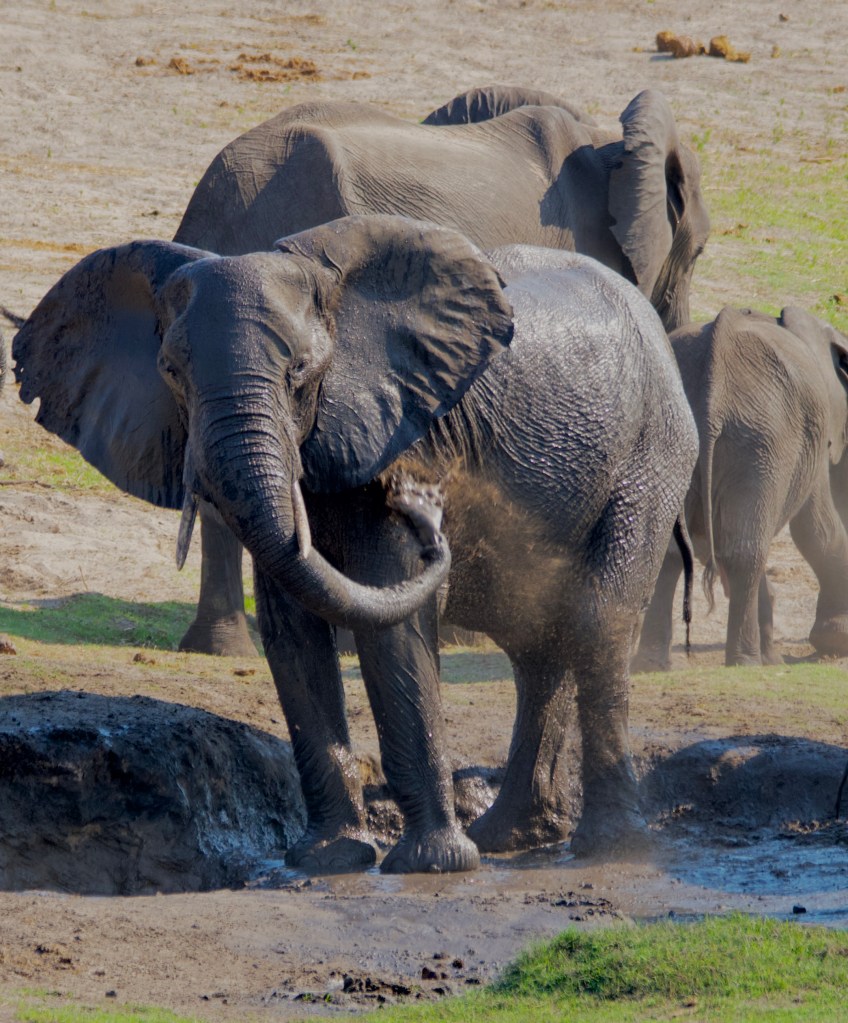
Elephants are known to sling mud onto their backs in order to stay cool in the hot African sun. Another theory states that the mud protects them against parasites or insects.
The guides catch wind of a Lion kill. The large felines have taken down a baby elephant, close to where the herd comes in. When the herd of elephants arrive on the river bank, we wonder if it is the same group that lost a baby, but this herd doesn’t seem to react when they see the bloody scene.

A British film crew films a documentary of the kill for network television. They are extremely close to the lions, as you can see. Sometimes I think the drivers get too close to the animals.
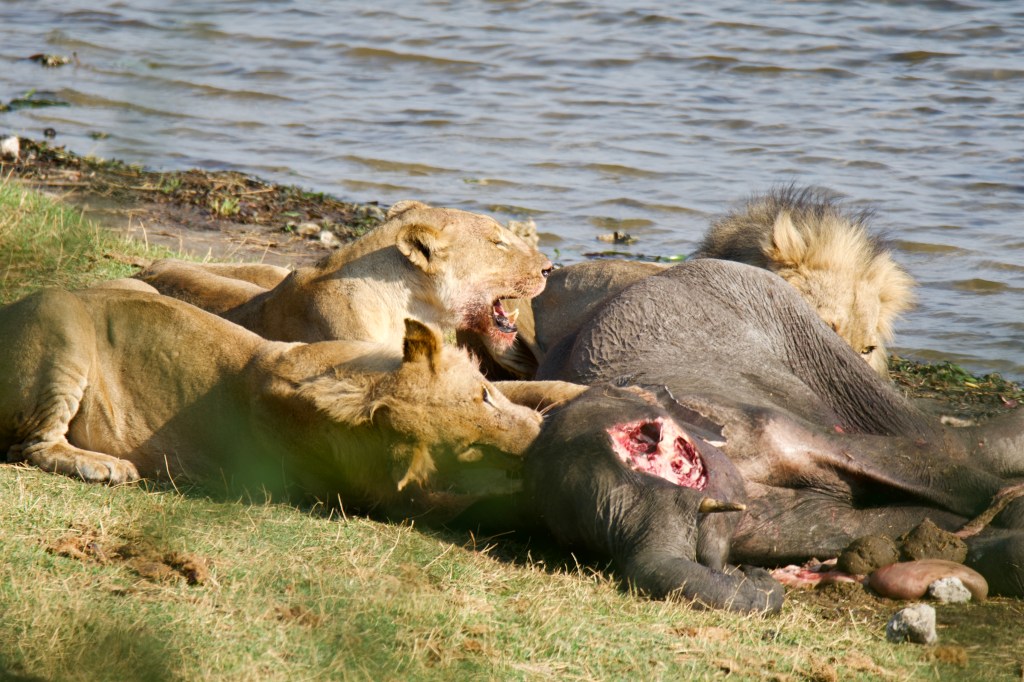
Our driver brings us around to watch the lions from a different angle. Poor baby elephant! But this is nature’s way. Apparently the lions love the eyes, so they go for them first, as a delicacy. The lions are now devouring the entrails from the back. I later learn that they actually prefer the taste of water buffalo.
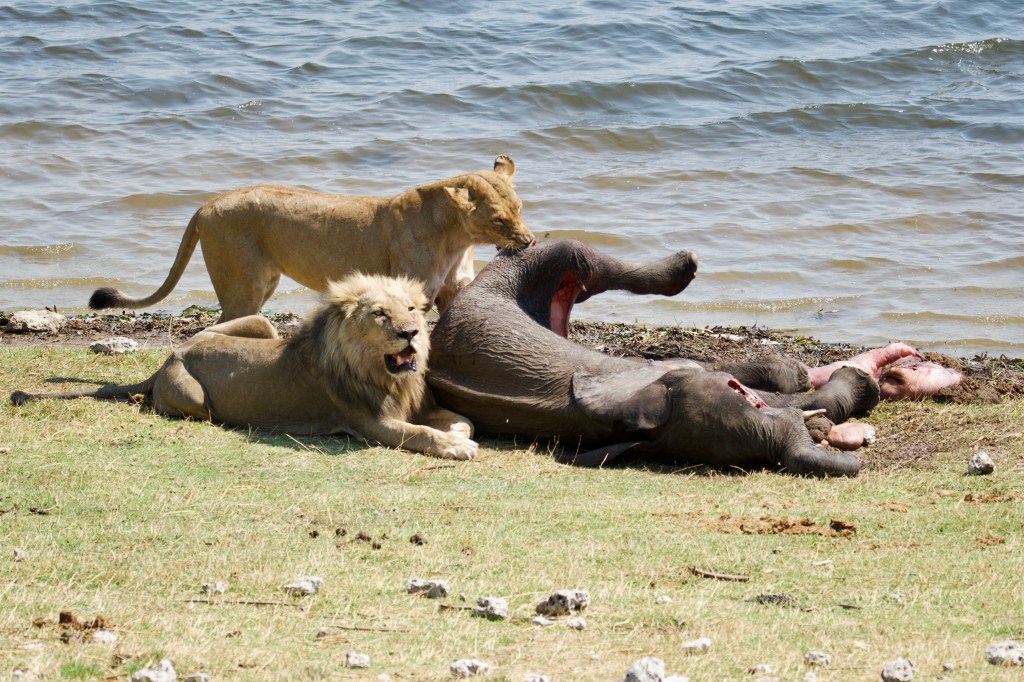
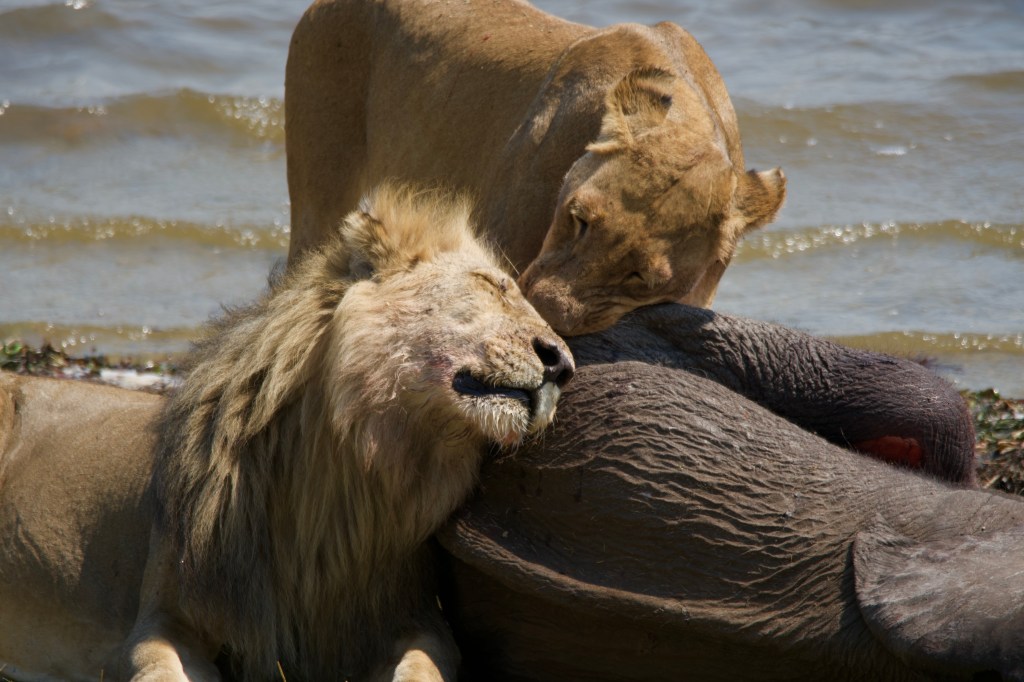
In a pride of lions, the dominant male lions are responsible for defending their territories. The females do most of the hunting, however, in packs. The dominant male eats first, and he has already had his fill. Below, he rests his head on the elephant while the female continues to eat.
The elephant herd finally leaves the river and returns to the savannah to seek shade.

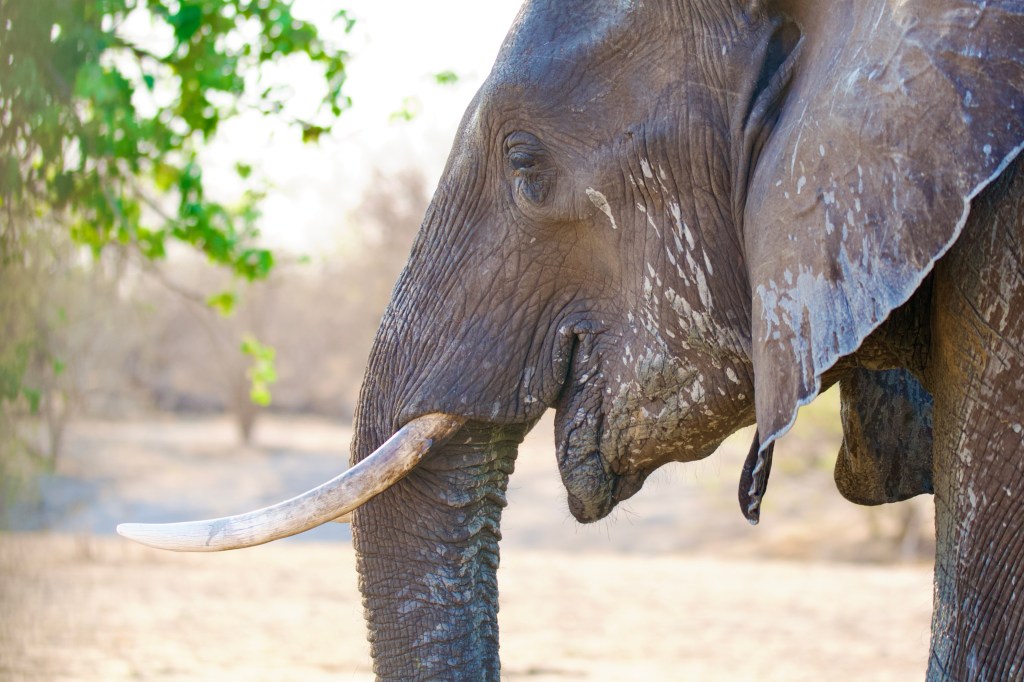
It is amazing how close I can get with my 600 mm lens. As our guide, Onx, says, this is an elephant that has taken good care of its tusks.
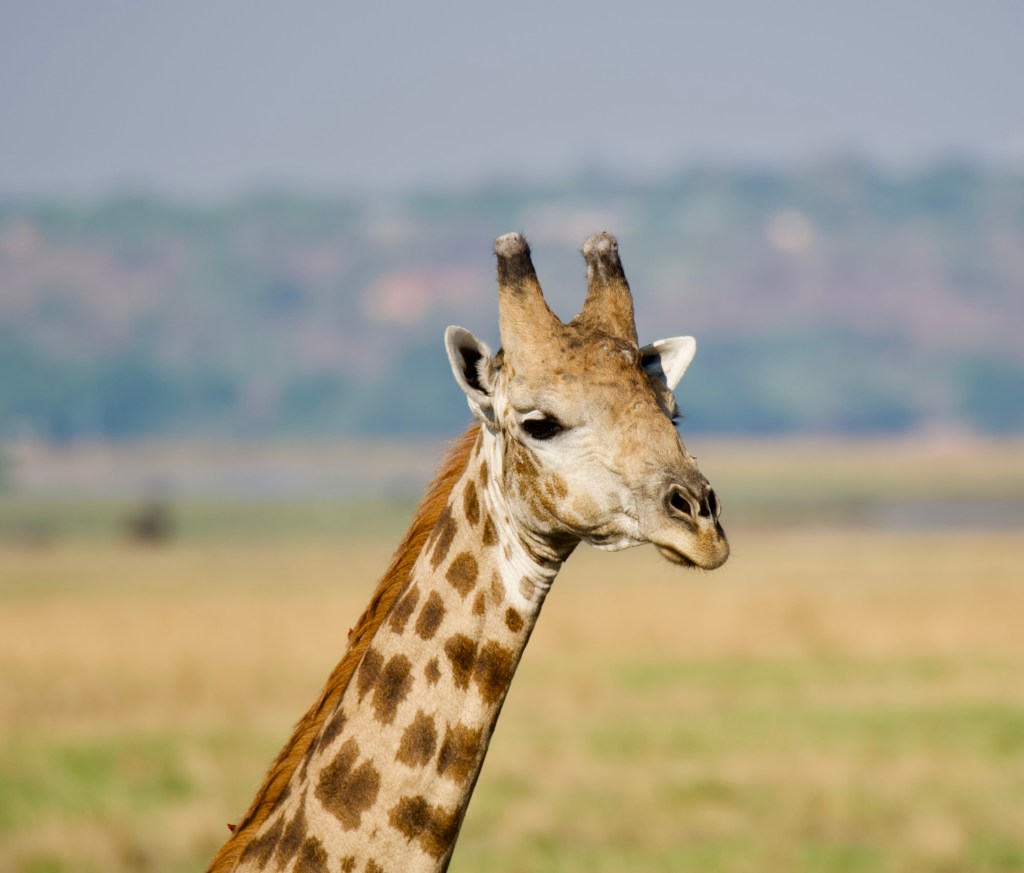
We come across a Giraffe and I am also able to take a close-up photo of her.
On the way home, we spot an older Baboon who is grooming a younger Baboon. It looks like a doctor giving its patient a medical exam. 🙂 “How does it feel when I do this?”
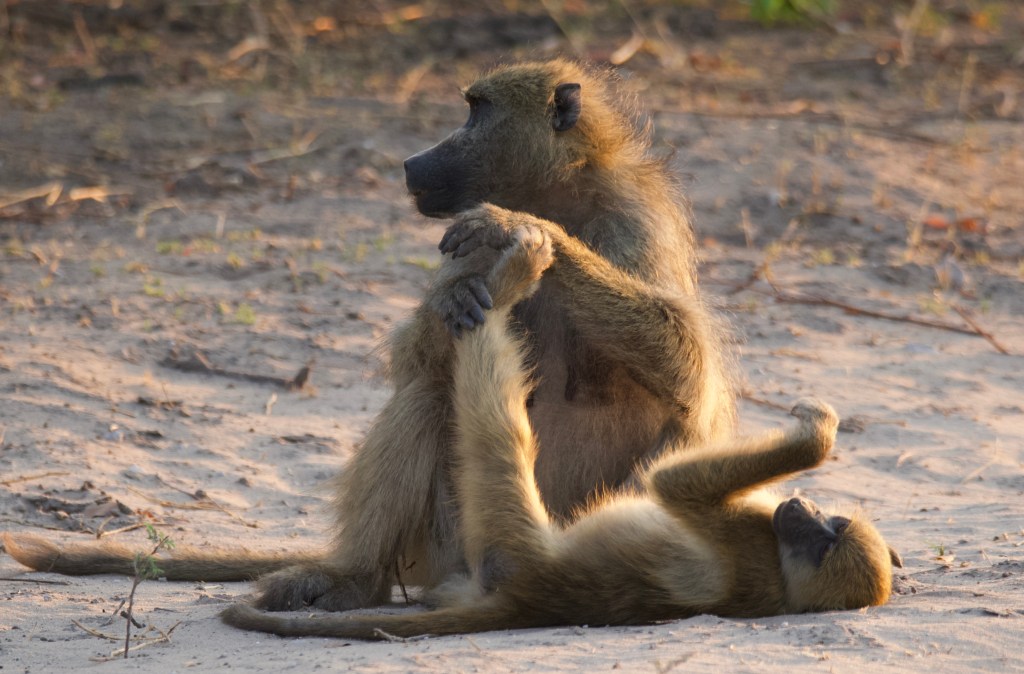
“What about this? Does that hurt?”

I hope you enjoyed reading my blog! Please “Follow” me below if you would like to see more of my nature travel adventures!
 birds fly free
Your photos are stunning! Thank you for sharing a piece of what looks to have been an amazing journey. As an elephant lover, I would’ve found the elephant kill particularly difficult to see. I’ve seen video of an elephant herd mourning and paying its “respects” to a dead elephant. They are such a communal species!!
LikeLiked by 1 person
Thank you Grace! Did you see my first post on Botswana? This one is the 2nd in a series of 4 or 5.
LikeLike
Well done. How lucky you are to have been able to see all this!
LikeLiked by 1 person
Thank you Barbara! Yes, I am very lucky. Hope you have been traveling, it is so wonderful to see the world. 🙂
LikeLike